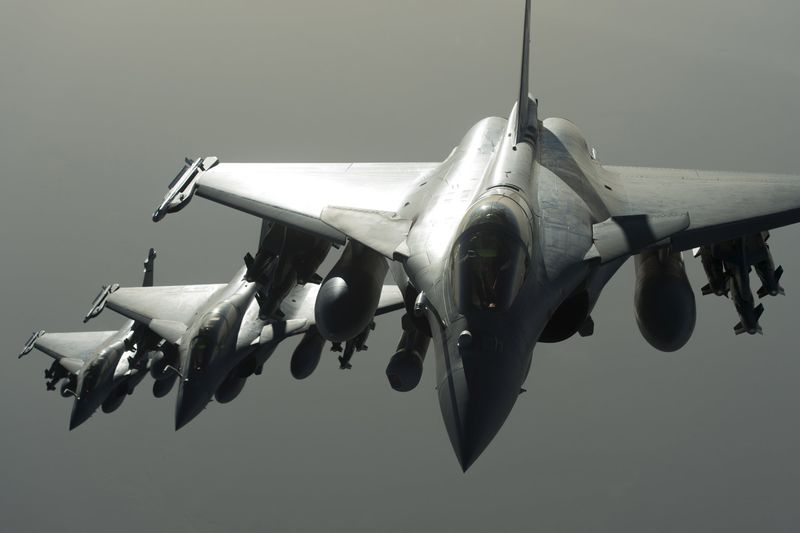
A U.S. F-15E was shot down over Iran; one of two crew members has been rescued while the second remains missing, and search-and-rescue operations are focused in Khuzestan near the Iraqi border. The shootdown and escalation pushed WTI futures above $110/barrel, heightening oil-supply risk given Khuzestan's role in onshore production and pipelines to Kharg Island and creating a significant risk-off shock to markets amid the ongoing U.S.-Israeli campaign.
The immediate market impulse is not just a crude price spike but an asymmetric risk premium on shipments and onshore infrastructure in the northern Persian Gulf. Insurance, detours, and protective naval escorts add days-to-weeks of transit time and tangible per-barrel logistics costs; a 3–10% effective supply reduction is plausible in the near-term purely from increased shipping friction and precautionary shut-ins, which amplifies price moves even before any physical export stoppage.
Defense and aerospace capture both near-term reflation (parts, spares, surge logistics) and multi-quarter procurement upside as buyers prioritize survivability, air defenses, and hardened ISR systems; this shifts cashflow profiles toward companies with large aftermarket/repairable inventories and short lead times, not just prime contractor backlog size. Vendors of mission computing and rugged servers see a discrete increase in addressable demand — procurement cycles that typically add measurable revenue with 3–12 month lags.
Market structure is important: risk-off real rates and a stronger USD are the usual counterweights to commodity-driven inflation; panicked long-only flows into energy will quickly drain risk-seeking capital and compress cyclicals outside energy. The consensus pricing pathway (sustained $110+ oil) is contingent on escalation persisting; a credible diplomatic de-escalation, SPR releases, or swift rerouting would collapse the premium in days to weeks, producing fast mean reversion in both oil and defense sentiment.
The clean second-order trade is therefore volatility capture and selective convexity exposure: short-duration commodity convexity (call spreads or ETFs) plus targeted long exposure to defense names with short fulfillment cycles, while using tactical pairs to neutralize macro directional beta. Position sizing and explicit stop triggers around de-escalation headlines are paramount given high event risk and fat-tailed outcomes.
AI-powered research, real-time alerts, and portfolio analytics for institutional investors.
Request DemoOverall Sentiment
strongly negative
Sentiment Score
-0.70
Ticker Sentiment
