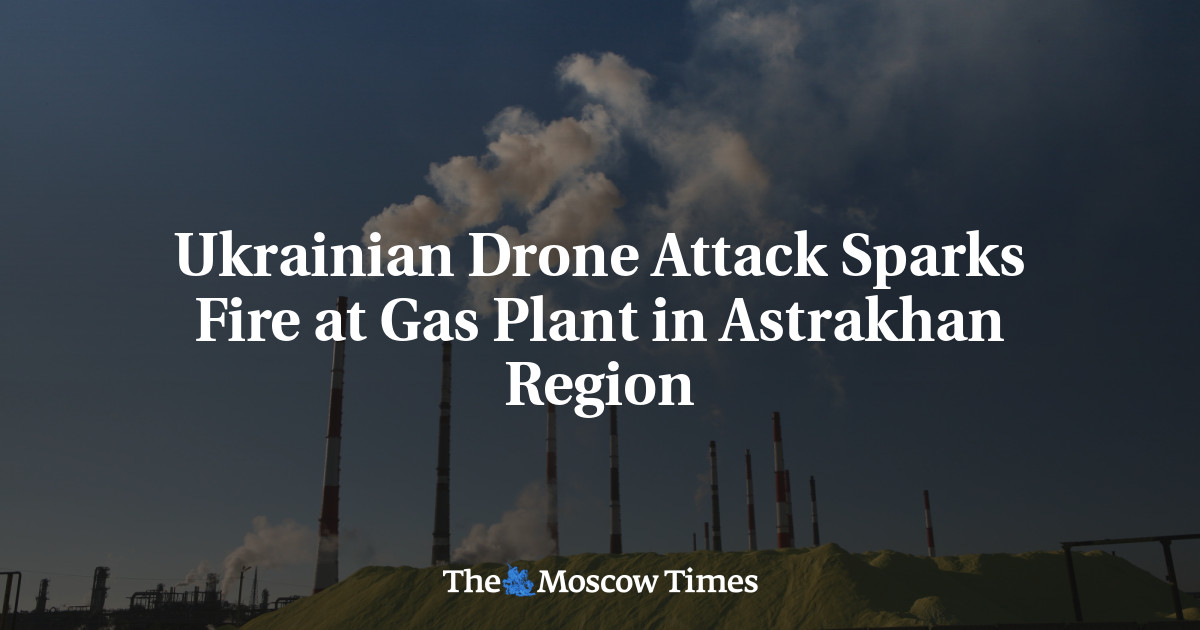
A drone interception in Russia’s Astrakhan region sparked a fire at the Astrakhan Gas Processing Plant, while another overnight strike ignited an industrial site in Krasnodar and injured at least one person. Russia said it intercepted 286 drones across more than a dozen regions and annexed Crimea overnight, highlighting continued escalation against industrial infrastructure. The incidents are negative for regional energy and industrial operations, but the broader market impact is likely contained unless disruption spreads further.
The key market implication is not the headline damage itself, but the growing probability of a rolling, low-grade disruption regime across Russian energy and logistics assets. That tends to reprice risk through two channels: a modest but persistent supply-risk premium in refined products/LNG-linked flows, and higher operating costs as operators divert capex toward air defense, hardening, and backup systems. The near-term effect is usually not a collapse in exports, but a widening dispersion between “paper barrels” and reliably deliverable barrels, which benefits Atlantic Basin refiners and non-Russian coastal storage/logistics assets more than upstream producers.
For energy, the bigger second-order issue is not crude supply, but plant utilization and product slate variability. Repeated hits to processing and port infrastructure can force short-term rerouting, reduce throughput, and create localized shortages in diesel, naphtha, and LPG even when headline export volumes look stable. That can lift regional crack spreads and freight rates for clean products over a 2-8 week horizon, while also raising counterparty risk for buyers who depend on discounted Russian barrels but lack alternative inland transport options.
This also increases the value of resilience infrastructure: tank storage, pipeline redundancy, port optionality, and industrial security vendors. The market often underprices the cumulative effect because each incident appears tactical, but the compounding impact is strategic—higher downtime, insurance friction, and more conservative logistics planning. If attacks remain frequent for several weeks, expect incremental support for non-Russian refining margins and a relative bid in shipping/terminal assets versus pure upstream names.
The contrarian angle is that the market may overestimate the persistence of the premium if disruptions stay superficial and repair cycles remain fast. Russia has demonstrated a capacity to restore operations quickly, and unless attacks begin to hit export bottlenecks or create sustained outages, the macro supply effect may remain small. The tradable edge is therefore in relative-value expressions tied to margin and logistics bottlenecks, not in a broad directional oil bet.
AI-powered research, real-time alerts, and portfolio analytics for institutional investors.
Request DemoOverall Sentiment
moderately negative
Sentiment Score
-0.35
