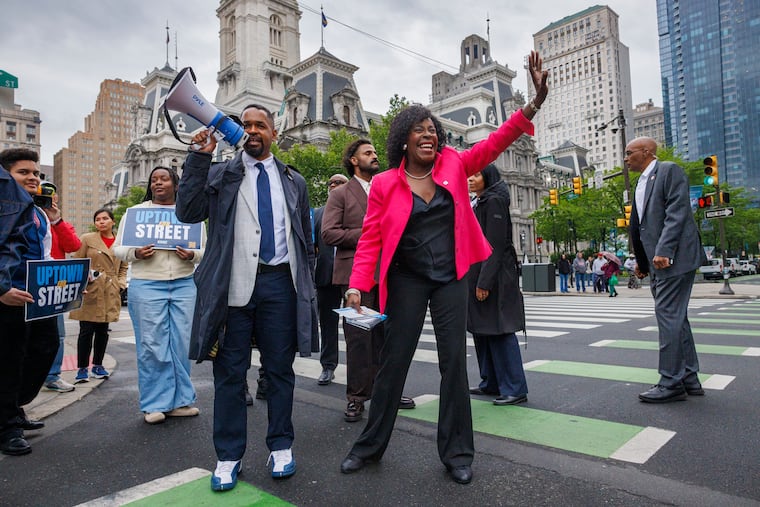
Philadelphia’s 3rd Congressional District Democratic primary remains highly competitive heading into Tuesday, with Sharif Street, Ala Stanford, and Chris Rabb each relying on distinct coalitions, outside money, and turnout efforts. Street has the establishment edge with party and union backing, Stanford benefited from a $3.5 million pro-science super PAC but saw late ad pullbacks, and Rabb appears to have gained late momentum despite campaign setbacks and controversy. The race is politically significant for Philadelphia but has little direct market impact.
This race is a clean read-through on Philadelphia’s political plumbing more than on any one candidate: the edge likely accrues to the organization that can convert low-information primary voters into actual ballots, not the campaign with the best narrative. That favors machine-backed ground games over pure persuasion, especially in a one-day event where ballot familiarity, door-knocking, and ward-level mobilization can matter more than broad TV impressions. The second-order implication is that any winner will likely owe their victory to a coalition asset class — union labor, local party infrastructure, or national outside money — which raises the odds of subsequent policy reciprocity even in a safely blue district.
The marketable signal here is less about ideology than about execution risk. A last-minute shift in advertising spend away from television and toward field operations usually implies internal data showing diminishing returns on persuasion and rising value of turnout protection; that often creates a narrow, fragile path to victory and makes final-hours weather, transit reliability, and turnout friction disproportionately important. If one campaign’s base skews older and institutionally connected, it is more resilient to low-turnout conditions; if another relies on younger, high-propensity-progressive enthusiasm, the risk is a late deceleration from classic primary apathy.
The contrarian read is that the loudest online controversy may be over-weighted by politically engaged observers relative to the median primary voter. In low-turnout municipal-style electorates, name recognition plus field efficacy can beat issue purity, and that means the “establishment” candidate may still outperform if the ward apparatus is intact. The upside for the eventual winner is immediate validation of a coalition model, but the downside is that a victory built on narrow, expensive mobilization is less transferable to future races and can overstate the durability of whichever faction claims momentum.
AI-powered research, real-time alerts, and portfolio analytics for institutional investors.
Request DemoOverall Sentiment
neutral
Sentiment Score
0.00
