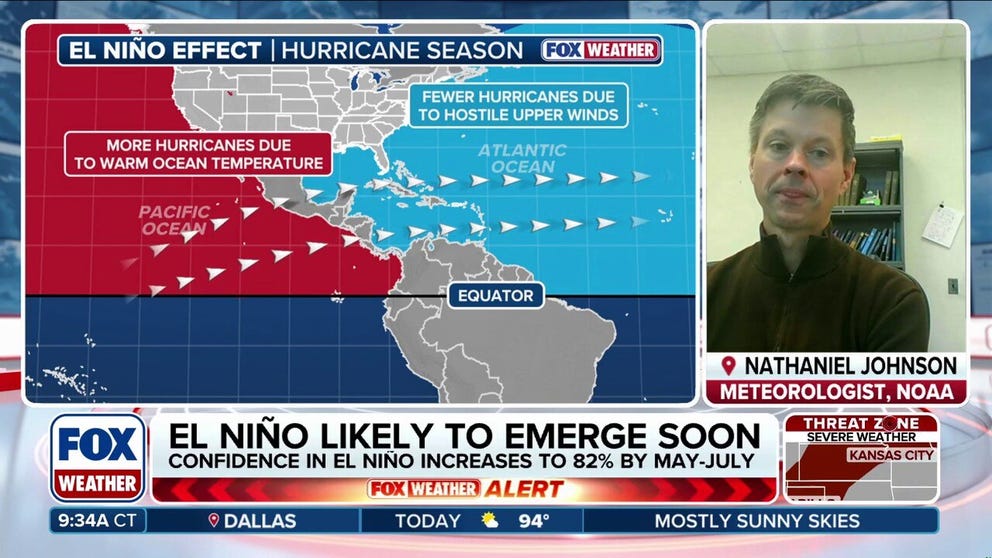
NOAA says there is a high chance El Niño develops between May and July, with odds rising that it could reach 'Super' strength later in the year. The pattern is expected to influence the upcoming hurricane season and may persist into winter, but timing and peak intensity remain uncertain. The article is primarily a climate outlook, with potential implications for weather-sensitive sectors rather than a direct market catalyst.
The market is likely underpricing the lag between ENSO headline risk and earnings translation. The first-order beneficiaries are not the obvious “weather” names but firms with highly elastic operating leverage to storm frequency and rainfall distribution: home-improvement, roofing, disaster remediation, generator, and utility-hardened infrastructure suppliers. The second-order loser set is broader than hurricane-exposed insurers; soft commodity supply chains and inland logistics can see basis volatility and inventory disruption long before landfall probabilities are fully repriced. The key second-order effect is that a stronger El Niño can suppress Atlantic hurricane activity while simultaneously increasing volatility in the Pacific-facing geographies and altering winter demand patterns later in the year. That creates a regime where “less hurricane damage” can still mean more earnings dispersion because claim severity, repair cadence, and timing shift rather than disappear. For insurers, the more actionable variable is not event count but reserving confidence; that argues for selective short exposure to reinsurers with thin catastrophe buffers rather than a blanket bearish call. Consensus is treating this as a binary weather story, but the more investable angle is cross-sector dispersion. Energy demand in the near term may soften modestly if storm risk fades, yet utilities and grid-resilience capex can still outperform if markets extrapolate wildfire, flood, and winter-storm extremes. The overdone trade is a broad short on “cat-risk” names; the underdone trade is pricing the premium from operational resilience and emergency-response spending that tends to rise even when headline hurricane counts fall. Catalyst timing matters: the next 4-8 weeks should be about probabilistic repricing, while the real P&L impact arrives into late summer/fall as guidance, reserve updates, and procurement orders adjust. If the pattern peaks weaker than feared, the trade unwinds quickly; if subsurface warming persists and forecast confidence rises, expect a sharper rotation into mitigation, backup power, and infrastructure hardening plays with asymmetric upside into Q3.
AI-powered research, real-time alerts, and portfolio analytics for institutional investors.
Request DemoOverall Sentiment
neutral
Sentiment Score
-0.05
