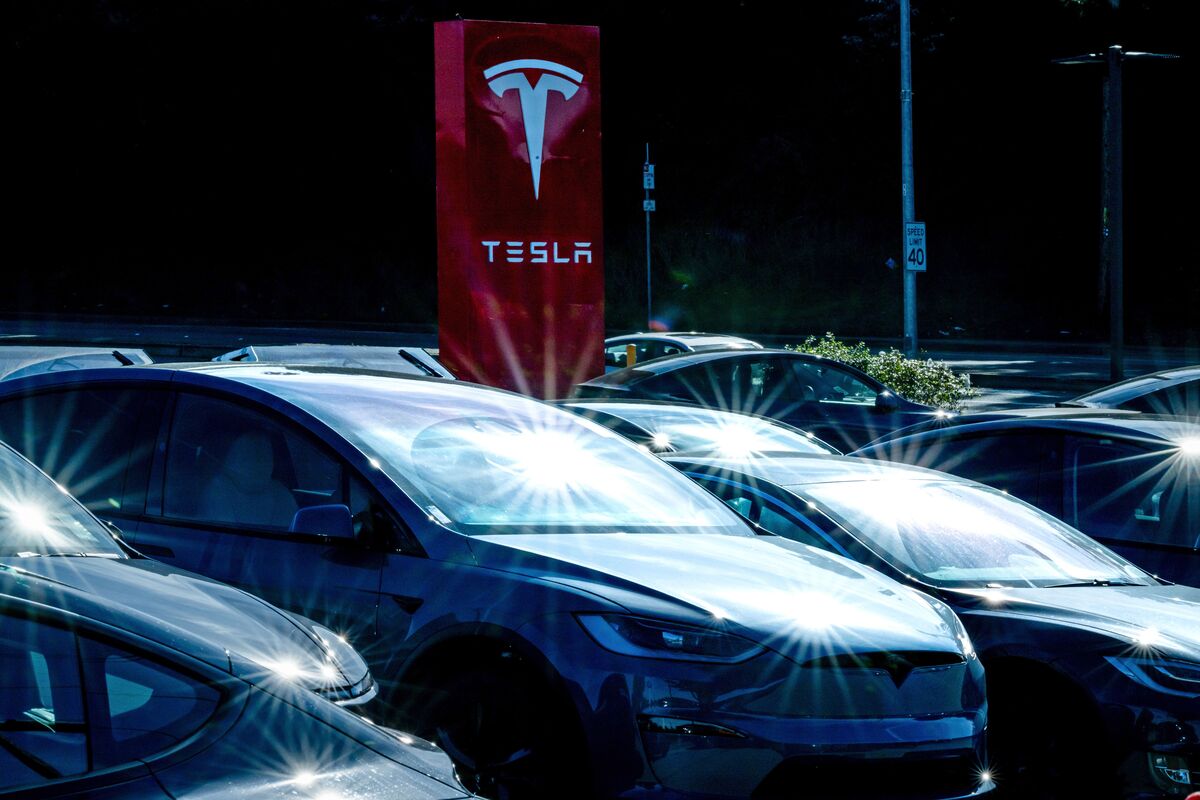
Morgan Stanley cut Tesla’s rating to the equivalent of a hold — its first downgrade since June 2023 — arguing the stock already prices in Elon Musk’s push into robotics and AI and is at a “full valuation.” Tesla trades at roughly 210x projected earnings over the next 12 months, making it the second-most expensive S&P 500 company behind Warner Bros. Discovery at 220x and ahead of Palantir at 186x; the firm’s view implies limited upside and may temper investor expectations and re-rate growth assumptions.
Market structure: Morgan Stanley’s downgrade is a sentiment shock to a market already pricing Tesla (TSLA) as a de facto AI/robotics growth asset at ~210x forward EPS. Immediate winners are cash-rich cyclical/value autos and parts suppliers (Ford F, GM, APTV) that trade at single-digit/low-teens multiples; losers are momentum growth longs and levered retail holders who face forced selling. Elevated TSLA concentration increases S&P cap-weight sensitivity — a sustained derating would shave 10–30 bps off broad-cap-weighted indices if TSLA falls 20–40%.
Risk assessment: Tail risks include a major FSD/robotics regulatory setback, an operational recall or significant margin erosion from raw-material inflation, any of which could compress multiples by 50–70% in 6–12 months. Near term (days–weeks) expect volatility spikes around analyst commentary, earnings, or delivery updates; medium term (3–9 months) is multiple repricing if growth disappoints; long term (2+ years) depends on execution of AI/robotics revenue scaling to >10% of sales. Hidden dependency: current market price assumes successful monetization of FSD/Dojo — delay or higher CAPEX needs are binary catalysts.
Trade implications: Reduce net long TSLA beta and reallocate to undervalued auto names and commodity plays (copper miners) over 1–6 months. Use defined-risk option hedges (3-month put spreads sized 0.5–2% portfolio) around deliveries/earnings and consider short-dated volatility selling (30–45 days) if IV > realized by 5–10 vol points. Rotate 2–5% from mega-cap growth into F/GM/APTV and select miners for upside if EV demand softens but infrastructure metals remain structural.
Contrarian angles: Consensus prices in fast AI/robotics monetization; if Tesla reports >20% beat in software revenue or reveals credible Dojo monetization timeline, a sharp re-rating upside is possible — LEAP calls (18–24 months) could asymmetrically pay off in a size-constrained way (0.5–1% portfolio). Conversely, the market may be underestimating short-squeeze risk in crowded short interest windows; avoid large naked short exposures. Historical parallel: late-stage narrative-driven re-ratings (dot-com) show sharp drawdowns when execution lags, so size and defined risk are paramount.
AI-powered research, real-time alerts, and portfolio analytics for institutional investors.
Request DemoOverall Sentiment
moderately negative
Sentiment Score
-0.35
Ticker Sentiment
