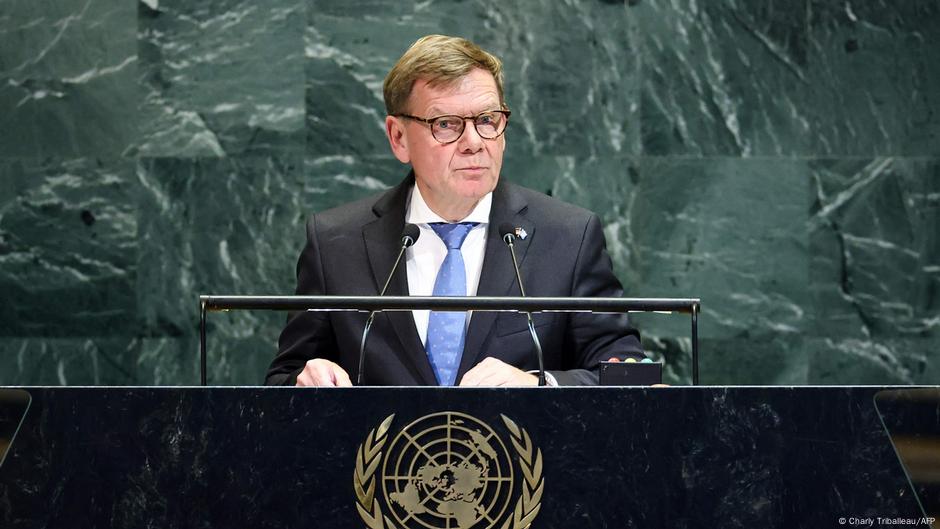
Germany's Foreign Minister confirmed that the E3 (France, UK, Germany) will reimpose "snapback" sanctions on Iran this Sunday due to non-compliance with the JCPOA, a move that failed to be delayed by a China/Russia-backed UNSC resolution, signaling heightened geopolitical risk and potential volatility in energy markets. Simultaneously, Russia's Foreign Minister warned of a "decisive response" to any NATO/EU aggression, while the U.S. revoked Colombian President Petro's visa following his controversial remarks at the UN General Assembly, collectively underscoring rising international tensions and diplomatic friction impacting global stability.
The impending reimposition of 'snapback' sanctions on Iran by the E3 (Germany, France, UK) this weekend marks a significant escalation in geopolitical tensions with direct implications for energy markets. German Foreign Minister Johann Wadephul confirmed the move, citing Iran's non-compliance with the Joint Comprehensive Plan of Action (JCPOA) and a nuclear program that 'goes far beyond any plausible civilian use.' The failure of a China and Russia-backed resolution at the UN Security Council to delay these sanctions underscores the deep diplomatic rift and solidifies the prospect of renewed punitive economic measures against Tehran. This development is set against a backdrop of broader, intensifying global friction, as reflected in the 'strongly negative' sentiment signal. Russia's Foreign Minister Sergey Lavrov issued a stark warning of a 'decisive response' to any perceived NATO or EU aggression, while tensions in South Asia remain acute, with India's Foreign Minister labeling Pakistan an 'epicenter of global terrorism' following a recent brief conflict. Further instability is evident in the Middle East, where Israeli Prime Minister Benjamin Netanyahu vehemently rejected Palestinian statehood as 'national suicide' and condemned key Western allies. The confrontational diplomatic environment is also highlighted by the US decision to revoke the visa of Colombian President Gustavo Petro, contributing to a fractious global political landscape with an elevated market impact score of 0.7.
AI-powered research, real-time alerts, and portfolio analytics for institutional investors.
Overall Sentiment
strongly negative
Sentiment Score
-0.60
