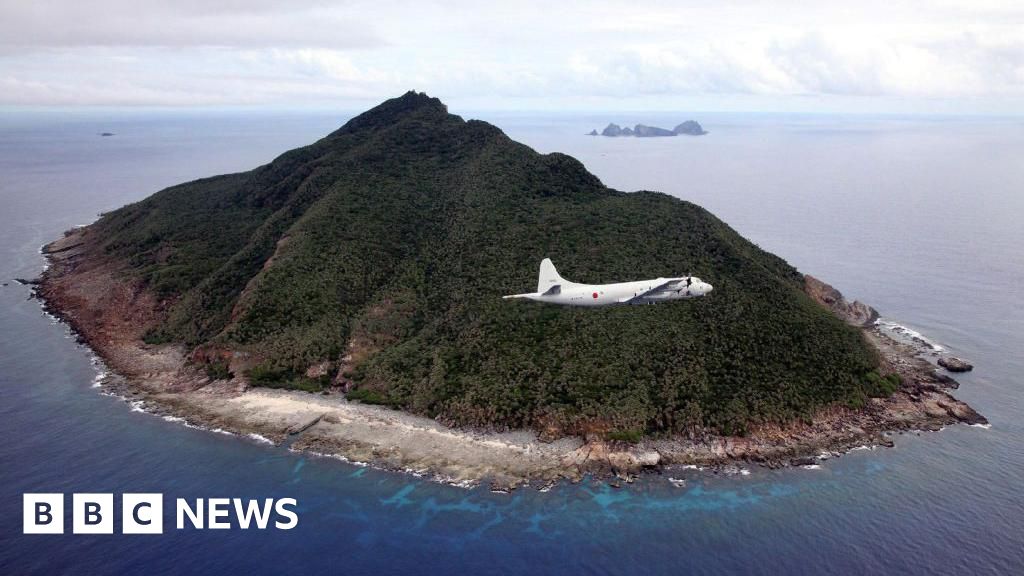
Chinese and Japanese coastguards reported conflicting accounts of a maritime confrontation near the disputed Senkaku/Diaoyu islands after Chinese vessels approached and warned off a Japanese fishing boat and Japan said it intercepted and expelled Chinese ships; Beijing and Tokyo both assert jurisdiction and have escalated rhetoric following Japanese PM Sanae Takaichi’s comments on Taiwan. The incident follows a record year of Chinese government and coastguard vessel presence around the islands and represents a rising regional security risk that could lift risk premia for regional assets, shipping routes and defense exposure if incidents continue to escalate.
Market structure: Near-term winners are defense and maritime security suppliers (US/JP shipbuilders, missile/ISR firms) and safe-haven assets (gold, US Treasuries); losers are Japan-exposed consumer/tourism, regional shipping and insurers. Expect pricing power shift to prime defense contractors as governments accelerate patrol-ship and ISR procurement — a plausible 10–25% revenue upside for suppliers over 12–36 months if procurement cycles accelerate. Cross-asset: risk-off supports JPY appreciation vs commodity currencies, higher Brent (3–8% jump on escalation), rising VIX and widening Asia credit spreads.
Risk assessment: Tail risks include a fatal skirmish or blockade that triggers sanctions, semiconductor supply shocks, or US military involvement — low probability but high impact (GDP hit 1–3% regionally). Immediate (days): volatility spikes, FX moves; short-term (weeks–months): orderbooks and defense capex reprioritization; long-term (quarters–years): durable reallocation into defense and reshoring of critical supply chains. Hidden dependencies: Taiwan proximity ties this incident to semiconductor/shipbuilding supply chains and US policy responses. Key catalysts: casualty event, formal maritime claims escalation, or coordinated procurement announcements from Japan/US within 30–90 days.
Trade implications: Direct trades favor selective long allocations to defense equities/ETFs and gold, short/hedged positions in Japan equity exposure and regional shipping names. Use options to express skewed risk (buy calls on defense, puts on Japan ETF) with 1–3 month expiries to capture volatility spikes; rotate into cash/corporate bonds if conflict risk persists beyond 30 days. Entry: deploy volatility-sensitive trades within 48–72 hours; hold defense exposure 3–12 months and re-evaluate after any formal government procurement or casualty-driven escalation.
Contrarian angles: Consensus focuses on immediate geopolitical headlines but underestimates durable procurement and industrial policy responses — Japanese and regional defense OEMs (including 7011.T, 7013.T) may be underpriced for multi-year order flow. The market may overshoot on yen strength and Japan equity weakness; consider buying high-quality Japanese exporters on >8% index drawdown as a mean-reversion/FX-hedged contrarian. Historical parallels (2012 Senkaku spike) show short-term pain but longer-term reallocation toward defense and supply-chain diversification.
AI-powered research, real-time alerts, and portfolio analytics for institutional investors.
Request DemoOverall Sentiment
moderately negative
Sentiment Score
-0.50
