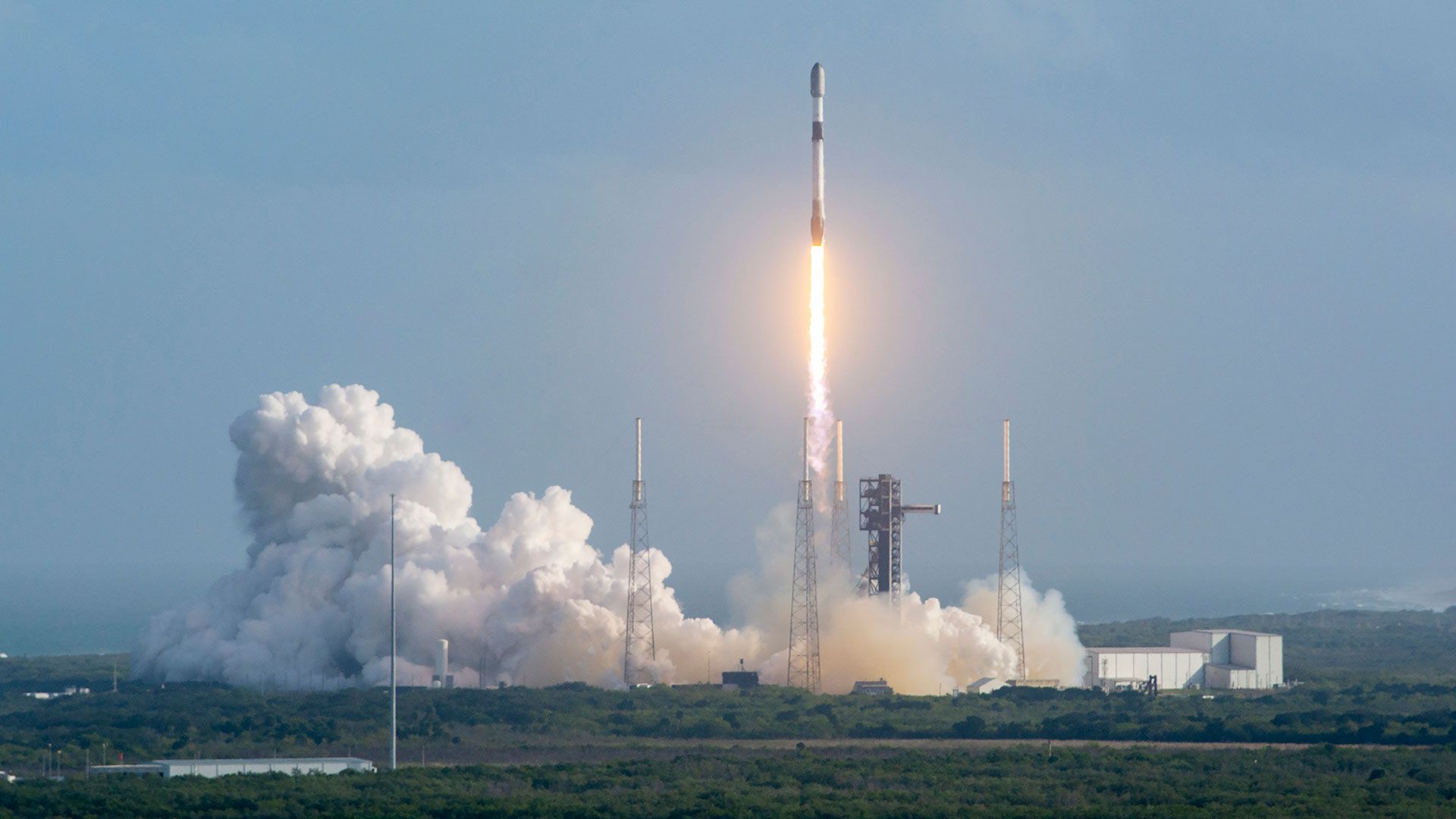
On Jan. 12 SpaceX launched 29 Starlink satellites (Group 6-97) from Cape Canaveral SLC-40 aboard a Falcon 9, with deployment about 50 minutes after liftoff; first-stage Booster 1078—on its 20th flight—successfully landed on the droneship 'A Shortfall of Gravitas.' The incremental capacity adds to SpaceX's near-9,500 active-satellite Starlink megaconstellation that supports broadband, in-flight Wi‑Fi and cell-to-satellite services; the successful reuse and landing reinforce operational reliability and cost efficiency, though a single mission is unlikely to materially alter near-term financials.
Market structure: SpaceX’s continued high-cadence Starlink launches lower marginal launch cost and accelerate LEO capacity growth, benefiting ecosystem partners (TMUS, QCOM) and content/distribution users (airlines, maritime). Incumbent GEO/MEO operators (SES, VSAT providers) face intensified pricing pressure and potential ARPU erosion; model a 10–25% ARPU compression risk for commodity broadband segments over 2–3 years while mission-critical MEO/GEO revenue may remain sticky.
Risk assessment: Tail risks include regulatory action on spectrum or direct-to-cell (FCC/EU decisions within 3–12 months), a major debris/collision event that could ground LEO ops (low-probability, high-impact), and sovereign restrictions on Starlink access that alter addressable market. Immediate market impact is muted (days); watch partnership announcements and airline contracts over the next 3–6 months; structural effects play out over 2–5 years.
Trade implications: Favor exposure to firms enabling device-to-satellite and chipset adoption (QCOM) and telco partners (TMUS) while selectively shorting commodity satcom providers (VSAT/SES) or launch peers (RKLB) that can’t match SpaceX scale. Use concentrated, time-bound options to express asymmetric views: 3–9 month calls on beneficiaries and 3–9 month puts on exposed legacy names; rebalance on 20% price moves or material contract announcements.
Contrarian angles: Consensus underestimates the resilience of high-reliability GEO/MEO contracts (maritime, government) — expect 20–40% of legacy revenue to stay defensible, creating a two-speed market. Overreaction risk: shorting all satellite names indiscriminately is overdone; prefer granular pair trades (long device/chips + short legacy transport) and hedge regulatory/debris tails with options or tail-protection within 6–12 month windows.
AI-powered research, real-time alerts, and portfolio analytics for institutional investors.
Request DemoOverall Sentiment
mildly positive
Sentiment Score
0.32
Ticker Sentiment
