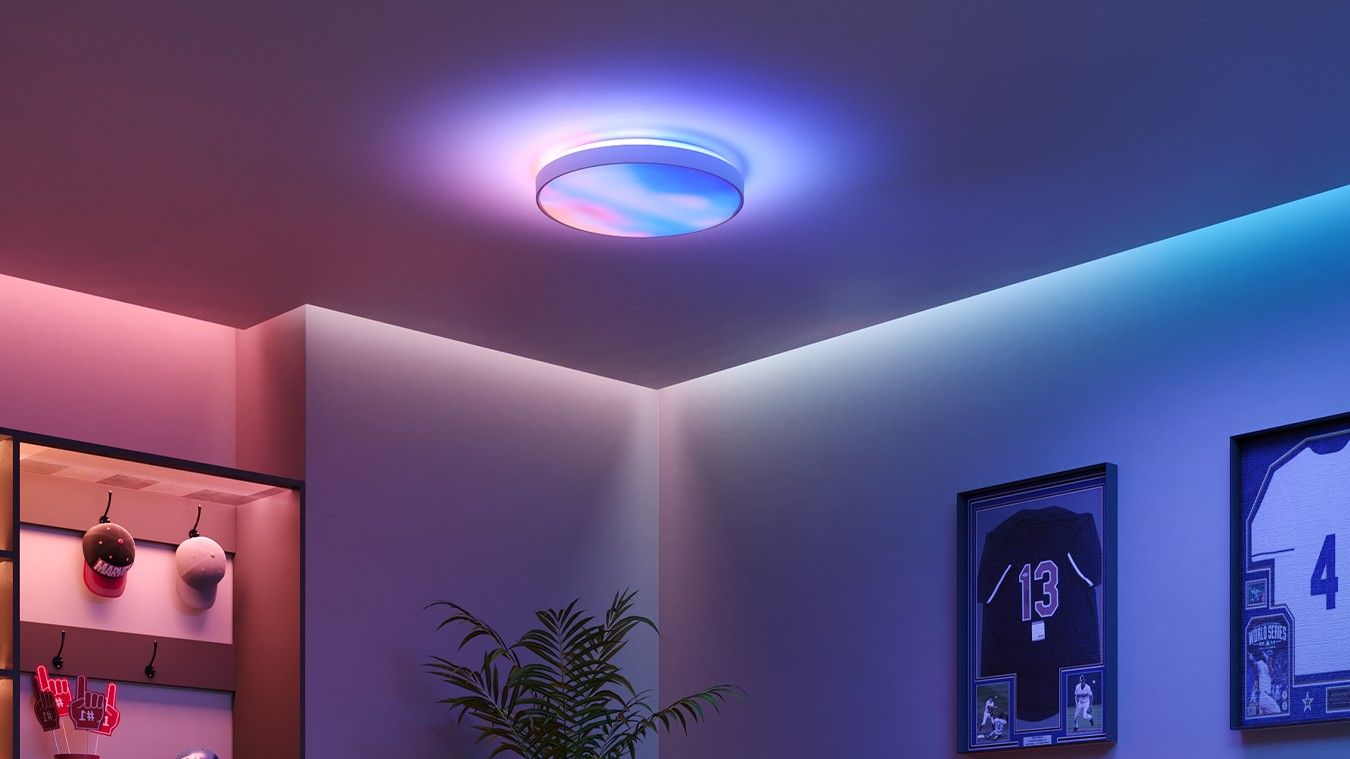
Govee showcased a new AI-driven smart-lighting strategy at CES 2026 centered on LuminBlend+ (a 16-bit color system enabling 281 trillion colors and a 1,000K–10,000K white range), AI Lighting Bot 2.0 (conversational scene creation and animated visuals), and DaySync (automatic circadian adjustments launching April 2026). Three flagship products—Floor Lamp 3 (integrated LuminBlend+/DaySync/Bot), Ceiling Light Ultra (616-pixel matrix, 5,000 lumens, CRI 95, 2,700–6,500K) and Sky Ceiling Light (up to 5,200 lumens, CRI 95)—illustrate the push toward adaptive, design-forward smart-home lighting; SmartThings support will roll out in 2026 while Matter compatibility and Matter 1.5 are available/coming. Pricing and ship dates remain undisclosed, limiting immediate revenue visibility, but the feature set could meaningfully differentiate Govee in the smart-home consumer market if adopted at scale.
Market structure: Govee’s push to embed 16-bit color, AI scene generation and automatic circadian control favors upstream component and platform winners (LED chip suppliers, SoC/AI vendors, Amazon/Google for distribution and voice/Matter services) while pressuring low-end commodity bulb makers and incumbents that rely on static feature parity. Expect ASP premium potential of ~10–20% for flagship products but volume reallocation toward value brands; near-term channel share shifts likely within 6–12 months as new SKUs reach retail.
Risk assessment: Tail risks include EU/US privacy or AI regulation delaying in-home AI features (6–18 months), patent/licensing fights over color/gamma calibration, and yield/mfg delays that could push shipments 3–6 months and widen component lead times. Immediate market impact is limited (days), but watch for short-term (3–9 months) retailer listings and long-term (12–36 months) margin compression of 100–300 bps for incumbents without premium tech.
Trade implications: Direct plays: overweight upstream suppliers of precision LEDs/driver ICs (e.g., OSRAM AG - OSR.DE, Samsung Electronics 005930.KS) and platform/distribution winners (AMZN, GOOGL) while avoiding small-cap/commodity smart-light OEMs. Options: use 9–15 month call spreads on incumbents that can convert product premium (e.g., LIGHT—Signify) rather than outright calls to limit IV risk. Pair trade: long OSR.DE (supply beneficiary) / short a small-cap consumer electronics ETF or underfunded lighting OEM if available.
Contrarian angles: Consensus underappreciates friction from ecosystems—proprietary AI scenes could fragment Matter benefits and actually raise switching costs, concentrating value with platform owners rather than lighting OEMs. Also adoption could be slower in pro-install channels (commercial lighting) than consumer headlines imply; this delays revenue recognition yet creates a 6–12 month window where component suppliers can reprice upwards if demand spikes.
AI-powered research, real-time alerts, and portfolio analytics for institutional investors.
Request DemoOverall Sentiment
mildly positive
Sentiment Score
0.30
