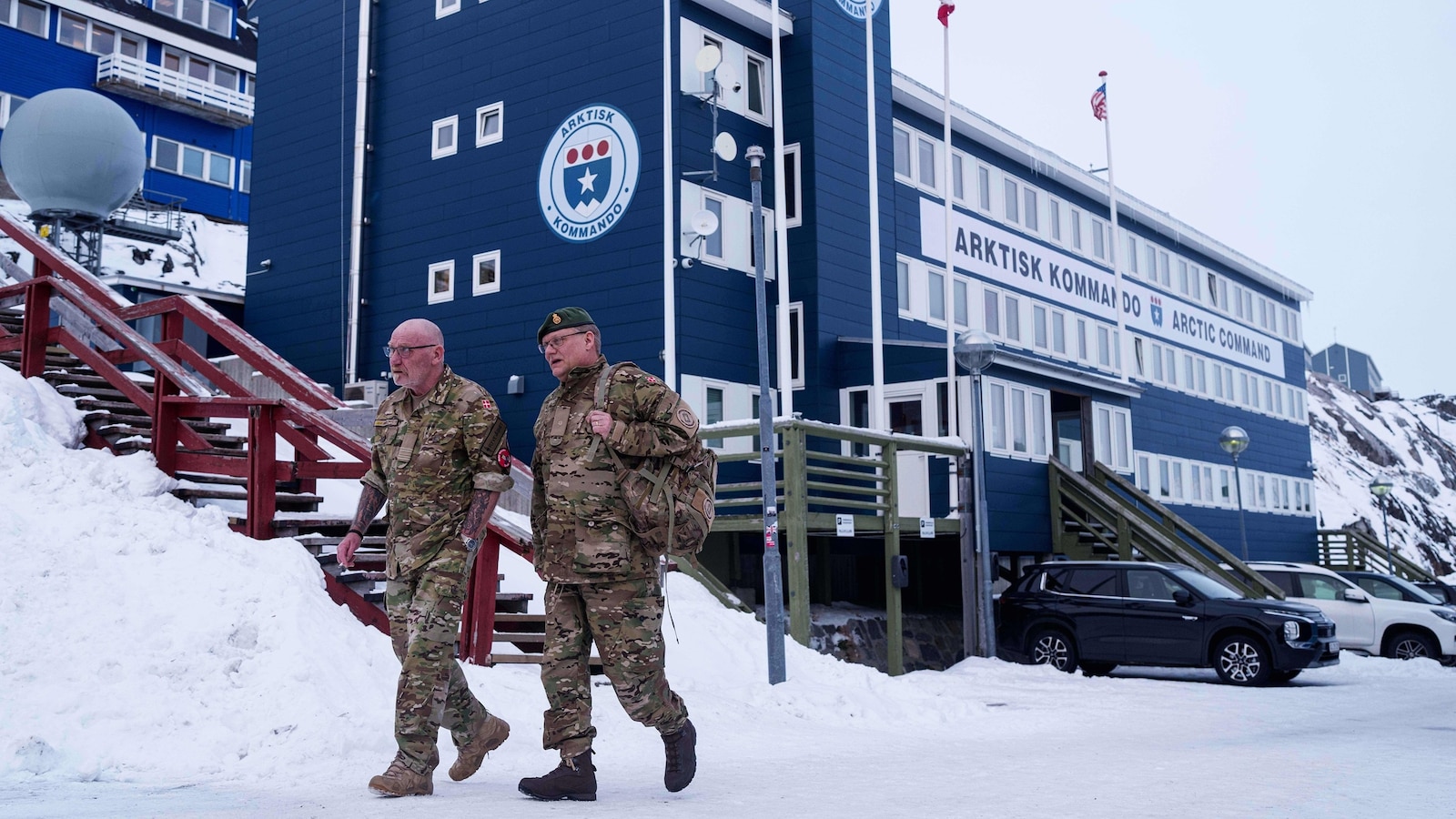
President Trump announced a 10% tariff on goods from Denmark, Norway, Sweden, France, Germany, the U.K., the Netherlands and Finland effective Feb. 1, rising to 25% on June 1, as part of pressure tied to his bid to acquire Greenland. European and NATO allies, led by EU officials and national leaders, condemned the move as damaging to transatlantic relations and vowed a coordinated response; lawmakers in Washington signaled bipartisan resistance and plans to introduce legislation to block such tariffs. The dispute centers on Arctic security — Greenland hosts the U.S. Pituffik base and is governed within the Kingdom of Denmark — and has prompted renewed defense commitments (including Denmark's $6.5 billion Arctic package) and political fallout rather than immediate large-scale market shocks.
Market structure: Immediate winners are US defense contractors and security-focused suppliers as Arctic security rhetoric raises expected defense budgets; losers are export-heavy European manufacturers (autos, machinery, luxury goods) and logistics providers facing a 10% tariff Feb 1 that could rise to 25% on June 1 if enacted. Pricing power will shift short-term to firms able to reroute supply chains to North American production or tariff-free jurisdictions; smaller exporters and narrow-margin suppliers face margin compression of 2–10% depending on pass-through.
Risk assessment: Tail risks include broadening of tariffs into retaliatory EU measures, formal sanctions, or de facto decoupling of transatlantic supply chains—each would push EU GDP forecasts down 0.2–0.8ppt over 12 months in a severe scenario. Near-term (days–weeks) volatility spikes in EUR, NOK, DAX; medium-term (months) credit spreads on European corporates widen; long-term (quarters) re-shoring/defense capex could boost select miners and contractors. Monitor congressional activity: bipartisan bills to block tariffs make the extreme tariff path <50% probability.
Trade implications: Use short-duration option structures to express view—protective puts on European ETFs and USD bullish FX exposure; rotate equity beta from EU exporters into US defense (RTX, LMT) and commodity names tied to Arctic minerals. Position sizes should be tactical (1–3% per idea) with event exits around June 1 tariff step-up.
Contrarian: Consensus assumes tariffs persist; political pushback in Congress and NATO unity make reversal plausible before June, creating a mean-reversion trade. If tariffs are priced out, expect 5–12% bounce in beaten-down European exporters; buy cheap, short-dated call spreads to capture policy reversal while keeping downside via put protection.
AI-powered research, real-time alerts, and portfolio analytics for institutional investors.
Request DemoOverall Sentiment
moderately negative
Sentiment Score
-0.35
