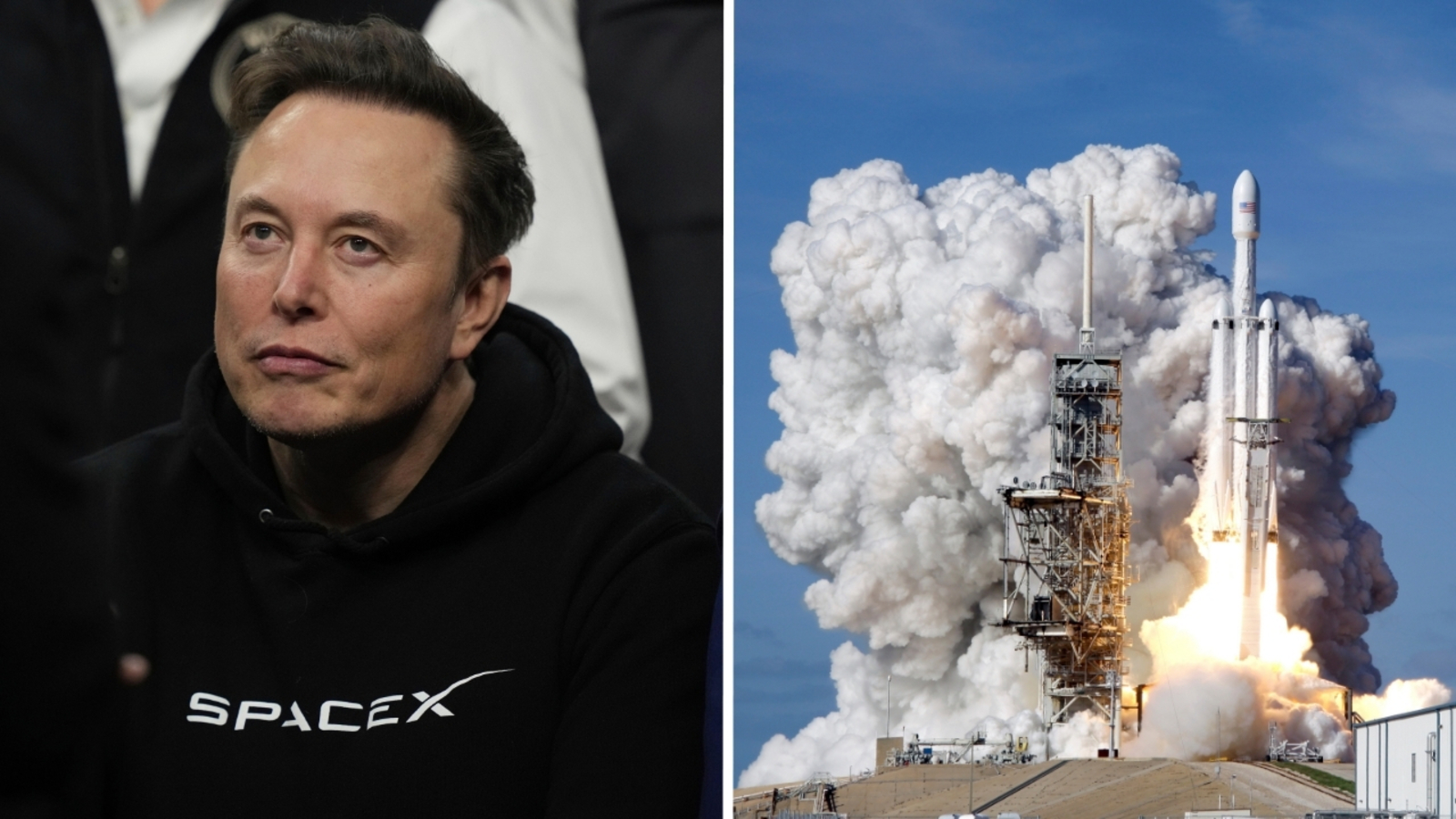
SpaceX has filed confidential SEC paperwork for an IPO that could raise as much as $75 billion and potentially value the company at about $1.5 trillion. Elon Musk reportedly owns ~42% pre-IPO and would likely exceed the trillion-dollar net-worth threshold if valuation holds; the offering could happen as soon as June. SpaceX owns Starlink and recently folded in X and xAI, and has won roughly $6 billion in U.S. government contracts—facts that raise governance and conflict-of-interest scrutiny given family ownership links to Donald Trump Jr.
This IPO is a tectonic liquidity event for an industry where a single vertically integrated supplier can compress marginal launch costs and reprice addressable TAMs across satellites, earth-observation, and in-orbit infrastructure. The most direct second-order winners will be high-volume satellite manufacturers and data/analytics firms that can scale production to exploit lower per-launch economics; smaller niche launch providers and early-stage constellation builders with tight cash runs will feel margin and funding pressure within 6–18 months.
Concentration risk rises: a dominant public launcher reduces marginal costs but increases counterparty and political risk for customers and governments — expect procurement policy changes, tightened national-security clauses, and periodic regulatory shocks that can intermittently reprice revenues for both primes and commercial customers. Capital markets mechanics matter: an oversized IPO followed by heavy lockup expiries could force secondary selling into a narrow cohort of space-related equities and bank stocks over a 3–12 month window.
Tail risks are asymmetric and time-staggered. Near term (days–months) pricing, underwriter allocations, and lockup schedules dominate price action; medium term (6–24 months) regulatory reviews, DoD procurement adjustments, and any high-profile technical failures will swing sentiment; long term (2–5 years) the industry bifurcates between players who scale manufacturing and those competing on bespoke services.
Contrarian read: the market will underprice the procurement/governance headwinds that follow concentration of launch capacity — that suggests the defensive trade is not blanket long-space exposure but a selective long on satellite industrials and data firms with diversified customer bases, paired with shorts of small launch and commoditized broadband incumbents whose economics can be structurally impaired.
AI-powered research, real-time alerts, and portfolio analytics for institutional investors.
Request DemoOverall Sentiment
moderately positive
Sentiment Score
0.45
