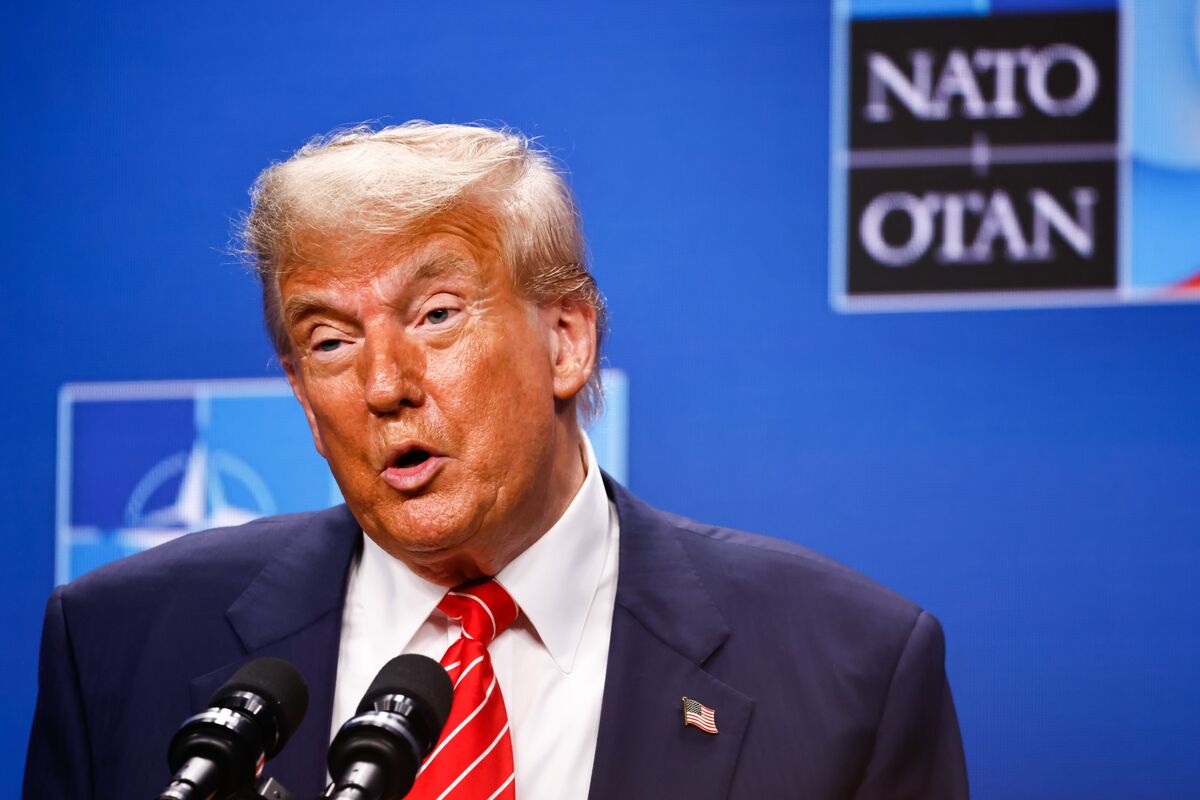
President Trump suggested the US may quit NATO after European allies denied US military aircraft access for attacks on Iran and refused to help enforce freedom of navigation in the Strait of Hormuz. The rhetoric raises geopolitical risk and could pressure defense and energy sectors and lift safe-haven assets if it produces sustained operational friction with European partners.
The headline threat of a rupture in alliance cohesion is a catalyst to reprice political risk into defense procurement and logistics over a multi-year horizon. If European capitals accelerate indigenous procurement to shore up deterrence, incremental capex will flow into missile systems, shipbuilding and C4ISR supply chains — areas where US primes (and their subcontracted US electronics & semiconductor suppliers) can capture outsized margins for work performed under export licenses. Expect a 12–36 month procurement wave rather than an immediate replacement of alliance structure; program-level awards, offsets and certification cycles mean revenue realization lags announcements by 9–24 months.
Energy and insurance markets embed a second-order friction: higher perceived transit risk raises tanker insurance and bunker/route-costs, widening FOB/DAP spreads and favoring exporters with flexible delivery portfolios and short-haul LNG cargoes. Traders should watch the Asian-European spreads on LNG and Brent time spreads — a persistent 10–20% premium in freight/insurance would shift marginal demand toward proximate US and African suppliers and mechanically lift spot differentials over 3–9 months. Currency and safe-haven flows will also reallocate capital intraday to USD and sovereign bonds, pressuring peripheral European assets.
Tail risks are binary and asymmetric: an actual US withdrawal is low-probability but would trigger immediate market dislocations across basing, overflight rights and munitions stockpiles; reversals are possible via congressional levers, defense appropriations riders and bipartisan strategic messaging. Near-term catalysts to watch are concrete refusals of basing/overflight requests, formal policy directives from the Administration, and coordinated EU procurement announcements — any of which could move sector equity and forward curves in days and then evolve into multi-quarter revenue shifts.
From a positioning perspective, the opportunity is to buy optional exposure to higher defense and LNG cashflows while hedging macro tail risk cheaply. Momentum in risk repricing will be choppy; use event-contingent scaling and plastic hedges (puts/call spreads) to avoid buying a transient headline spike.
AI-powered research, real-time alerts, and portfolio analytics for institutional investors.
Request DemoOverall Sentiment
moderately negative
Sentiment Score
-0.45
