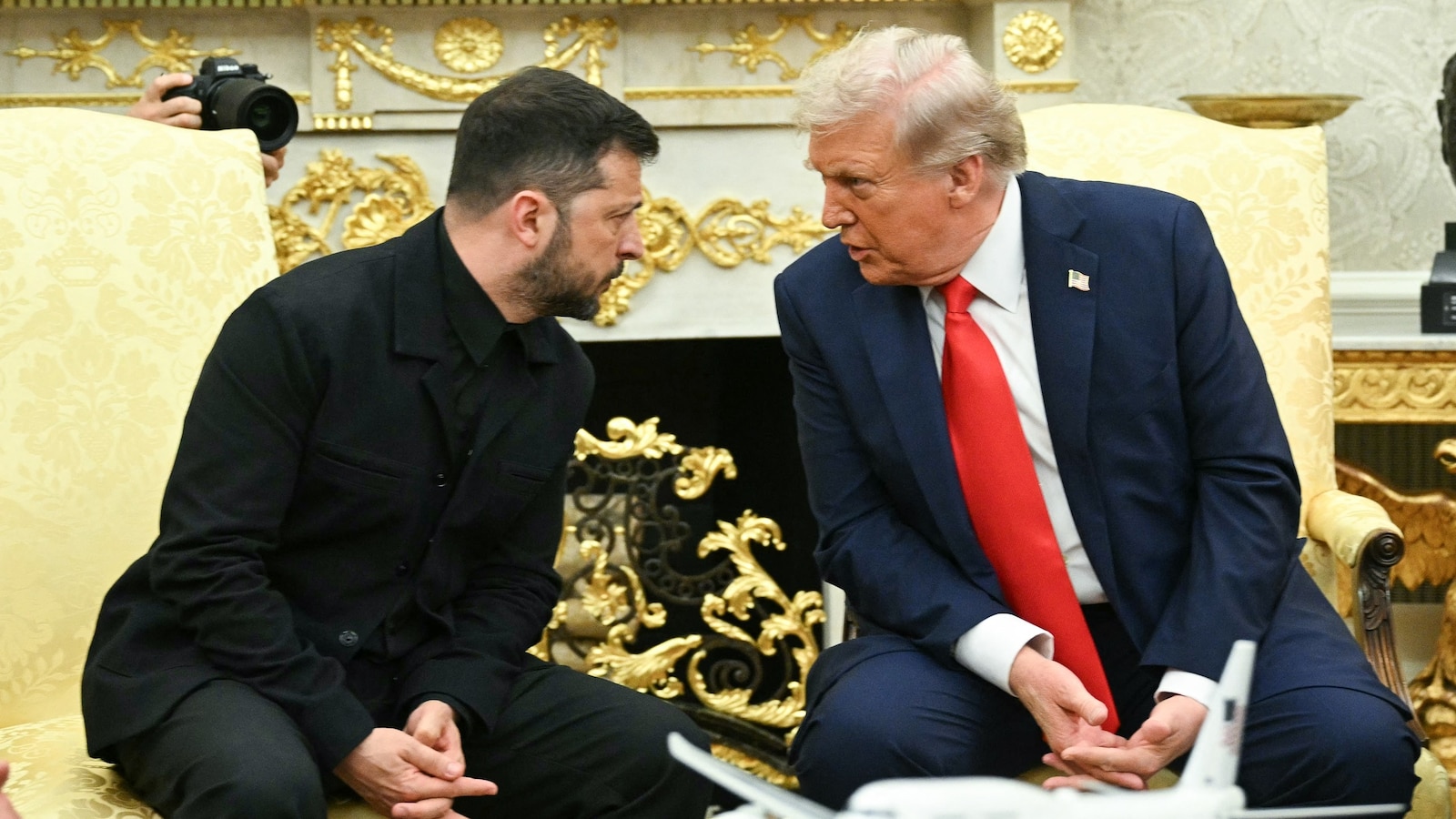
President Trump met with Ukrainian President Zelenskyy and European leaders, pledging U.S. security assistance for Ukraine, which Russia has reportedly agreed to accept. Significantly, Trump walked back his previous demand for an immediate ceasefire, though European leaders strongly advocated for a ceasefire and robust, Article 5-like security guarantees for Ukraine. Trump is now pushing for a trilateral meeting with Putin and Zelenskyy, which Zelenskyy supports, and plans to discuss this with Putin imminently. This signals complex, evolving diplomatic efforts with notable divergences in strategic approaches among key Western allies on conflict resolution.
High-stakes diplomatic meetings in Washington signal a fluid and complex phase in efforts to end the war in Ukraine, marked by a significant strategic divergence among Western allies. While President Trump has pledged unspecified U.S. security assistance for Ukraine—a commitment he states Russia is willing to accept—he has simultaneously walked back his previous insistence on an immediate ceasefire. This pivot directly conflicts with the position of key European leaders from France and Germany, who publicly pressed that a ceasefire is a necessary prerequisite for further negotiations. The ambiguity of the U.S. security pledge, coupled with Trump's emphasis on Europe shouldering the primary burden, introduces uncertainty about the nature and reliability of future support. The immediate focus is now on Trump's push for a trilateral meeting with Zelenskyy and Putin, a step Ukraine is 'ready' for, but its feasibility remains questionable without alignment on preconditions. The situation presents a fragile diplomatic landscape where progress hinges on resolving fundamental disagreements within the Western coalition itself.
AI-powered research, real-time alerts, and portfolio analytics for institutional investors.
Request DemoOverall Sentiment
Neutral
Sentiment Score
0.10
