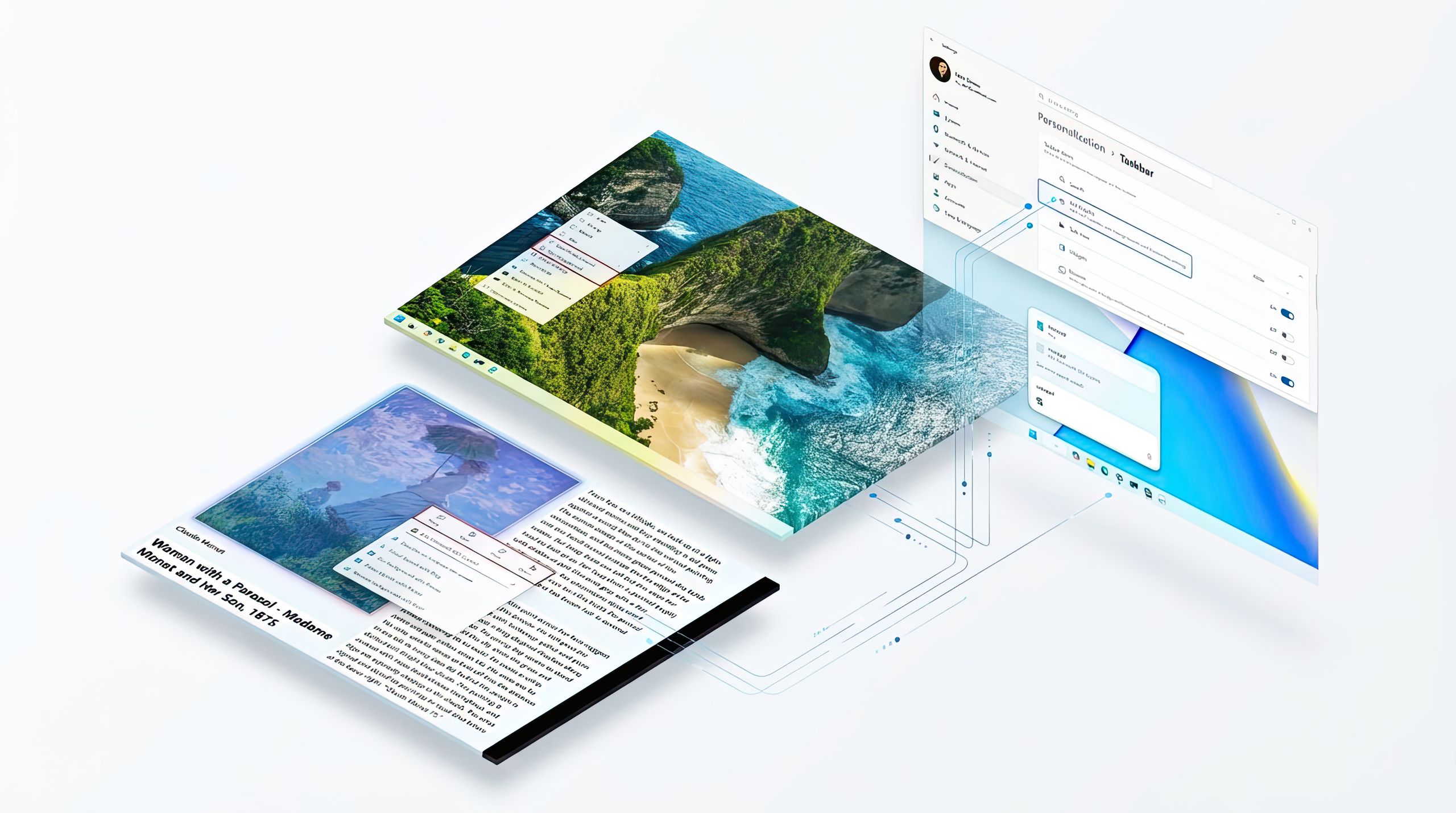
Microsoft shipped a December set of Windows 11 Insider preview builds (notably Dev/Beta 26220.7344 and 26220.7523 and Canary 28000.1340/28020.1362) that significantly deepen on-device AI integration — introducing Model Context Protocol (MCP), Agent Launchers, Ask Copilot on the taskbar, a Unified Update Orchestration Platform (UOP), expanded Copilot connectors (File Explorer, Settings), Windows MIDI Services, and multiple UI and settings enhancements. The releases further productize Microsoft's Copilot and agent vision, improving developer and user workflows and potentially boosting Copilot+ PC differentiation and future monetization, but they represent feature-cycle execution rather than an immediate, material financial catalyst.
Market structure: Microsoft deepening OS-native AI (MCP, Agent Launchers, Ask Copilot) strengthens MSFT’s platform moat and raises switching costs for enterprise and consumer AI clients; expect incremental monetization via Microsoft 365, OEM Copilot+ device skews, and higher attach rates for premium Windows SKUs over 6–18 months. Winners: MSFT, enterprise networking (CSCO), cloud infra players; losers: standalone desktop-search/utility apps, some niche AI app vendors, and low-margin PC OEMs if value migrates to software. Cross-asset: modest positive tech equity skew, negligible immediate bond/FX moves; potential upward pressure on GPU-related equities and input commodities over quarters if agentic AI increases compute demand.
Risk assessment: Tail risks include aggressive regulatory intervention on embedded AI (privacy/antitrust) or a high-profile data breach that forces feature rollbacks—each could erase 10–20% forward multiple in months. Near-term (days–weeks) impact is limited; short-term (1–3 months) depends on Copilot+ OEM announcements and holiday device sales; long-term (3–24 months) depends on monetization cadence and enterprise adoption. Hidden dependencies: OEM licensing economics, developer adoption of MCP/Agent Launchers, and cloud compute capacity. Catalysts: Microsoft FY reports, OEM Copilot+ shipment disclosures, Microsoft 365 agent rollouts and enterprise procurement cycles.
Trade implications: Primary direct play is MSFT exposure with a 6–12 month horizon to capture software monetization; CSCO is a secondary play for datacenter/networking demand growth. Use options to express asymmetric upside (buy-call spreads) and defined-cost insurance against regulatory drawdowns (long-dated puts sized to 1–2% portfolio). Rotate small weight from commodity/consumer tech hardware into software/cloud/infrastructure names over next 3–9 months; scale in on OEM shipment confirmations.
Contrarian angles: Consensus likely underestimates multi-year revenue leverage from OS-level AI connectors (file, settings, agent orchestration) because monetization is indirect and front-loaded in sentiment; conversely, short-term consumer upgrade impulse may be overhyped. History: platform shifts (e.g., Office→365) took 12–36 months to re-rate fundamentals—don’t expect instant margin jolt. Unintended consequences include increased enterprise security spend and potential OEM resistance to Copilot licensing terms that could slow adoption; position sizing should reflect these second-order risks.
AI-powered research, real-time alerts, and portfolio analytics for institutional investors.
Request DemoOverall Sentiment
mildly positive
Sentiment Score
0.30
Ticker Sentiment
