Anthropic inked a multi-gigawatt TPU compute deal with Google and Broadcom beginning in 2027 and says revenue run rate jumped to $30B from $9B at end-2025. Large-scale AI compute demand is directly competing with bitcoin miners for grid connections, land, cooling and cheap power, pushing miners (Core Scientific, Iris Energy, Hut 8, Riot, MARA, Genius) to pivot to AI hosting and prompting sales of >19,000 BTC last week. The shift favors contracted, predictable AI hosting revenue over volatile mining economics and constitutes a sector-level headwind for pure-play miners while benefiting data-center and power-infrastructure providers; bitcoin network hashrate, however, remains robust above 1 ZH/s.
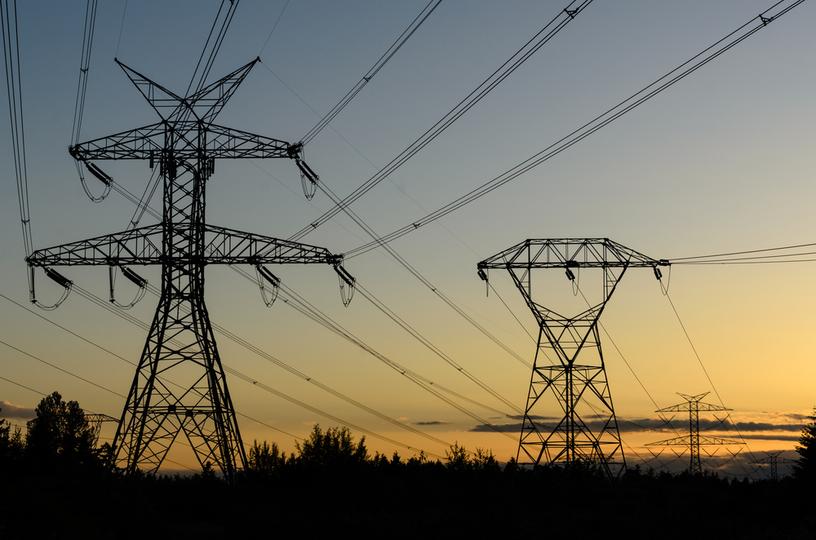
AI’s fast-growing compute footprint is not just a demand story for chips and cloud — it is an industrial reallocation of grid-connected real assets (substations, land with high-voltage taps, liquid cooling, and long-term PPAs). Owners of those assets capture outsized optionality: they can either run volatile, price-sensitive workloads (bitcoin mining) or sell multi-year, fixed-price capacity to AI customers. That arbitrage transforms valuation drivers from coin price and hashrate to contract duration, counterparty credit, and sunk interconnect scarcity.
Second-order winners extend beyond hyperscalers and GPU makers to specialists that bridge chip-to-facility (networking silicon, custom ASIC partners, and data-center enablers). Expect higher near-term margins for suppliers that sell integrated turnkey racks, power conversion gear, and liquid-cooling packages because AI customers prioritize time-to-service and density over lowest energy unit cost. Conversely, pure-play miners with short-term power contracts, high leverage, and concentrated regional exposure will see compressions in utilization or be forced into asset-light hosting pivots.
Catalysts and timing: permitting and interconnect queue bottlenecks create a 6–36 month runway where existing owners of fully permitted capacity can extract premium pricing. The market will reprice winners as visible contracted revenues replace commodity-exposed BTC yields — watch cloud bookings, disclosed multi-year hosting deals, and regional interconnection queue positions as proximate signals. Tail risks include a sharp retracement in AI investment (macro or regulation), a BTC rally that revalues mining yield vs hosting, or a systemic grid constraint that forces capacity rationing and politicized intervention.
AI-powered research, real-time alerts, and portfolio analytics for institutional investors.
Request DemoOverall Sentiment
mildly positive
Sentiment Score
0.20
Ticker Sentiment
