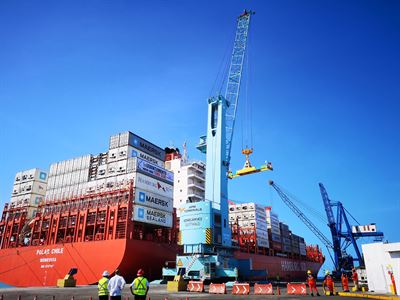
APM Terminals Yucatán has ordered two Konecranes Gottwald ESP.7 mobile harbor cranes, with the order booked in Q4 2025 and delivery scheduled to Puerto Progreso at the end of September 2026; each crane is customized for local infrastructure and equipped with an external power supply to enable fully electric operation. The purchase is part of a wider port modernization and decarbonization program (Konecranes' 'Ecolifting' roadmap) and represents incremental equipment revenue for Konecranes, which reported group sales of EUR 4.2bn in 2024, while strengthening logistics capacity for Yucatán's trade link to the U.S.
Market structure: This order is a clear, targeted win for Konecranes (KCR Helsinski) — it reinforces product-market fit in Latin American container terminals and strengthens aftermarket/service revenue that historically carries 2–4x product margin. The ticket size is small versus Konecranes’ EUR 4.2bn sales (likely single‑digit millions per crane) but the real value is credibility for electrified cranes, which can support a 5–10% ASP premium and higher lifecycle attach rates over 3–7 years. Local incumbent diesel-focused suppliers and lower-tech secondhand crane/reseller markets are the near-term losers as terminals prioritize low-emission capex and long-term service contracts.
Risk assessment: Immediate market impact is negligible (days), but key short-term risks (weeks–months) are delivery/supply‑chain delays and MXN volatility that can compress terminal throughput; material long-term risks (3–5 years) include slow grid upgrades or Mexican regulatory changes that delay electrification rollouts. Tail risks: a systemic slowdown in US–Mexico trade or a port concession reversal could wipe expected multi‑year service annuities; hidden dependency is local utility capacity and tariff structure — cheap grid power is required to monetize electrified fleets. Catalysts: pipeline/order announcements (next 6–12 months), Maersk/APM throughput reports, and Mexico port policy signals.
Trade implications: Direct play is KCR equity and LEAPS to capture a multi-year electrification narrative; expect reorder/service margin recognition around deliveries in H2–Q4 2026. Cross-asset: modest positive tilt to copper/electrification suppliers (copper miners, ABB/Siemens) and negligible sovereign bond impact; monitor copper +15% moves as validation of broader electrification demand. Pair trades: long specialized electrified OEMs vs short generic diesel-equipment peers should capture relative operating leverage.
Contrarian angle: The market underestimates annuity value — two cranes are a beachhead that can lead to multi-terminal frameworks across Mexico/Caribbean (1–3% upside to KCR service revenue per successful roll‑out). Reaction is underdone: price impact will be earned over subsequent orders and service contracts, not at booking; unintended consequence: rising electrification could increase port grid investments and local utility revenue, creating new corporate beneficiaries outside pure‑OEMs.
AI-powered research, real-time alerts, and portfolio analytics for institutional investors.
Request DemoOverall Sentiment
mildly positive
Sentiment Score
0.35
