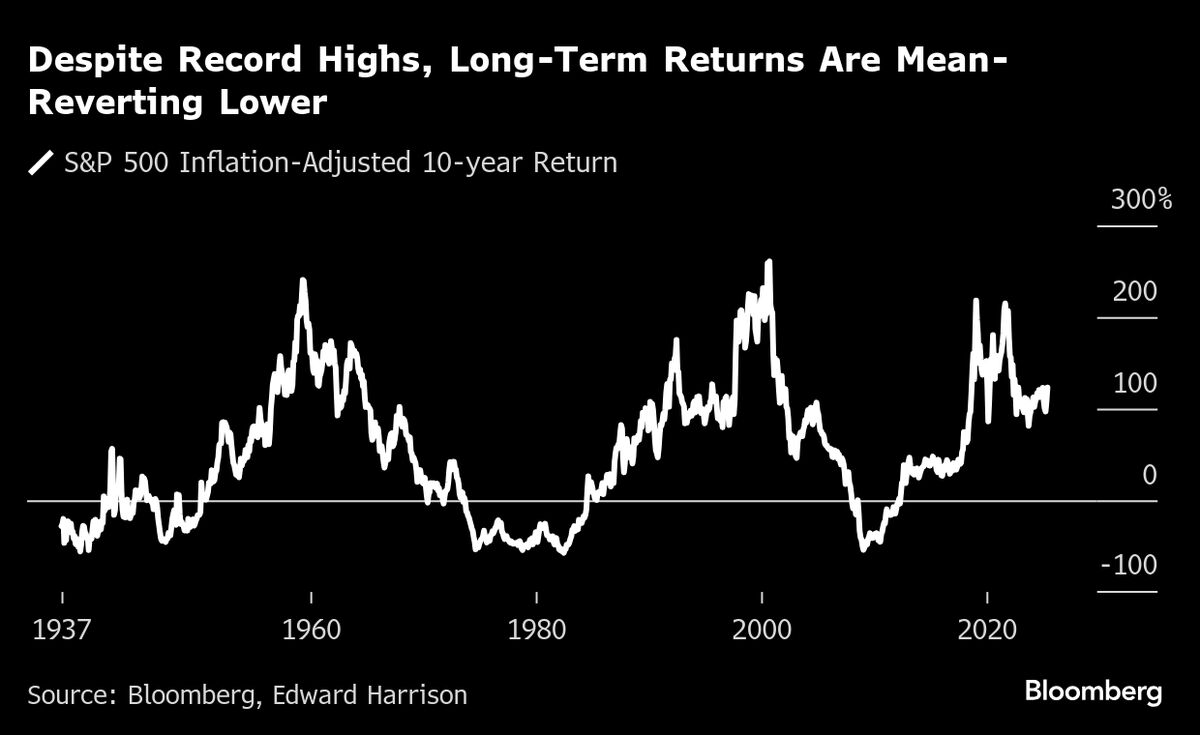
The US stock market faces a critical test this month, as the S&P 500 trades over 33% above its 10-year average for expected profits, with high-risk shares leading recent gains. This confluence of overvaluation, economic vulnerability, and declining long-term returns suggests the current rally's sustainability is highly questionable, making the coming period crucial for investors.
The US equity market is facing a critical test of its rally's sustainability, underpinned by a confluence of risk factors. Current valuations are notably stretched, with the S&P 500 trading more than a third above its 10-year average based on forward earnings expectations. This overvaluation is compounded by the nature of the recent market advance, which has been led by high-risk equities, often a signal of late-cycle speculative behavior rather than fundamental strength. The analysis points to a precarious combination of these high valuations, underlying economic vulnerability, and a structural downward trend in long-term returns. This convergence suggests that despite reaching new highs, the market's foundation is fragile, making the current period a critical inflection point for assessing future direction.
AI-powered research, real-time alerts, and portfolio analytics for institutional investors.
Request DemoOverall Sentiment
strongly negative
Sentiment Score
-0.70
