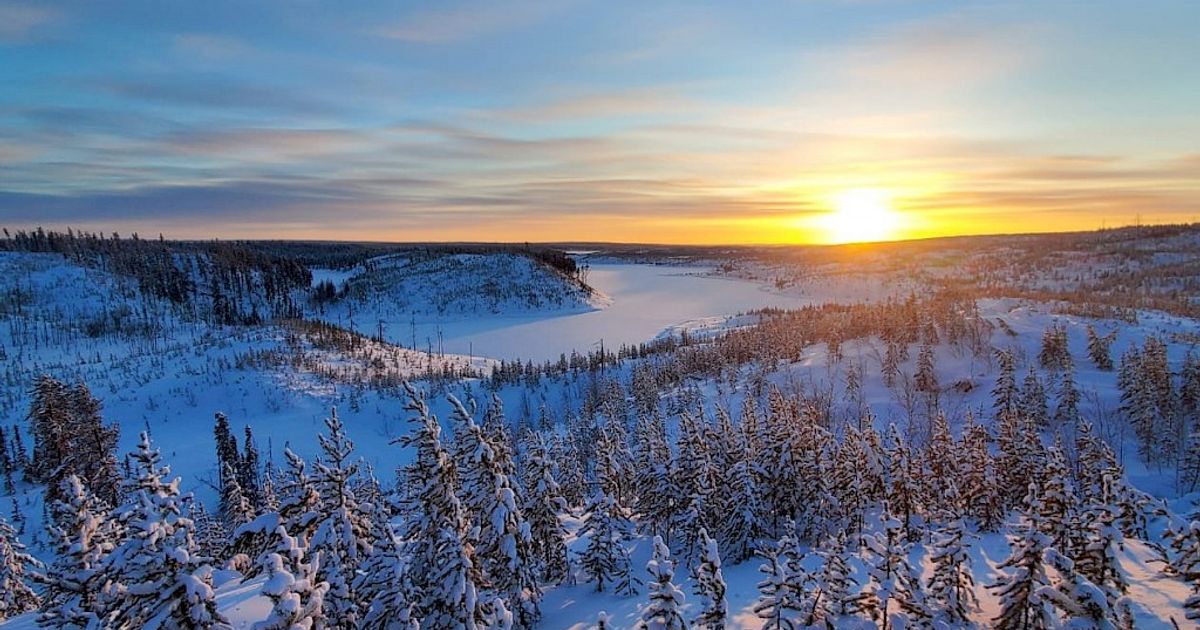
Standard Uranium secured an 18-month exploration permit for its Corvo project in Saskatchewan's eastern Athabasca Basin, enabling a high-resolution gravity survey covering up to 29 km of strike and a planned initial drill program of approximately 3,000 metres starting in January 2026. Summer 2025 surface assays returned a peak result of 8.1% U3O8 at the Manhattan showing—exceeding historical results—and management says the target has not been drilled in roughly 40 years, with modern geophysics and 3D modelling to be used to refine drill targets.
Market structure: A successful Corvo drill program (3,000m starting Jan 2026, within an 18‑month permit) primarily benefits STND/STTDF equity holders and service firms in Saskatchewan; an authentic high‑grade discovery (>1% U3O8 over multiple metres) would trigger a rerating but would be small versus global uranium supply (<<1% of annual mine supply), so pricing power for uranium producers is unlikely from Corvo alone. Competitive dynamics favor Athabasca-focused juniors with modern geophysics; companies lacking high‑resolution data or land position around Corvo are losers if STND’s gravity/3D models deliver repeatable targets. Cross‑asset: positive drill news could lift uranium miners (CCJ) and uranium ETFs (URA) and tighten credit spreads for small miners; negative results drive junior equity volatility, widen credit spreads, and lift safe havens (bonds, CAD weakness vs USD on risk-off).
Risk assessment: Tail risks include regulatory change in Canadian uranium policy, failed drill campaign, and acute dilution if STND needs financing (common for TSX‑V juniors); operational tail risk includes rig accidents or sampling contamination that delay assays by months. Time horizons: gravity results immediate (weeks), drill results short‑term (Q1 2026), discovery→development multiyear (3–7 years). Hidden dependencies: STND’s upside requires sufficient cash runway—if cash <12 months they must dilute; uranium spot moves (>±15% in 90 days) will dominate market moves regardless of Corvo data. Key catalysts: gravity inversion release (now–Dec 2025), first assays from Jan–Mar 2026 drill, and any JV or financing announcement.
Trade implications: For explorers, asymmetry favors small, concentrated long positions ahead of drills with defined stop rules. Use STND equity exposure sized to idiosyncratic risk and hedge commodity beta with liquid miners/ETFs. For sector exposure, use liquid option structures on CCJ or URA rather than illiquid STND options. Entry/exit: establish a starter long now, add on positive gravity inversion or first positive intercepts, trim on a 2–3x price increase or after confirmatory holes.
Contrarian angles: The market may underestimate modern geophysics—post‑processing can materially reduce dry holes, so success probability >historical averages (move from ~10% to ~20–30% for well‑funded Athabasca targets). Conversely, consensus may overvalue surface assays (8.1% peak at Manhattan showing)—surface oxidation and boulder spikes often mislead; similar past Athabasca junior rallies collapsed after initial drill failures. Unintended consequence: a failed early program could trigger a rapid sector de‑risking cycle, forcing juniors to raise capital at punitive prices and amplifying downside.
AI-powered research, real-time alerts, and portfolio analytics for institutional investors.
Request DemoOverall Sentiment
mildly positive
Sentiment Score
0.35
Ticker Sentiment
