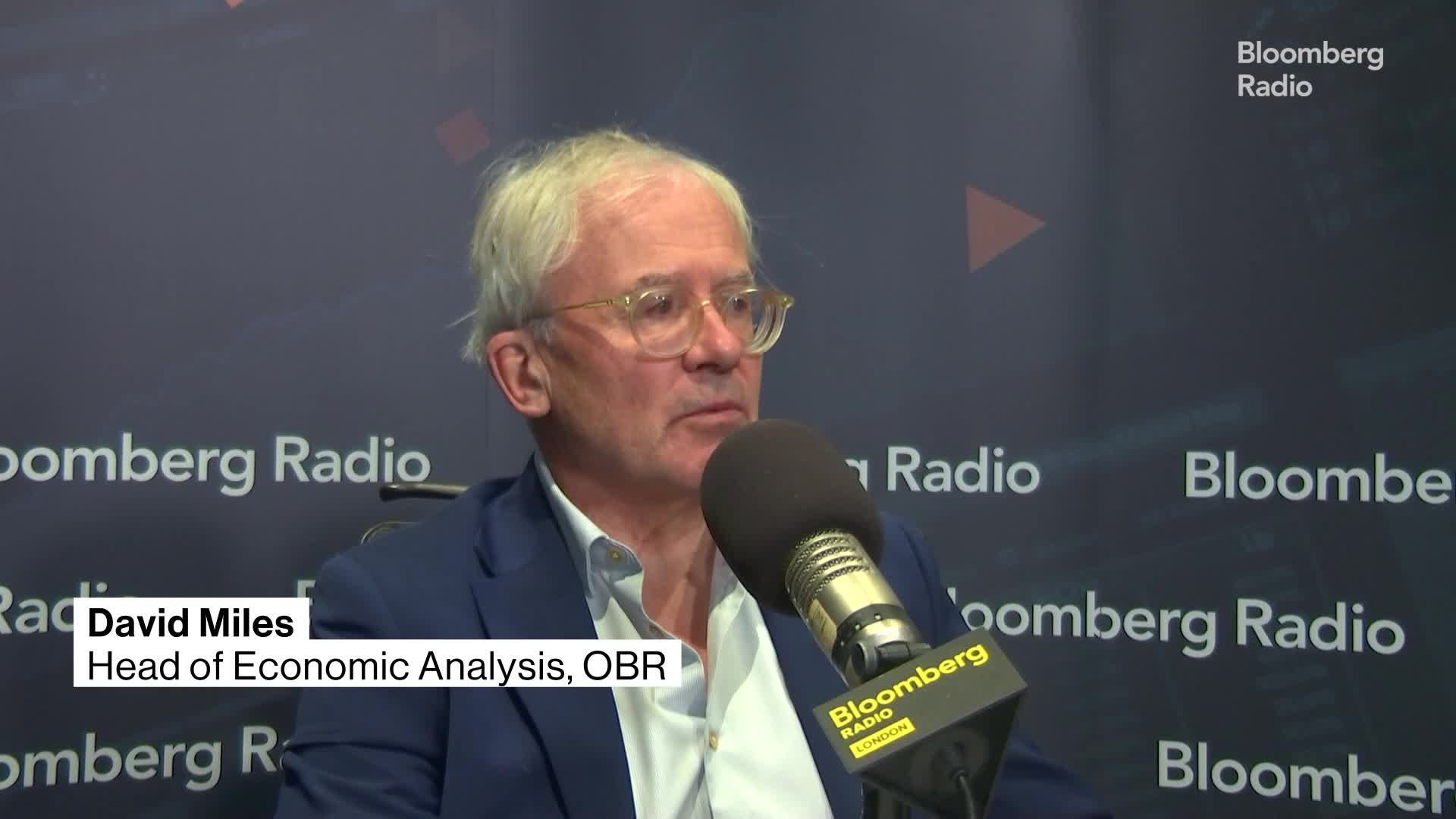
The discussion centers on a sizeable UK fiscal package that the OBR estimates will raise roughly £26 billion of extra revenue (largely backloaded into 2028–29), driven primarily by continued income tax threshold freezes and a slate of diverse measures including a novel EV mileage levy with uncertain take-up. Pre-measures headroom was wafer-thin at about £4 billion, the Chancellor sought to rebuild buffers (cited central buffers of ~£10bn rising to ~£20bn four years out) and gilt-yield/Bank Rate paths were fixed early in the forecast process. The OBR downgraded trend productivity and growth to around 1.5% annually, creating implementation and revenue risk for markets and leaving uncertainty around timing and effectiveness of the tax increases; separately, a high-profile cybersecurity incident is under investigation by Baroness Sarah Hawke and Professor Kieran Martin, reporting to the Treasury Select Committee and the Chancellor.
Market structure: The budget is a material fiscal tightening backloaded to 2028–29 (c. £26bn of measures, headroom ~£10–20bn), which favors exporters and large multi-nationals (sterling hedged revenues) and cybersecurity/defence contractors who could win increased government spending. Direct losers are UK domestic consumer discretionary, autos exposed to the EV mileage levy, and small-cap domestic services — expect margin pressure and earnings downgrades of 5–15% by FY2026 for highly domestic names. Higher long-term tax risk and productivity downgrade (OBR) reduce long-run growth, compressing cyclicals with weak pricing power.
Risk assessment: Tail risk includes a fiscal credibility shock if revenues underperform (low-probability, high-impact) that could spike 10y gilt yields +75–150bp in 1–3 months and widen UK credit spreads by 50–150bp. Operational risk from the cybersecurity breach raises short-term regulatory scrutiny and contracting costs for government IT suppliers; this is a near-term catalyst (days–weeks) with medium-term procurement reform (quarters). Hidden dependency: backloading means political risk — future governments may renege or accelerate measures, creating regime uncertainty for 2026–2029 planning.
Trade implications: Tactical: establish a 1–2% short position in 10y UK gilt futures (or via pay-fixed swaps) with stop if 10y yield falls >40bp from entry; horizon 1–6 months to hedge credibility risk. Buy 1–2% combined long position in marquee cybersecurity names (CRWD, PANW, FTNT) sized by liquidity, targeting 6–12 month upside from renewed government/contractor spending and rerated multiples. Reduce UK domestic consumer/retail exposure (trim EWU domestic-heavy holdings by 2–4%) and consider buying 6-month EWU 2% OTM puts (0.5% notional) as asymmetric insurance.
Contrarian angles: Consensus may over-penalize the near-term UK economy because tax hits are largely backloaded — near-term demand could outperform expectations through 2025–H1 2026; opportunistic buy on sterling and UK exporters if 10y gilts rally >30–50bp after initial sell-off. Mispricing risk: markets price symmetric uncertainty; if initial revenue collections exceed OBR by >£5bn in 12 months, gilts could rally fast — convert short gilt positions to short-dated with duration cap. Historical parallel: 1990s consolidations tightened then delivered lower yields; if political follow-through occurs, long-dated gilts may become a buy in 12–24 months.
AI-powered research, real-time alerts, and portfolio analytics for institutional investors.
Request DemoOverall Sentiment
mildly negative
Sentiment Score
-0.25
