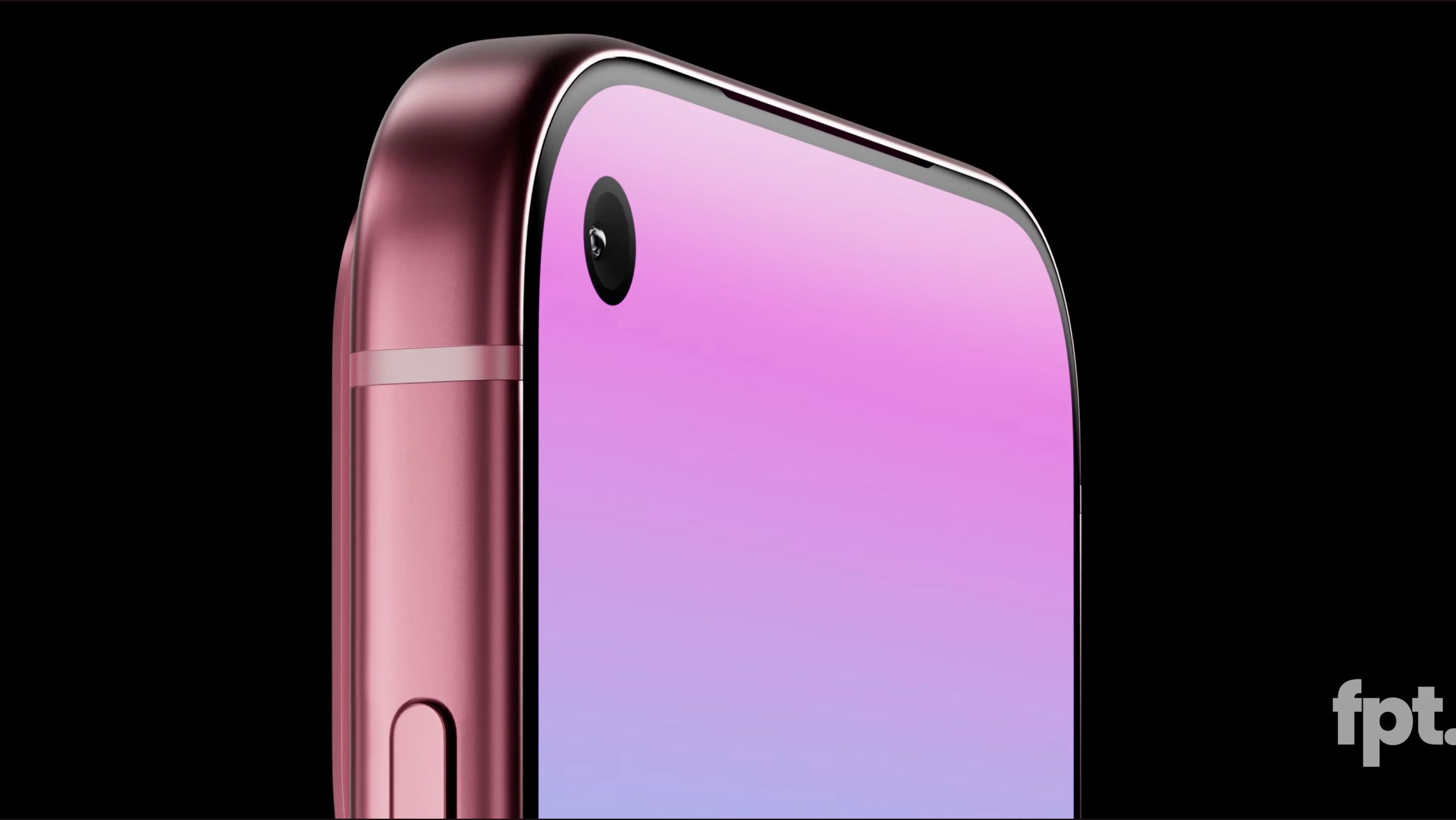
Reliable leaks and image analysis suggest the iPhone 18 Pro will retain a centered selfie camera with a small cutout Face ID sensor rather than a full under-display solution, likely supporting a constant Dynamic Island. Rumors also point to an A20 Pro chipset built on a 2nm node with an Apple C2 modem and possible variable-aperture cameras (potentially limited to Pro Max), with a tentative launch cadence that places the iPhone Pro series and an iPhone Fold in September 2026 and the base iPhone 18 delayed to 2027 alongside an iPhone Air 2.
Market structure: The clarification that the iPhone 18 Pro front layout is incremental (small cutout + centered selfie rather than full under-display sensors) favors incumbents supplying conventional camera modules, Face ID components and established OLED/cover-glass vendors rather than niche under-display innovators. Key beneficiaries over 12–36 months: TSMC (TSM) for 2nm wafer demand, ASML/LRCX for node tooling, and module suppliers with scale; losers are specialist under-display display startups whose addressable pickup shrinks. Demand signal: sustained premium upgrade cycle still tied to chipset (A20 2nm) and modem improvements, implying steady component demand rather than a one-off structural retooling spike.
Risk assessment: Tail risks include 2nm yield delays at TSMC or export/regulatory actions curtailing advanced tool flows (Asia–US tech decoupling) that could shave 20–40% off expected incremental gross margin improvement for Apple and suppliers over 2026–2027. Immediate (days) impact should be muted; short-term (weeks–months) volatility clusters around WWDC/September confirmations; long-term (12–36 months) risk centers on Apple’s C2 modem cannibalizing Qualcomm (QCOM) revenue and supplier share shifts. Hidden dependency: Apple’s vertical integration timetable (modem + SoC) is the key driver — supplier wins are conditional on Apple committing volumes.
Trade implications: Tactical long AAPL exposure into Sep 2026 makes sense but size should be modest (1–3% of NAV) given uncertainty; higher-conviction longs are TSM (TSM) and ASML (ASML) 12–36 month plays to capture 2nm capex, target 20–40% upside, stop-loss 18–22%. Consider a pair trade: long TSM/ASML, short QCOM (small size, 0.75–1.5% NAV) to hedge modem risk; horizon 12–36 months. Options: sell near-term Sep 2026 call spreads on AAPL to harvest IV ahead of product confirmations, and buy LEAP calls on ASML/TSM for leveraged exposure to 2nm adoption.
Contrarian angles: Consensus hype around “under‑display” as a big tech-shift is likely overdone — the market may be mispricing winners as if a display inflection occurred when it hasn’t, creating opportunities to short small-cap under-display suppliers and overweight established module/OLED suppliers. Historical parallel: incremental notch/ID changes (iPhone X to later models) created short-lived winners among niche suppliers but long-term gains went to scale players; if Apple’s A20/C2 cadence holds, the durable winners will be found in wafer fabs and tooling, not experimental display startups. Unintended consequence: an incremental front design preserves accessory and repair economics, capping aftermarket disruption for 2026 and moderating resale/pricing volatility for older models.
AI-powered research, real-time alerts, and portfolio analytics for institutional investors.
Request DemoOverall Sentiment
neutral
Sentiment Score
0.12
Ticker Sentiment
