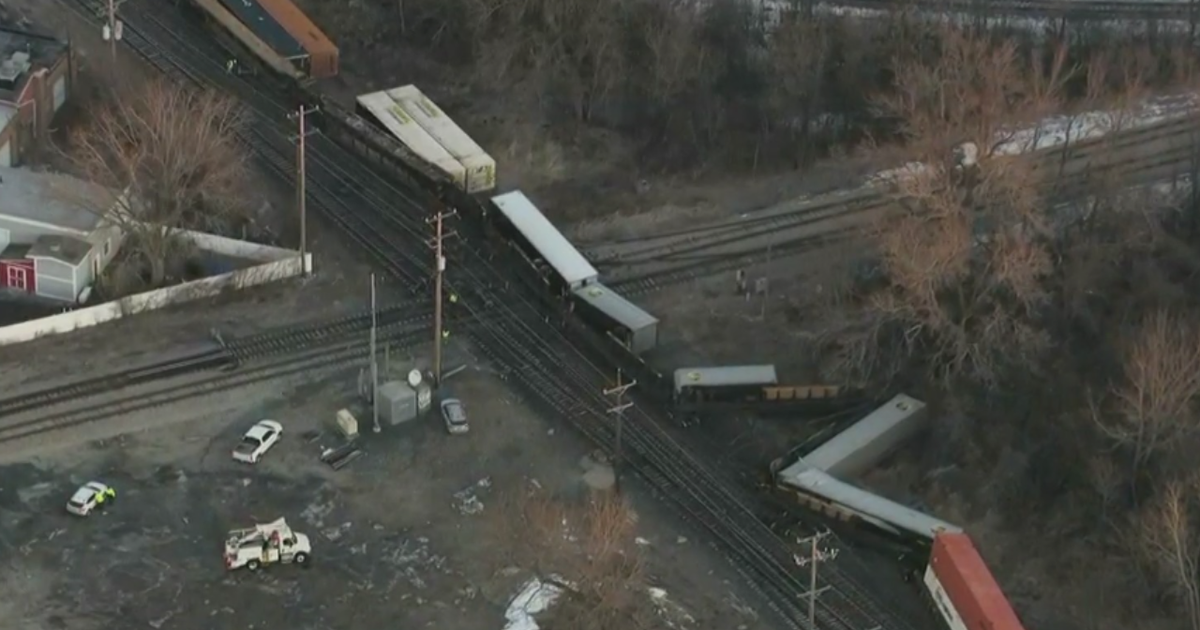
A freight train derailment near Ridgeland and Central Avenues in Chicago Ridge has suspended all Metra Southwest Service trains during the morning commute, with tracks closed for an indeterminate period; no injuries were reported. Local officials reported Hulcher Services on scene clearing detached parts, while alternate Metra routes (Rock Island and Heritage Corridor) and road closures around Ridgeland and Central Avenues were advised; the disruption is a localized transportation/infrastructure issue with minimal broader market implications.
Market structure: This is a localized shock with winners being spot trucking brokers/carriers and ride‑hail operators that can pick up diverted commuter and freight demand; expect local truckload spot rates to rise an estimated 5–15% for 1–7 days around Chicago Ridge while Class I rail revenue impact should be <<0.1% nationally but material for regional origination windows. Competitive dynamics briefly favor asset‑light brokers (CHRW) and expedited parcel/truck specialists (ODFL, ODFL’s premium pricing power) versus schedule‑dependent commuter rail (Metra) and any freight lanes that rely on the blocked corridor.
Risk assessment: Tail risks include hazardous cargo release or a multi‑train incident prompting NTSB/FRA fines and 30–90 day operational curtailments that could lift trucking demand for months and trigger local regulatory constraints; immediate risk horizon is hours–days, short term weeks, long term months if investigations force reroutes. Hidden dependencies: Chicago is an intermodal choke point — repeated incidents amplify truckload rejection rates and overland congestion, increasing operating costs for consumer goods distribution; catalysts are official NTSB/FRA updates and weather events that could escalate or clear disruption.
Trade implications: Tactical plays favor 1–3 week exposures to trucking/logistics and ride‑hail; implement small, risk‑limited positions (1–3% portfolio) in ODFL and CHRW and short‑dated call spreads on UBER/LYFT to capture commuter substitution. Use pair trades (long ODFL, short broader transport ETF IYT or regional rail exposure) to isolate upside from modal substitution; enter within 24–72 hours, target 8–20% realized upside, stop losses at 5–8%.
Contrarian angles: The market will likely underprice the value of repeated Chicago bottlenecks — if ≥2 similar derailments occur within 90 days, structural modal shift to trucking could sustain a 1–3% regional EBITDA uplift for carriers for quarters. Don’t oversize: a single derailment rarely moves national fundamentals; cap tactical positions at low single‑digit portfolio weights and prepare to rotate into infrastructure/contractors (J, ACM) on regulatory or funding signals over 3–12 months.
AI-powered research, real-time alerts, and portfolio analytics for institutional investors.
Request DemoOverall Sentiment
neutral
Sentiment Score
-0.10
