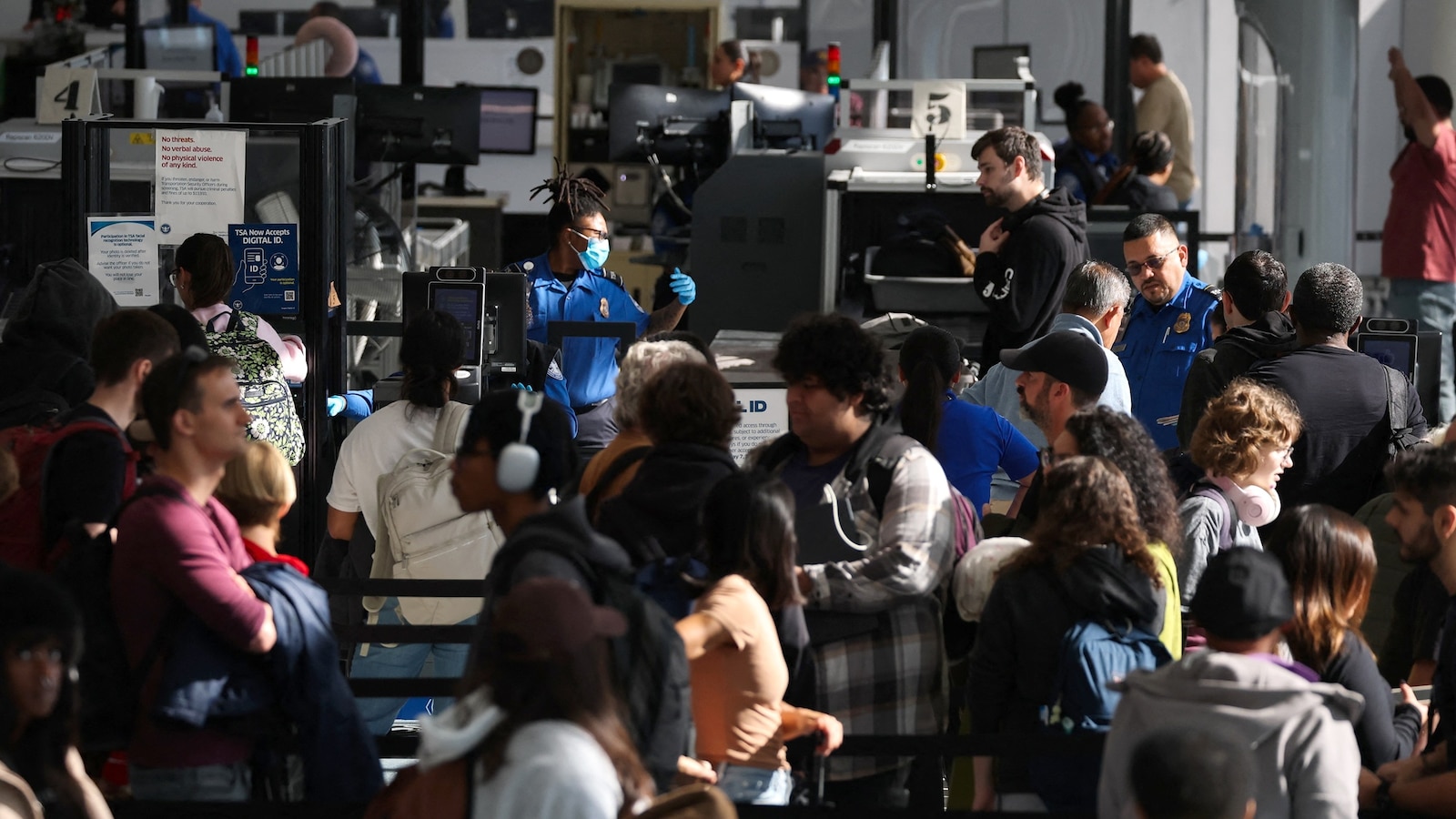
Holiday travel is set to be the busiest on record with more than 122 million people forecast to travel between Dec. 20 and Jan. 1, a 2.2% increase from last year's 119.7 million, according to AAA. Domestic air travel is expected to reach about 8.03 million passengers (up 2.3%) with Florida, Southern California and Hawaii top destinations, while roughly 109.5 million people are forecast to travel by car (up 2%). Carriers anticipate peak operational days — United expects Dec. 27 to be its busiest and American plans four departures per minute across Dec. 18–Jan. 5 — implying stronger near-term demand for airlines, airports, rental cars and related services.
Market structure: The +2.3% YoY rise in flyers (~8.03M) and +2% road travel concentrates demand on peak days (Dec 19, Dec 27, Jan 4), creating short windows of pricing power for carriers, airports, parking, car rental and leisure destinations (Florida/SoCal/Hawaii). Winners: network carriers with scale and robust ancillaries (ticket+bag+change fees) and refiners if jet-fuel demand rises; losers: undercapitalized regionals, overstretched ground handlers, and high-leverage carriers that suffer disruption costs. Higher load factors for 2–3 weeks imply better unit revenue but limited duration for persistent margin expansion.
Risk assessment: Primary tail risks are severe weather/operational meltdown (IRROPS) and a fuel price shock; jet fuel represents ~15–25% of airline opex, so a sustained +10% fuel move over 30 days can wipe out much incremental holiday profit. Immediate (days): operational risk and cancellation spikes; short-term (weeks): ticket yield realization and ancillary capture; long-term (quarters): labor costs, capacity reallocation and fare rebasing. Hidden dependency: airport/ground staffing and TSA throughput create non-linear failure modes—if cancellation rate >1% on a peak day, revenue and sentiment reverses fast.
Trade implications: Favor scaled, risk-limited exposure to UAL (ticker UAL) vs AAL (AAL) — UAL has better sentiment and international flows. Tactically buy limited-risk call spreads on UAL into Feb 2026 and size small refiners/energy longs (VLO or XLE) as a hedge against rising jet-fuel-driven margins. Use short-duration puts as insurance around Dec 19–27/Jan 4 peak dates; if cancellations exceed 1% or jet fuel rises >8% in 30 days, reduce exposure immediately.
Contrarian angles: The market is focused on volume but underestimates margin sensitivity to fuel and IRROPS; consensus may be overoptimistic on sticky fare gains post-holiday. Historical parallel: holiday spikes in 2018–19 produced temporary revenue bumps but margins reverted once capacity normalized; expect mean reversion by end-Q1 2026 unless structural capacity discipline emerges. Actionable contrarian: buy upside selectively but hedge operational tail risk with calibrated puts or skewed option structures.
AI-powered research, real-time alerts, and portfolio analytics for institutional investors.
Request DemoOverall Sentiment
mildly positive
Sentiment Score
0.25
Ticker Sentiment
