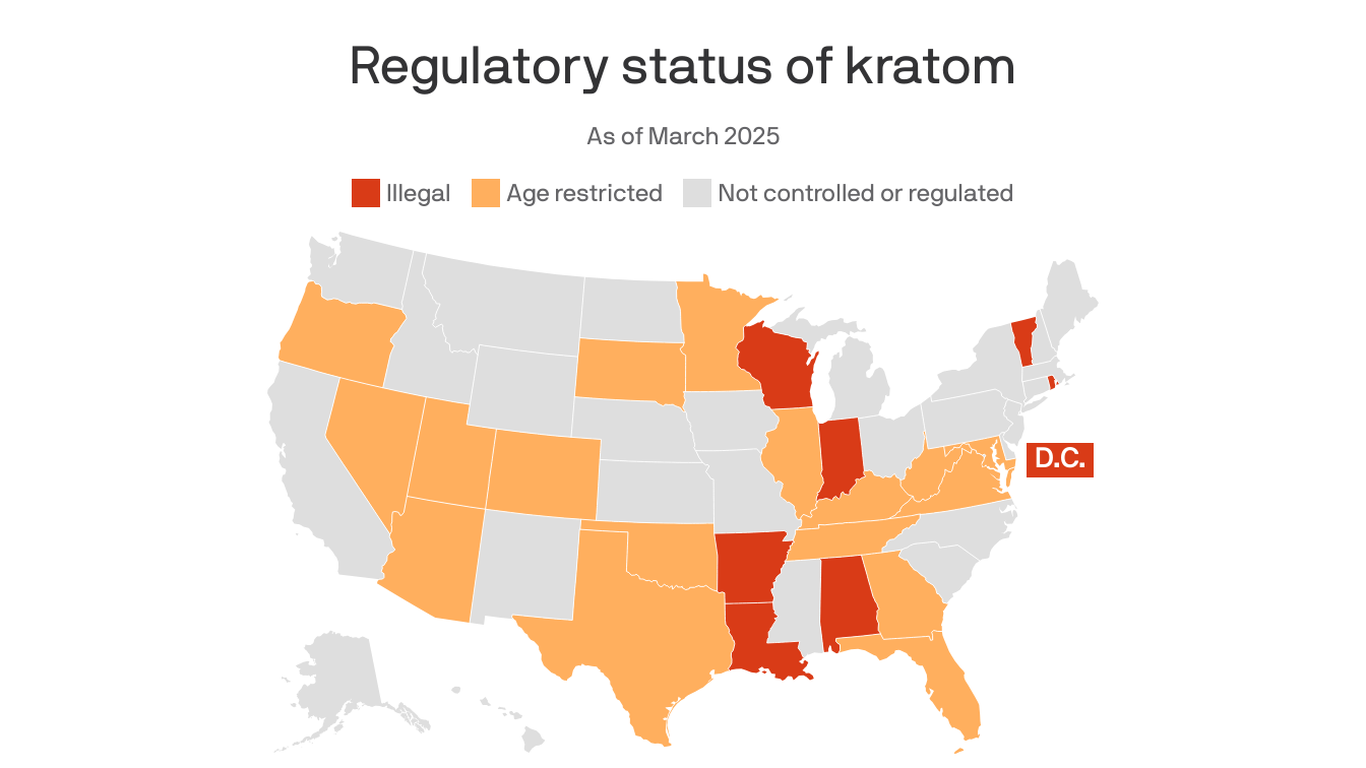
The FDA is cracking down on 7-hydroxymitragynine (7-OH), a potent opioid-like compound found in kratom supplements, due to its addictive properties and high potency, which far exceeds natural kratom. With usage estimates reaching over 20 million Americans, this compound, dubbed 'legal morphine,' is available without prescription, raising significant public health and regulatory concerns. This action targets a market where manufacturers have aggressively pursued highly potent extracts, signaling heightened regulatory risk for a segment with fragmented state-level oversight and potential for broader federal intervention.
The U.S. Food and Drug Administration (FDA) is initiating a crackdown on 7-hydroxymitragynine (7-OH), a potent compound in kratom supplements, signaling a significant regulatory escalation for this rapidly growing market. The action is driven by the compound's opioid-like mechanism and high potential for addiction, with one expert describing it as a "pure opioid" that is "more potent than morphine in treating pain in animals." While proponents cite benefits for pain and mood, the market has seen an aggressive push by manufacturers toward highly concentrated extracts, transforming a product comparable to "light beer" (raw kratom leaf) into one akin to "Everclear" (7-OH extract). This unregulated race for potency has occurred within a market estimated to include over 20 million Americans, operating under a fragmented and inconsistent state-level regulatory framework. The failure of legislative efforts, such as the Illinois Kratom Consumer Protection Act, has created a vacuum that federal agencies appear poised to fill, reviving concerns from a 2018 DEA proposal to ban kratom and suggesting an impending disruption for manufacturers and distributors of these high-potency products.
AI-powered research, real-time alerts, and portfolio analytics for institutional investors.
Request DemoOverall Sentiment
strongly negative
Sentiment Score
-0.70
