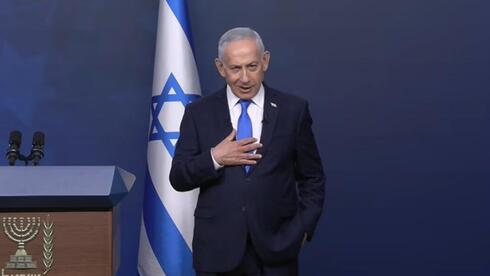
Prime Minister Netanyahu declared that Iran 'no longer poses an existential threat' after what he called '10 blows' delivered across five weeks of fighting and claimed Iran wasted nearly $1 trillion invested in its military programs. He cited continued strikes (including inside Iran), intensified US-Israel military coordination, establishment of buffer zones in Gaza, southern Lebanon and near Mount Hermon, and said operations will continue despite casualties, including four soldiers killed the prior day. For portfolios, the note signals sustained regional military activity and heightened geopolitical risk with potential market-wide implications, while Israeli officials portray societal and economic resilience amid ongoing hostilities.
Israeli leadership framing the campaign as a decisive strategic reversal is creating a visible pathway for accelerated regional defense procurement and closer US-Israel operational integration. Expect material orderflow for missile defense, loitering munitions and networked air defenses to accelerate over the next 6–18 months, increasing revenue visibility for firms with existing production capacity and export approvals. This creates a near-term supply-chain stress point: precision-guided weapon subcomponents (seekers, warheads, datalinks) are the choke points — companies owning those IPs will see outsized margin expansion and backlog re-rating.
Energy and trade channels are in a fragile equilibrium; tactical degradation of proxy capabilities should relieve Red Sea/Suez insurance premia and spot freight rates, but destabilization of regime-level command creates asymmetric tail risks to oil infrastructure. Model scenarios show a 3–8% downside to freight/insurance costs if proxy strikes abate within 30–90 days, but a 10–20%+ oil spike is possible within weeks if strategic assets are targeted or sanctions trigger supply friction. That convexity favors short-duration volatility protection and selective exposure to energy producers with integrated downstream cash flow.
Domestically the messaging buys political capital but increases the odds of episodic policy volatility (emergency legislation, labor mobilization, export controls) over the next 3–12 months — risks that are poorly reflected in Israeli equities and currency. Investors are underpricing the probability of intermittent market access frictions (payments, shipping, worker strikes) which would compress multiples on local tech and cyclical names. Treat near-term rallies in regional risk-sensitive assets as tactical opportunities to trim and reallocate into long-duration defense/commodity optionality instead of structural equity exposure.
Contrarian read: the market’s implicit assumption that military pressure equals permanent neutralization is overconfident. Decentralized asymmetric threats reconstitute faster than centralized programs; regime destabilization can produce longer, messier insurgent risk rather than clean strategic outcomes. Position on event-timing, not on a binary outcome — buy insurance and selectively long extractable value (defense suppliers, vertically integrated energy) while keeping conviction sizes modest until orderbooks and export contracts are visible.
AI-powered research, real-time alerts, and portfolio analytics for institutional investors.
Request DemoOverall Sentiment
mildly positive
Sentiment Score
0.20
