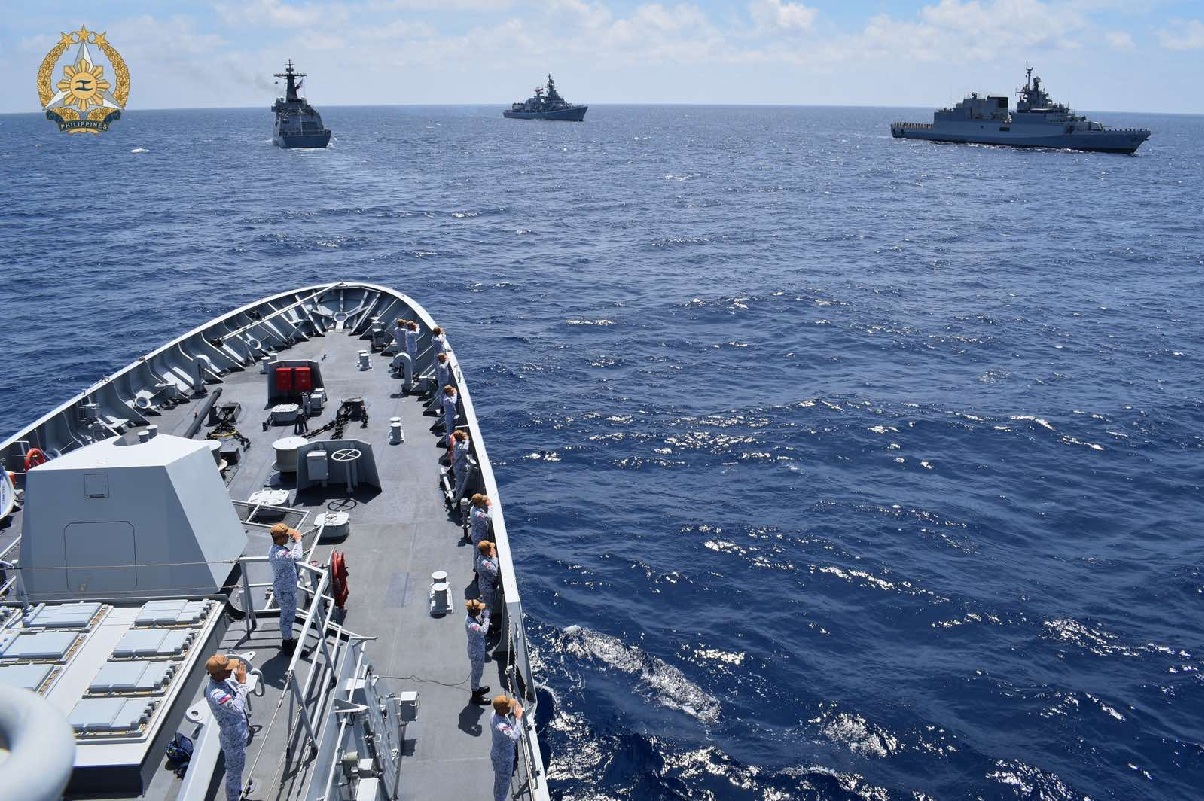
India and the Philippines conducted their first-ever joint naval exercise in the South China Sea, eliciting a protest from China, which claims sovereignty over the disputed waterway. This drill signals the Philippines' enhanced pushback against China's maritime expansion and India's deepening strategic engagement in the Asia-Pacific. The exercise coincided with Philippine President Marcos Jr.'s visit to India, where the nations upgraded their bilateral relations to a strategic partnership, strengthening defense and trade cooperation amidst regional geopolitical tensions.
The inaugural joint naval exercise between India and the Philippines within the latter's Exclusive Economic Zone marks a significant development in the Indo-Pacific's security architecture. This maneuver is not merely symbolic; it is reinforced by the elevation of bilateral ties to a 'strategic partnership' during President Marcos Jr.'s visit to New Delhi and tangible defense commerce, evidenced by the Philippines' acquisition of Indian BrahMos missiles as part of its $35 billion military modernization program. The event underscores India's expanding strategic reach into the region and a more assertive Philippine foreign policy aimed at countering China's expansive maritime claims. While a Chinese analyst labeled the drill 'gesture politics,' the combination of military cooperation and high-level diplomatic alignment suggests a substantive, long-term shift. For global markets, this escalates geopolitical complexity in a waterway crucial for an estimated one-third of global maritime trade, heightening the risk profile for supply chains dependent on regional stability.
AI-powered research, real-time alerts, and portfolio analytics for institutional investors.
Request DemoOverall Sentiment
mildly positive
Sentiment Score
0.25
