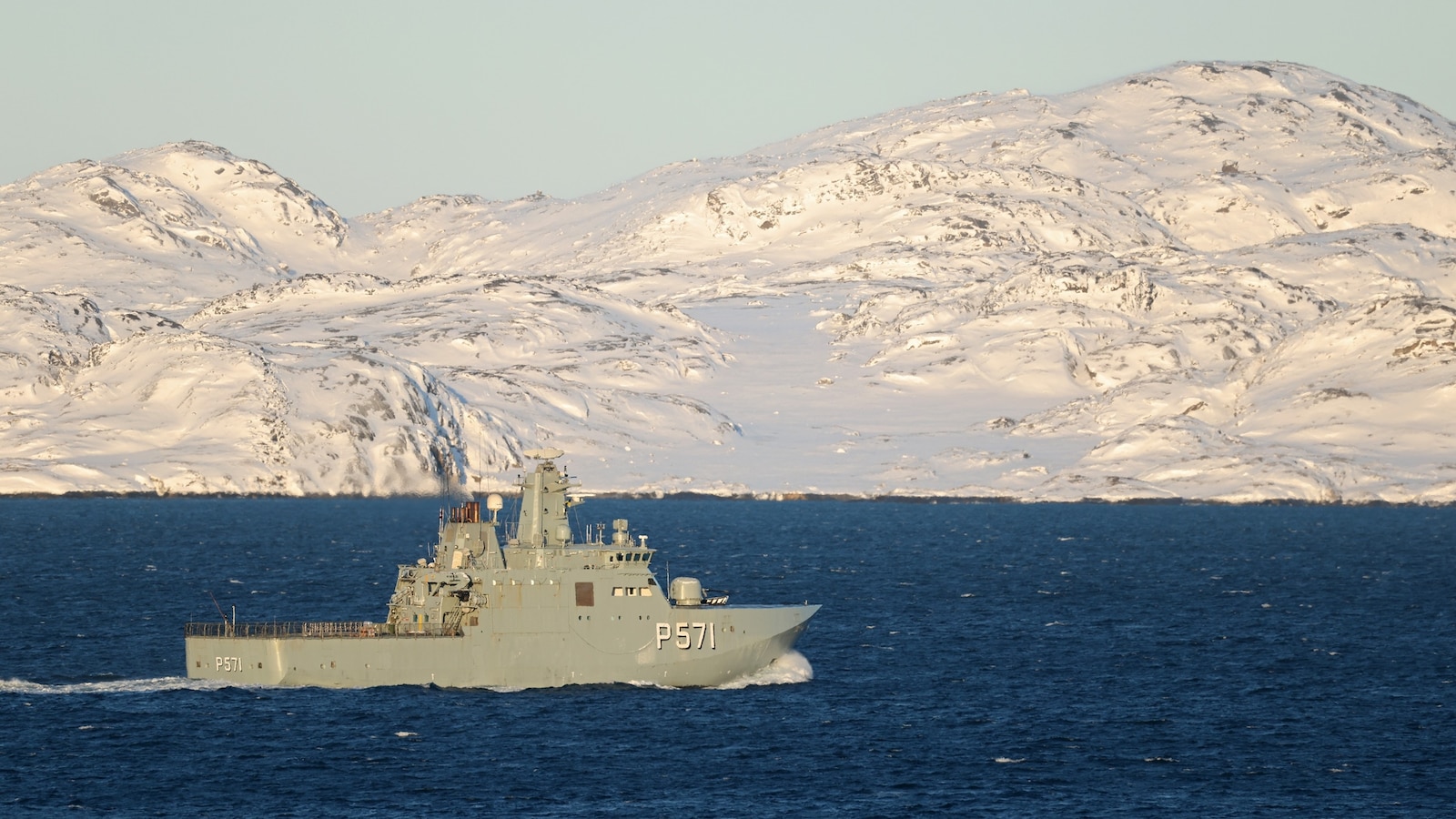
President Trump has repeatedly pushed to acquire Greenland, citing U.S. security concerns and the island's mineral resources, and claimed a tentative 'framework' after Davos talks despite Copenhagen and Nuuk insisting sovereignty is non-negotiable. Earlier threats to impose tariffs on European allies and recent NATO troop deployments to Greenland underscore transatlantic tension and potential trade risks, while climate-driven Arctic access and strategic competition with China and Russia elevate the territory's geopolitical and resource significance. European leaders, per former Danish FM Jeppe Kofod, are debating coordinated military and economic responses to deter U.S. unilateralism, a dynamic that raises political and policy uncertainty but is unlikely to trigger immediate market-moving financial shocks.
Market Structure: A sustained U.S.-Greenland pressure campaign materially favors defense contractors, Arctic-capable energy/minerals explorers, and strategic-metals miners while weighing on European export-sensitive sectors if tariff brinksmanship resumes. Expect re-rating of U.S. defense names (+10–30% potential revaluation over 6–18 months if FY appropriations rise) and higher forward curves for rare earths/nickel/uranium as Arctic access prospects increase. FX winners likely: USD safe-haven bid vs. DKK/NOK on unilateral U.S. action risk; bond impact is mixed — U.S. yields could drift higher on defense spending, while Nordic sovereign spreads may widen on geopolitical risk.
Risk Assessment: Tail risks include sudden tariff imposition on EU goods (1–5% daily downside shock to Euro-area equities), unilateral U.S. moves raising sanctions/military tension (low probability, high impact), and Greenland resource nationalization delaying projects by >5 years. Short-term (days–months) volatility spikes around political events; medium/long-term (1–5 years) fundamental upside for strategic minerals but execution risk (permits, infrastructure) is high. Hidden dependencies: Greenlandic self-rule and EU unity — a coordinated European retaliation or NATO bargaining could blunt U.S. leverage quickly.
Trade Implications: Direct plays: overweight U.S. aerospace & defense (tickers: LMT, NOC, RTX, or ETF ITA) and strategic-metals miners/ETFs (REMX, URA) with 6–36 month horizons; hedge by shorting Europe cyclicals (VGK) or buying puts if tariff rhetoric escalates. Options: use 3–9 month bull call spreads on LMT/NOC sized 0.5–2% NAV to limit downside; buy 2–6 month put spreads on VGK as cheap tail insurance. Rotate out of high-duration European exporters and into industrials/defense as data confirms increased NATO/US Arctic spending.
Contrarian Angles: Consensus treats this as political theater; underappreciated is multi-year capex reallocation toward Arctic infrastructure and mining — wins are slow but durable (3–7 year payoff). Reaction is underdone for miners: market prices assume multi-year development delays; a single U.S.-EU joint investment program would re-rate REMX/URA constituents quickly. Conversely, a united European “power play” could cap U.S. defense re-rating; position sizing should assume binary outcomes and cap losses at 8–12% per position.
AI-powered research, real-time alerts, and portfolio analytics for institutional investors.
Request DemoOverall Sentiment
mildly negative
Sentiment Score
-0.25
