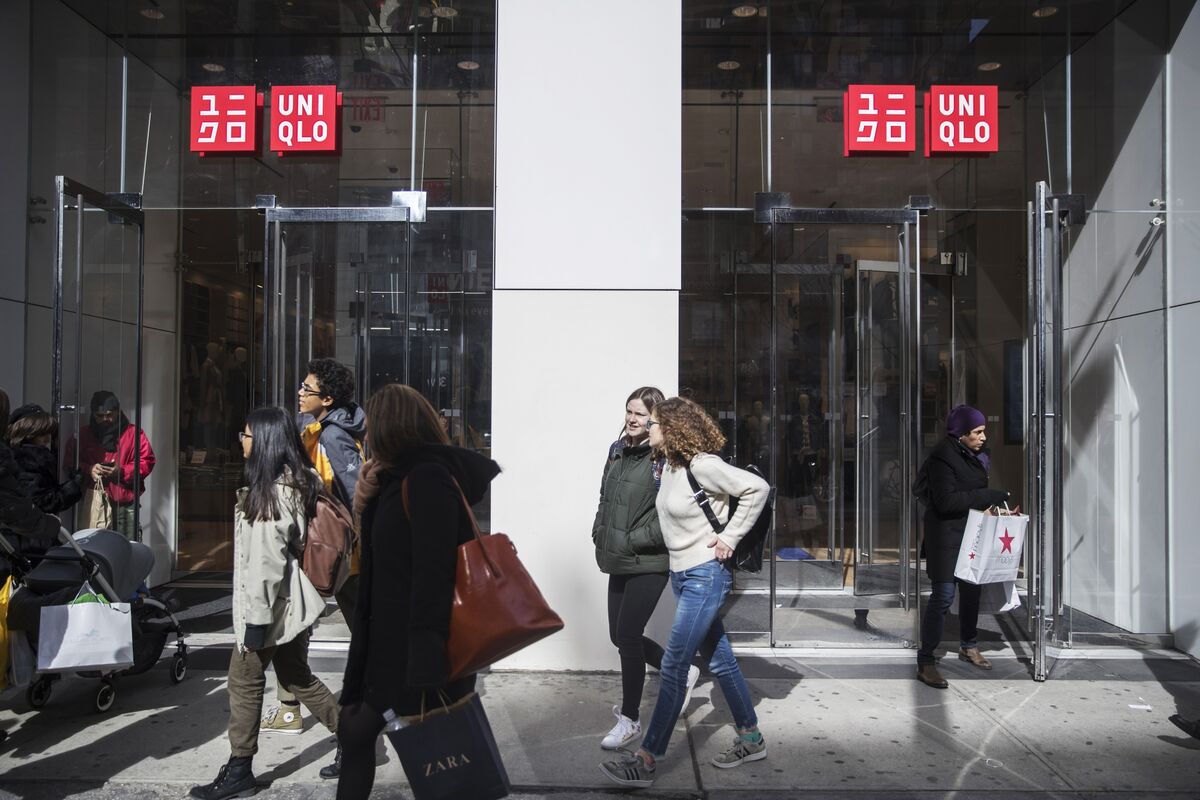
Event: Uniqlo founder Tadashi Yanai outlined an ambitious plan on the Big Take Asia podcast to expand into Middle America; Uniqlo is part of the world's third-largest clothing retailer by sales. The piece highlights past difficulty winning U.S. customers — the announcement signals potential upside for Fast Retailing's U.S. growth if execution succeeds, but near-term impact is likely modest given execution risk and a history of limited U.S. traction.
Uniqlo’s disciplined SPA model (low SKU depth, high turns, centralized buying) creates an asymmetric cost advantage that will force mid‑market US apparel players to choose between margin squeeze or unit volume loss. Expect 150–300 bps of gross margin pressure across weakly differentiated incumbents (Gap/Old Navy peer set) over the next 12–24 months as promotional intensity and inventory markdowns rise to defend share.
Supply‑chain shifts are the key second‑order lever. Faster replenishment and concentrated Asian factory relationships (Vietnam/Bangladesh hubs) shorten lead times and lower safety stock; that advantage magnifies in seasonal, value‑segment apparel where fit and basic SKUs dominate. Beneficiaries will be asset‑light 3PLs and select Asian CMT partners, while US domestic re‑shorers and high‑cost suppliers see pricing pressure and loss of order flow within 6–18 months.
Commercial real estate and traffic patterns will subtly re‑rate: strip centers and suburban mall nodes that can host compact, high‑turn Uniqlo stores should see incremental footfall and higher rents per linear foot; conversely, dollar‑SKU apparel doors with deep discounting will show accelerating sales cannibalization. FX (JPY) and freight cycles are short‑horizon catalysts — a weaker yen materially increases Fast Retailing’s US margin cushion in the next 2–4 quarters.
Key tail risks: mis‑localization of fit/marketing that prevents repeat purchases, political/tariff shocks, or a rapid consumer discretionary pullback that amplifies markdowns. Watch roll‑out cadence over the next 6–12 months; if initial stores fail to clear inventory at planned turns, the bear case accelerates and promotional spiral becomes self‑fulfilling.
AI-powered research, real-time alerts, and portfolio analytics for institutional investors.
Request DemoOverall Sentiment
mildly positive
Sentiment Score
0.12
