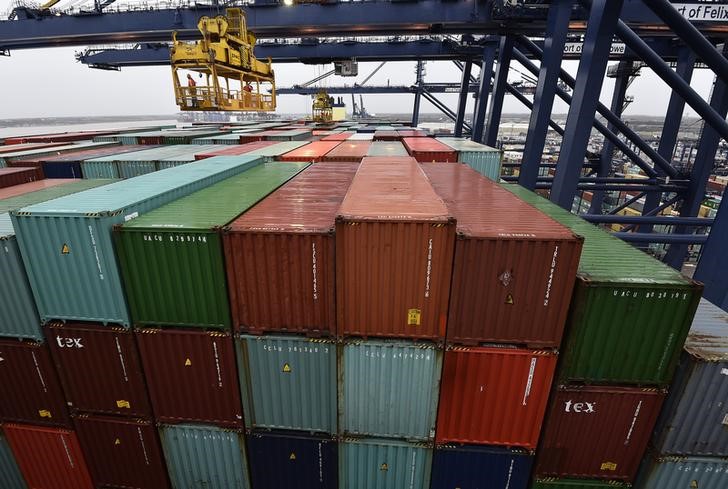
China posted a wider‑than‑expected trade surplus of $111.68 billion in November versus consensus $100.20 billion and October's $90.07 billion, as exports rebounded 5.9% year‑on‑year (versus a 3.8% forecast and October’s -1.1%) while imports rose a modest 1.9% (below the 3.0% forecast). The export recovery—supported by improving global trade conditions and a recent U.S. tariff truce—provides near‑term support to growth, but weak import growth underscores ongoing softness in domestic consumption and investment, leaving room for cautious positioning by investors.
Market structure: The sharp November export rebound (exports +5.9% YoY, surplus $111.7B) mechanically benefits export‑oriented industrials, EMS, ports/shipping and server/AI hardware suppliers that service global demand. Weak imports (+1.9% YoY) signal still‑soft domestic consumption, pressuring retail, domestic internet ad revenues and upstream commodity demand; expect near‑term pricing power concentrated in export supply chains and logistics, not consumer staples.
Risk assessment: Tail risks include a renewed US‑China tariff escalation (single-event shock >10% earnings hit for exposed exporters), RMB volatility (>3% move in 30 days) and sudden inventory destocking if global demand cools; these risks crystallize over weeks to months. Immediate risks center on Fed moves and rate volatility (days), medium term (3–6 months) on trade negotiations and PMI prints, long term (6–24 months) on structural domestic demand weakness prompting fiscal stimulus or policy easing.
Trade implications: Direct plays favor high‑beta export/AI hardware names (servers, chips, logistics) while underweighting domestic consumer/internet exposure. Cross‑asset: expect mild RMB appreciation pressure (supporting CNH forwards), commodity demand softness weighing on bulk commodities and EM commodity FX, and reduced safe‑haven Treasury flows if China growth steadies—flattening bias in curve if cyclical recovery persists.
Contrarian angles: Consensus may over‑reward exporters assuming durable external demand; the rebound could be front‑loaded (order restocking) and reverse if US/Europe slow. Conversely, persistent import weakness raises probability of targeted Chinese fiscal stimulus within 3–6 months—benefiting domestic capex and infrastructure beneficiaries more than consumer discretionary in the near term.
AI-powered research, real-time alerts, and portfolio analytics for institutional investors.
Request DemoOverall Sentiment
mildly positive
Sentiment Score
0.28
Ticker Sentiment
