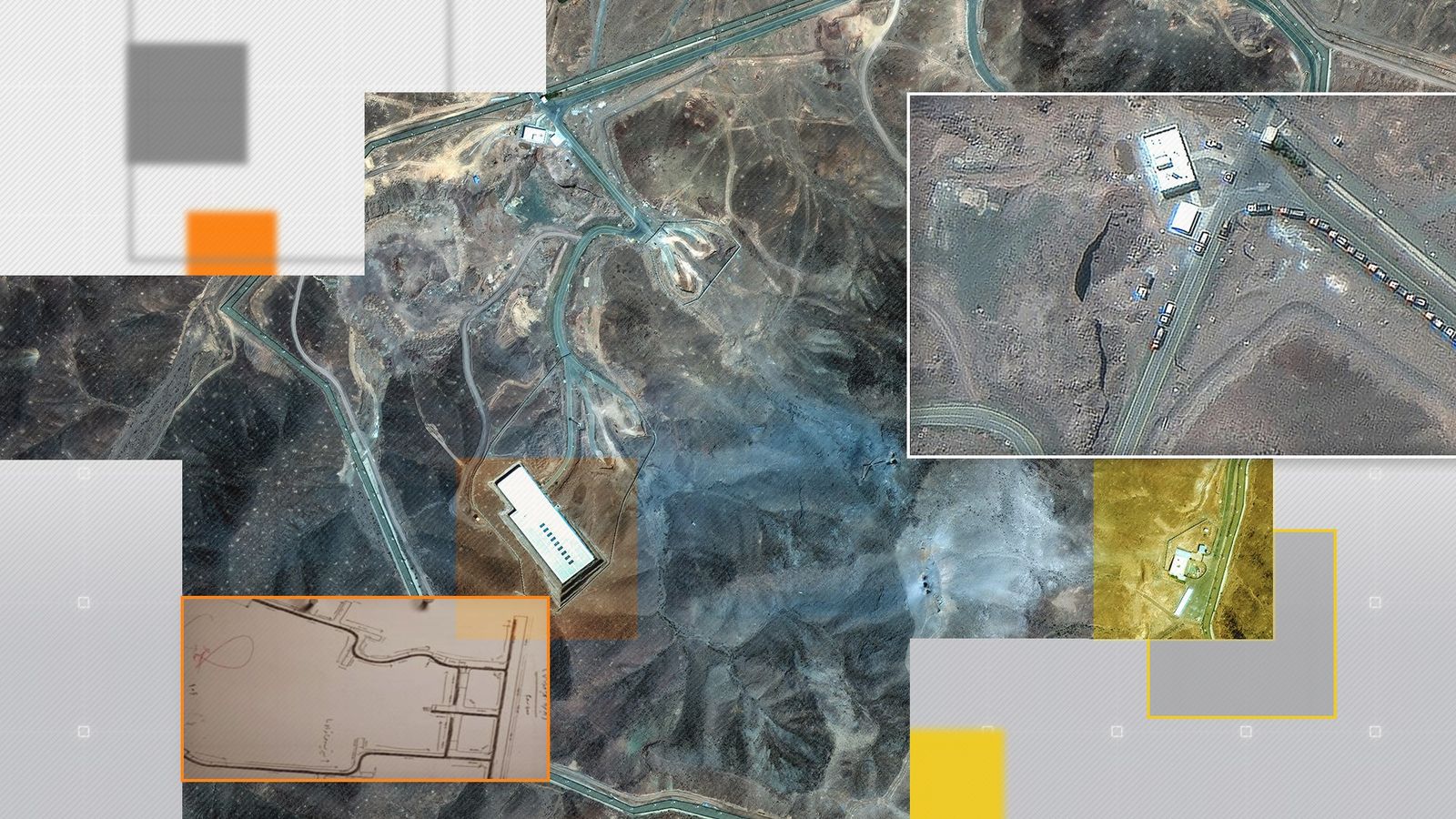
US airstrikes on June 22 targeted Iran's key nuclear facilities at Fordow, Natanz, and Isfahan, employing GBU-57 'bunker buster' bombs against deeply buried sites. While satellite imagery confirms direct hits, the full extent of damage to Iran's enrichment capacity remains uncertain, partially due to the facilities' robust construction and potential pre-strike evacuation of materials. Despite President Trump's assertion of 'obliteration,' experts contend these strikes are unlikely to fully eliminate Iran's established nuclear program, indicating ongoing geopolitical tensions and a persistent proliferation risk.
Recent US airstrikes on June 22 targeted Iran's primary nuclear enrichment facilities at Fordow, Natanz, and Isfahan, constituting a significant escalation in the ongoing conflict. The deployment of specialized GBU-57 'bunker buster' munitions against the deeply fortified Fordow site underscores the strategic intent to neutralize Iran's most advanced enrichment capabilities. However, a critical uncertainty persists regarding the efficacy of these strikes. While US leadership declared the facilities 'obliterated,' the actual extent of the damage remains unconfirmed, partly due to the robust underground construction and the likelihood that Iran relocated sensitive materials prior to the attack. Expert analysis from a RUSI specialist suggests that a full elimination of Iran's well-developed nuclear program by military means is unlikely, indicating that significant latent expertise and potential for reconstitution remain. This discrepancy between official statements and expert assessment, coupled with the high market impact score of 0.65, points to a period of sustained geopolitical tension and a persistent nuclear proliferation risk that has not been fully resolved by this military action.
AI-powered research, real-time alerts, and portfolio analytics for institutional investors.
Request DemoOverall Sentiment
mixed
Sentiment Score
0.00
