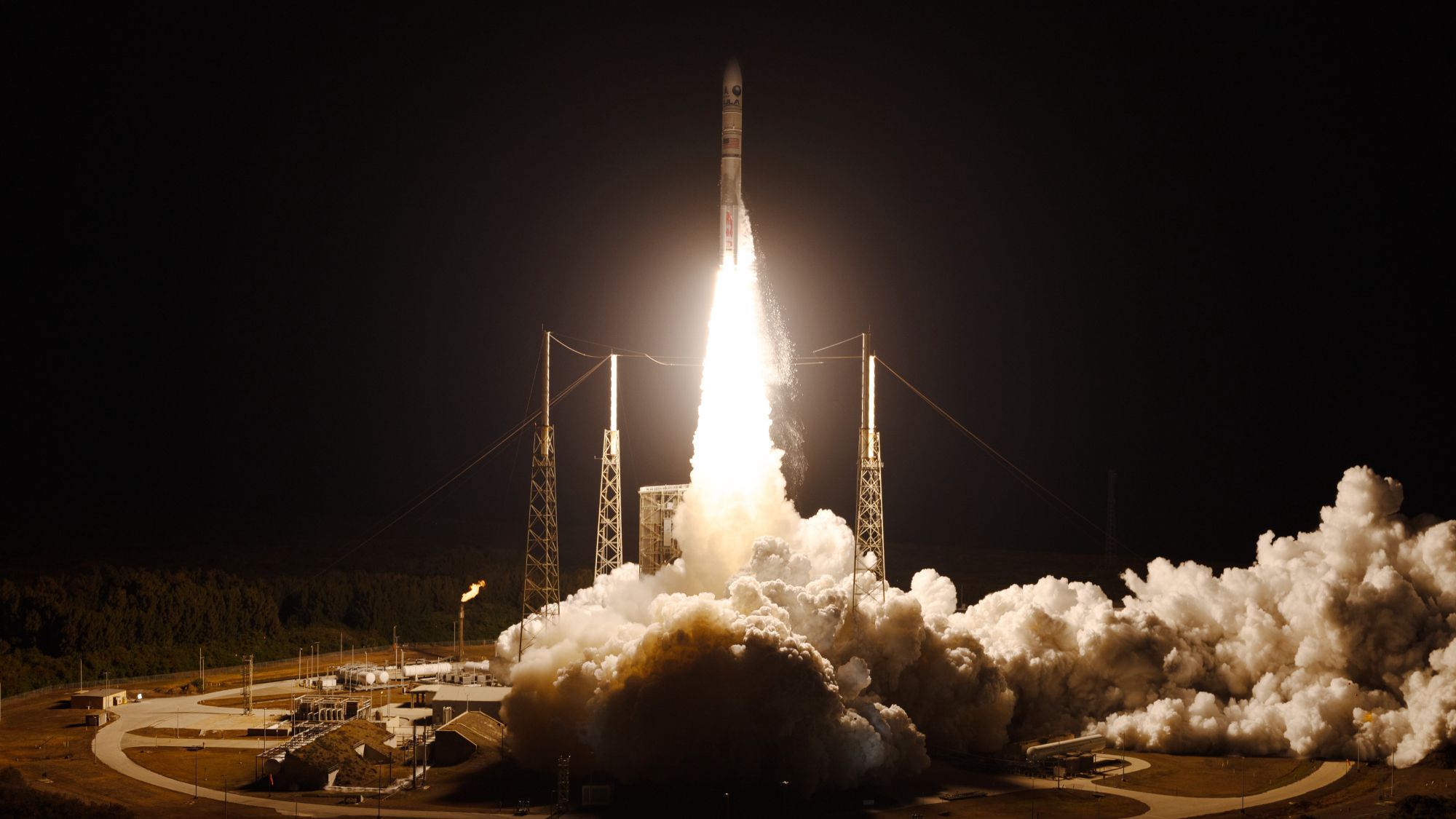
United Launch Alliance's Vulcan Centaur successfully delivered two U.S. Space Force reconnaissance satellites to geosynchronous orbit on Feb. 12 despite a 'significant performance anomaly' observed early in flight on one of four Northrop Grumman-built solid rocket boosters. ULA and the Space Force have launched a technical investigation and debris-recovery effort; given a prior SRB nozzle manufacturing failure and recent certification for national-security missions, the probe could prompt supplier corrective actions, schedule risk and additional oversight but the immediate mission outcome was successful.
Market Structure: The immediate beneficiary is integrated launch operators and alternative propulsion suppliers (SpaceX privately, Aerojet Rocketdyne AJRD) as customers and the Space Force scrutinize SRB reliability; primary direct loser is Northrop Grumman (NOC) which supplies the SRBs and faces reputational and contract risk. Expect short-term pricing power erosion for SRB suppliers, potential re-pricing of future contracts (5–15% higher QA/contingency line items) and modest demand deferral as U.S. government conducts inspections over the next 30–90 days.
Risk Assessment: Tail risk scenarios include a finding of systemic manufacturing defects at NOC leading to program pauses or penalties, which could drive a 10–25% drawdown in NOC equity within 60 days and ~50–150 bps margin compression over 12 months. Near-term volatility is the highest risk (days–weeks); medium-term (3–6 months) depends on the ULA/Space Force report (expected 30–60 days) and remediation costs; long-term (12–36 months) hinges on contract repricing and possible supplier substitution.
Trade Implications: Tactical trades: hedge or short NOC exposure into the investigation, rotate into diversified primes (LMT, RTX) and propulsion specialists (AJRD) that have lower SRB concentration. Volatility strategies: buy 3-month NOC puts (5%–8% OTM) sized to 1–2% portfolio risk and/or establish collars if adding long exposure on a clearance signal within 30–60 days.
Contrarian Angles: The market may over-penalize NOC despite mission success (payload delivered), underestimating upside if investigation clears—clearance could trigger an 8–12% rebound inside 2–4 weeks. Conversely, regulatory tightening could create new recurring QA service opportunities for primes; consider event-driven asymmetry rather than binary headline reaction.
AI-powered research, real-time alerts, and portfolio analytics for institutional investors.
Request DemoOverall Sentiment
neutral
Sentiment Score
-0.05
Ticker Sentiment
