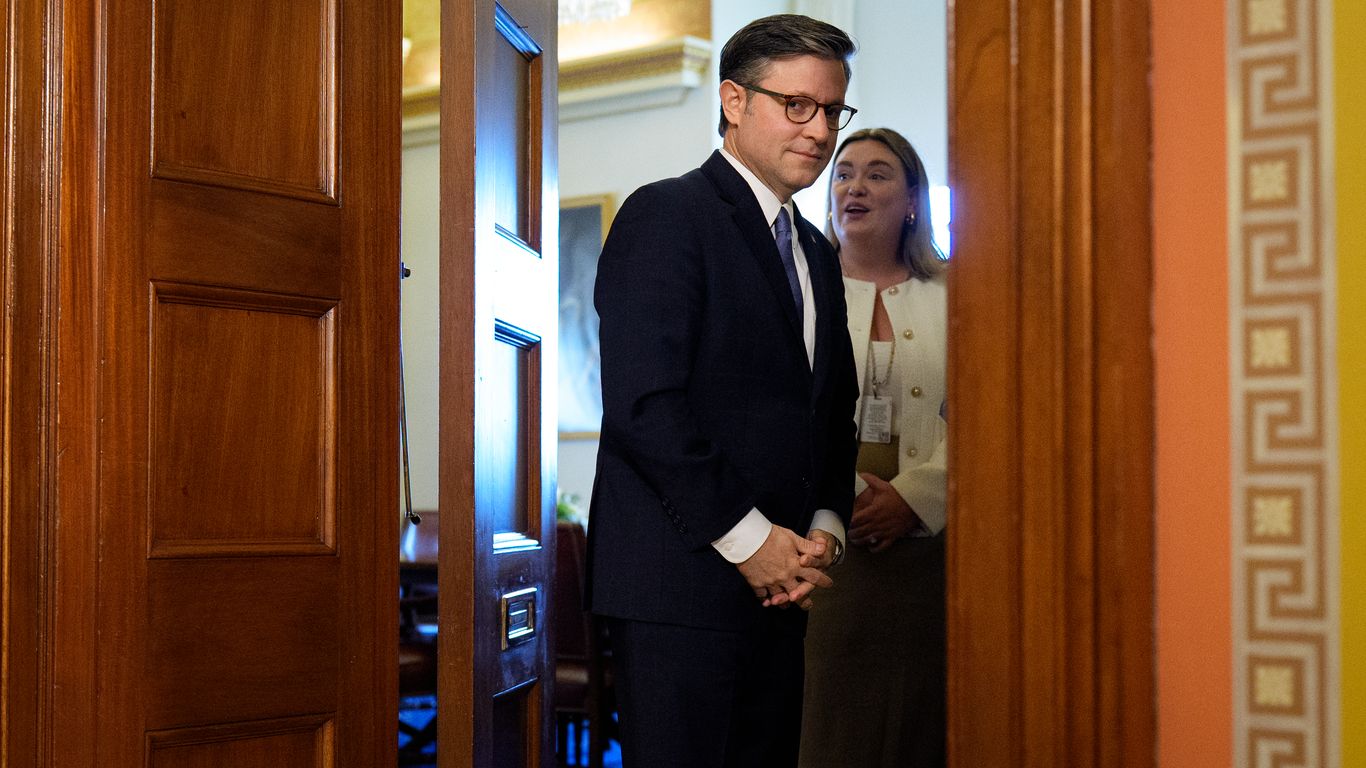
The House, led by Speaker Mike Johnson, passed a short-term spending stopgap 217-212, with Johnson securing critical Republican votes by promising increased member security funding, including $30 million in the current bill and potential future supplementals. This temporary measure now moves to the Senate, where Johnson has signaled strong opposition to Democratic demands for additional spending, indicating persistent fiscal policy friction and potential for future government funding impasses.
The U.S. House of Representatives has narrowly passed a short-term spending stopgap with a 217-212 vote, temporarily averting a government shutdown but highlighting significant underlying fiscal and political friction. Speaker Mike Johnson's ability to secure passage despite tight margins depended on last-minute concessions, specifically a promise to increase member security funding, which swayed key Republican holdouts. While the bill includes an initial $30 million for security, the Speaker is already contemplating a supplemental security bill, indicating ongoing spending pressures. The primary risk, however, has been deferred, not resolved. The bill now faces a contentious path in the Senate, where Speaker Johnson has adopted a confrontational stance, explicitly rejecting what he termed Senator Schumer's proposal for an additional '$1.1 trillion in spending'. This signals that the fundamental disagreements on fiscal policy persist, making future government funding negotiations highly susceptible to brinkmanship and increasing the probability of a shutdown when this temporary measure expires.
AI-powered research, real-time alerts, and portfolio analytics for institutional investors.
Request DemoOverall Sentiment
mixed
Sentiment Score
0.00
