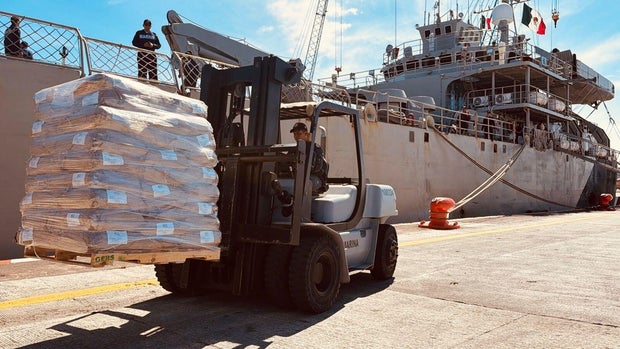
Cuban aviation authorities warned that jet fuel will be unavailable at nine airports, including José Martí International in Havana, from Tuesday through March 11, forcing carriers to suspend routes or add refueling stops (Air Canada suspended flights; others routing via the Dominican Republic or Cancun). The shortages stem from U.S. pressure that has effectively severed Cuba's oil lifelines from Venezuela and Mexico — including an executive order threatening tariffs on countries supplying oil to Cuba — and compound a broader energy emergency that is denting tourism (once about $3 billion annually), halting public transport, reducing bank hours and causing extended power outages.
Market structure: Short-term winners are regional fuel suppliers and nearby refueling hubs (Dominican Republic, Cancun) that can capture diverted jet-fuel demand; losers are carriers with direct Cuba exposure (AC.TO, smaller charter operators) and Cuba’s tourism sector where GDP and FX receipts can drop 10-20% q/q if flights and arrivals remain curtailed for months. Pricing power shifts to refineries and fuel-transport logistics in the Caribbean — expect regional ULSD/jet-fuel crack widening of ~$2–$6/bbl versus WTI if rationing persists more than 30 days.
Risk assessment: Tail risks include escalation (tariffs on Mexico) that could remove a major supply outlet and push regional refined-product shocks into global markets, and political responses (Mexico/China increasing shipments) that could normalize flows within 30–90 days. Immediate (days) pain: route cancellations and operational costs for airlines; short-term (weeks–months): revenue downgrades in Q1–Q2 for Cuba-linked travel names; long-term (quarters–years): re-routing of supply chains and higher insurance/logistics premia for Caribbean operations.
Trade implications: Direct trade ideas are small, tactical exposures: short idiosyncratic Cuba-exposed airlines (AC.TO, partial AAL exposure) and long domestic-resilient carriers (LUV) as relative safety. Hedge or express regional refined-product upside via short Dated-Brent vs long ULSD/HO calendar spreads for 1–3 months; consider 3-month call-spreads on ULSD to cap capital. Stay size-conservative: initial positions 1–3% risk each given geopolitical binary outcomes.
Contrarian angles: Consensus may overstate permanent demand loss — historical parallels (Cuban supply shocks in 2000s) show rapid rerouting within 6–12 weeks when diplomatic backchannels open; airline revenue hits are likely under 5% of annual revenue for large global carriers, so deep, permanent equity de-rating is unlikely. Risk of over-shorting AC.TO/AAL exists if Mexico/China step in within 30–60 days; trade sizing and strict stops are essential.
AI-powered research, real-time alerts, and portfolio analytics for institutional investors.
Request DemoOverall Sentiment
strongly negative
Sentiment Score
-0.60
Ticker Sentiment
