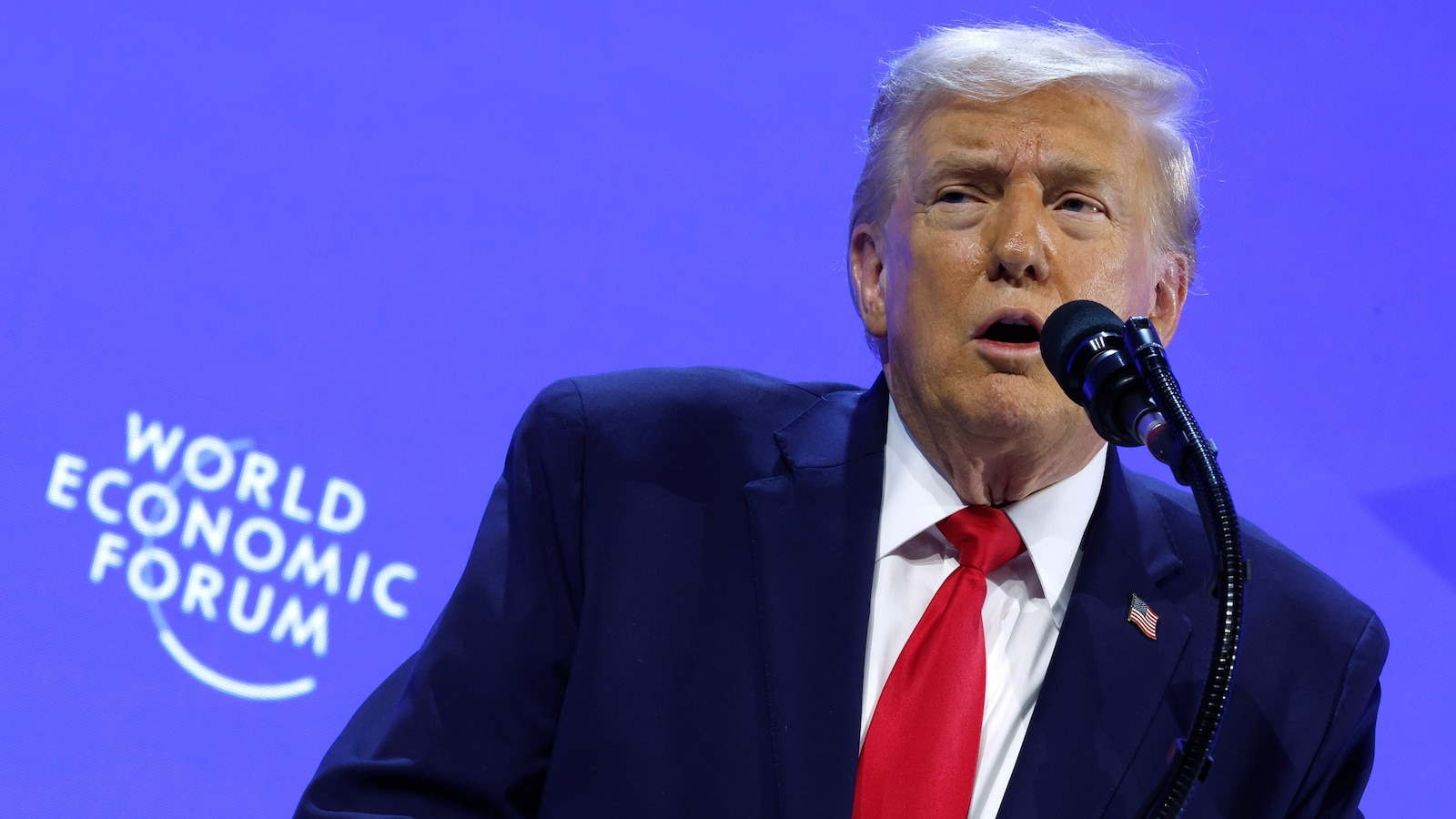
President Donald Trump announced he will not impose tariffs that were scheduled to take effect Feb. 1, saying he and NATO Secretary-General Mark Rutte have “formed the framework of a future deal with respect to Greenland”; no further details were provided. The decision removes an immediate source of transatlantic trade tension and a near-term market risk, though material implications remain limited by the absence of substantive terms or timelines.
Market structure: Removing the Feb 1 tariff shock reduces a near-term trade-cost shock to autos, machinery, and agricultural exporters and modestly restores pricing power to EU manufacturers. Expect continental European equities (Stoxx 600) to outperform US large caps by ~1–3% over 1–3 months if risk-on persists; EUR could re-rate +0.5–1.5% vs USD in the same window. Supply/demand: suspended tariffs remove a marginal increase in import cost that would have tightened supply chains for container shipping and raised input-cost inflation by an estimated 10–30 bps for exposed industrial corporates.
Risk assessment: Tail risks include reversal (tariffs reinstated) or retaliatory measures that would spike global risk premia; assign a 10–15% chance over 6 months with >200 bps market move risk. Immediate (days) volatility should compress; short-term (weeks) sentiment gains may fade absent concrete trade terms; long-term (quarters) uncertainty persists because “framework” lacks binding commitments. Hidden dependencies: election-cycle signaling can reintroduce policy risk quickly; corporate guidance around FX and input costs (next 30–90 days) is a key second-order data point.
Trade implications: Favor directional Europe and FX risk-on trades: buy Europe ETFs and long EURUSD while trimming duration and shorting defensives that benefitted from geopolitical risk (defense). Use options tactically to monetize lower implied volatility: sell premium on volatility products or buy one-way risk reversals skewed for modest moves. Entry window: next 5–30 trading days; re-evaluate at NATO follow-ups or when Greenland framework text is released.
Contrarian angles: Consensus understates political fragility — the market may be underpricing a rapid reversal pre-election; avoid levering directional bets >3% not hedged by options. Historical parallels: 2018 tariff headlines produced 2–6% sectoral moves that reversed when deals were vague; therefore prefer pairs or spread trades to capture relative, not absolute, moves. Unintended consequence: easing tariff threat could reduce safe-haven flows and push 10y yields +10–20 bps, pressuring growth multiple heavy tech names.
AI-powered research, real-time alerts, and portfolio analytics for institutional investors.
Request DemoOverall Sentiment
mildly positive
Sentiment Score
0.25
