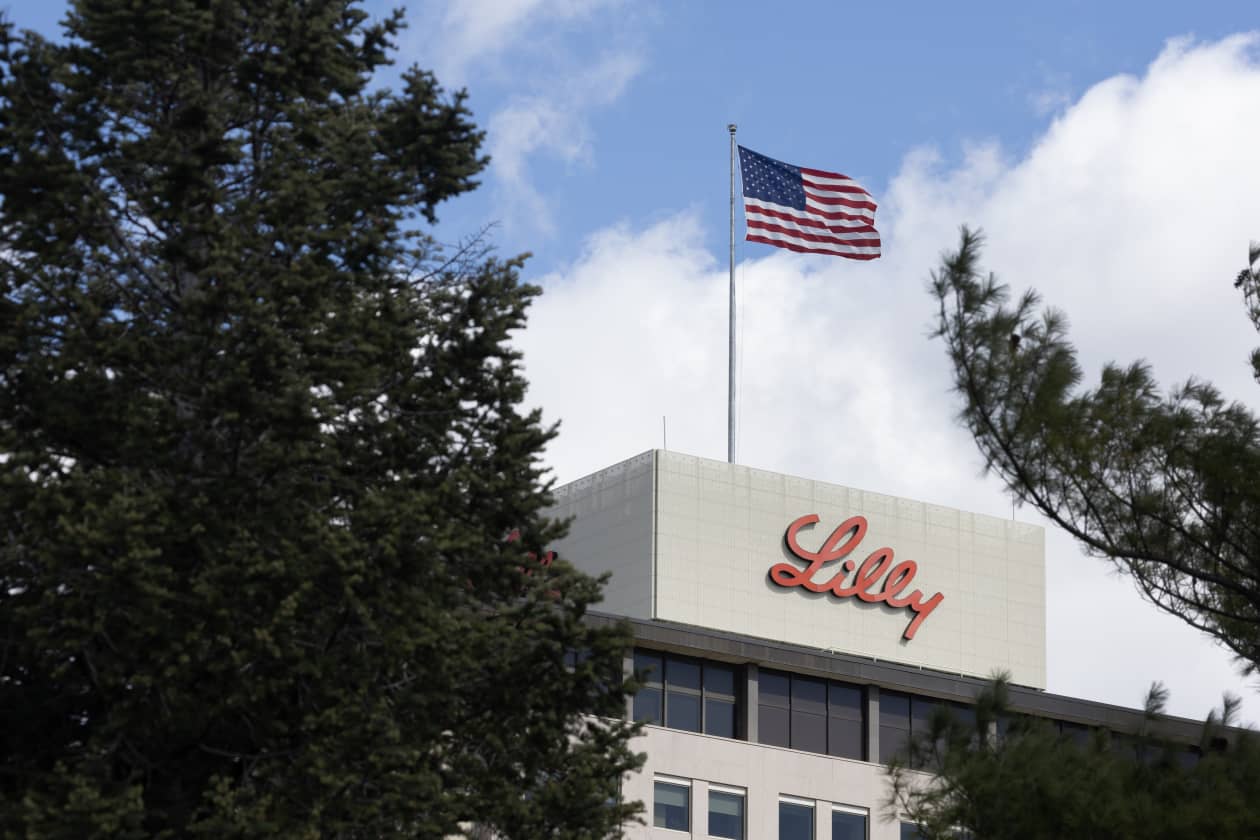
Lilly agreed to acquire Centessa Pharmaceuticals for up to $7.8 billion to gain orexin receptor 2 agonists targeting narcolepsy and idiopathic hypersomnia. The lead candidate is in Phase 2 trials across three indications, representing a late-stage pipeline bolt-on that supports Lilly's ongoing dealmaking strategy. The deal is material for Lilly's biotech exposure and could be sector-moving given the transaction size and therapeutic focus.
A large pharma pivot into orexin agonists should be read as category validation rather than an immediate commercial win; that validation compresses the risk premium on smaller innovators but raises the bar for incumbents that rely on older modalities and on-demand controlled substances. Expect payers to demand head-to-head or real-world effectiveness vs sodium oxybate and stimulants, and to insist on step therapy — that will slow revenue ramp by 12–36 months even after approval.
Supply-chain winners aren’t obvious API suppliers but CMOs and specialty formulation vendors capable of rapid scale-up and controlled‑substance handling; those with existing sleep-drug fill/finish capacity will win early follow-on contracts and enjoy 30–50% incremental utilization uplift in the 12–24 month post-approval window. Conversely, companies whose revenues are concentrated in legacy narcolepsy treatments face margin compression and loss of bargaining leverage with payers.
Near-term catalysts that will materially re-rate equities are clinical readouts (Phase 2→3 decisions) and payer coverage signals; both occur on 3–18 month horizons. Tail risks include class-specific safety findings or restrictive label language that force REMS-like programs, which would delay uptake by years and materially reduce peak sales.
The consensus is bullish on headline category expansion but underweights the durable frictions: formulary inertia, required head‑to‑head economics, and the non-trivial physician education curve for a novel mechanism. There is a realistic scenario where the market initially overshoots, then grinds lower as adoption proves slower than modeling suggests — creating tactical opportunities to sell into strength and to buy selective developers after clinical deratings.
AI-powered research, real-time alerts, and portfolio analytics for institutional investors.
Request DemoOverall Sentiment
strongly positive
Sentiment Score
0.60
Ticker Sentiment
