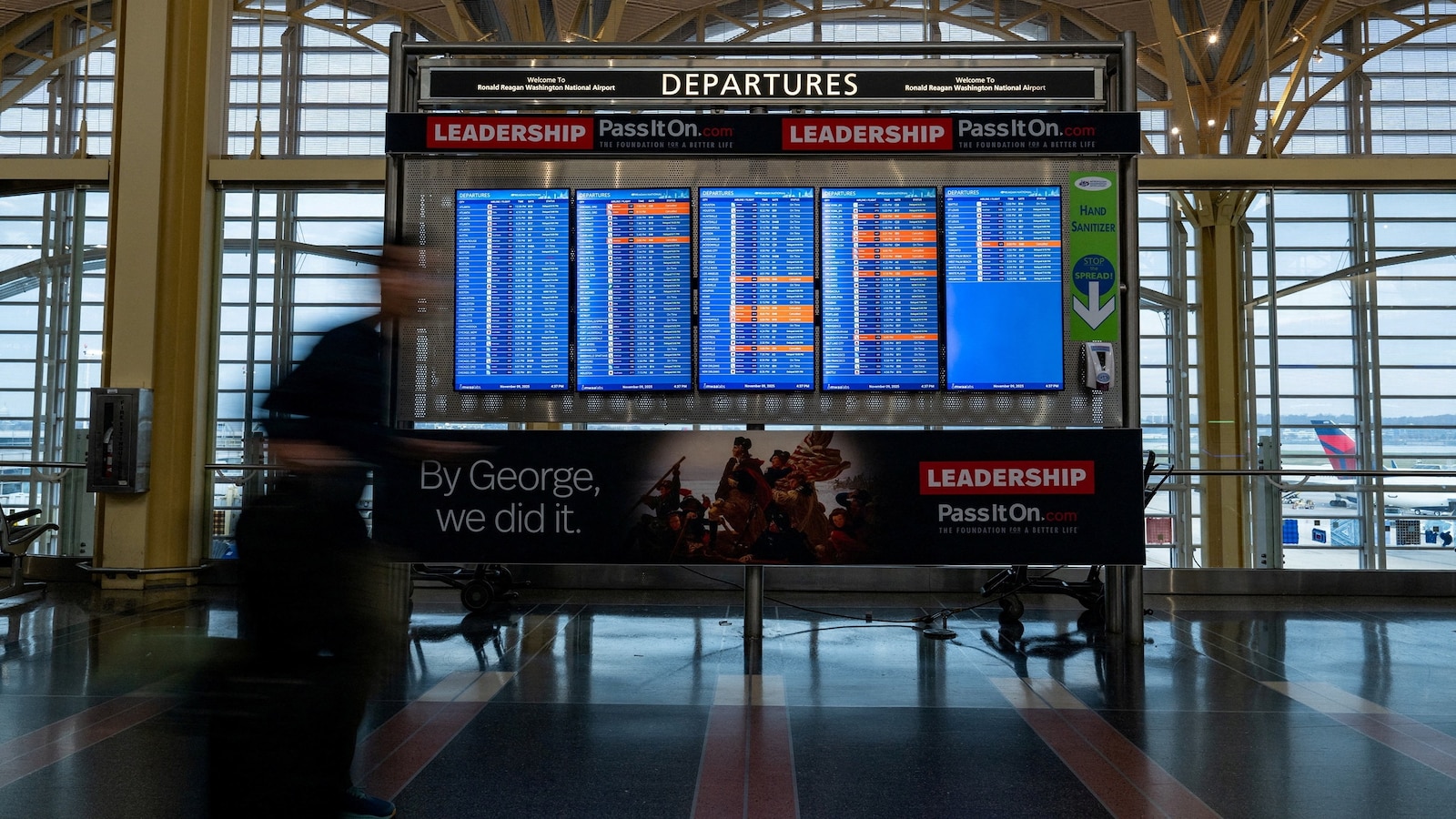
Over 1,700 U.S. flights were canceled and 4,300 delayed on Monday, following 2,953 cancellations on Sunday, as the FAA limited capacity at 40 major airports due to an air traffic controller shortage exacerbated by the ongoing federal government shutdown. President Trump publicly ordered controllers to return to work, threatening pay cuts for non-compliance while mentioning bonuses for others, amidst union pushback over unpaid labor. This widespread operational disruption, driven by the shutdown's impact on essential services, is expected to continue and poses significant challenges for the airline industry and broader economic activity.
The ongoing federal government shutdown has significantly disrupted U.S. air travel, leading to 1,742 flight cancellations and 4,306 delays on Monday, following 2,953 cancellations on Sunday. This operational chaos is primarily due to the Federal Aviation Administration (FAA) limiting capacity at 40 major U.S. airports, necessitated by an air traffic controller shortage. The situation is expected to persist, with 942 flights already canceled for Tuesday, indicating continued strain on the domestic aviation network.
The controller shortage is exacerbated by the government shutdown, leaving air traffic controllers unpaid and facing financial hardship, which impacts their ability to report for duty. President Trump's public directives, threatening pay cuts for non-compliance while also mentioning potential bonuses, underscore the political tension surrounding essential service provision. The ATC Union has emphasized controllers' dedication and the need for fair compensation, highlighting the human capital risk inherent in the current fiscal impasse.
This widespread disruption poses a direct financial and reputational risk to U.S. domestic airlines, impacting passenger volumes, operational costs, and customer satisfaction. While international flights remain unaffected due to existing agreements, the sustained domestic travel chaos could depress demand for air travel and negatively influence related sectors within the travel and leisure industry. The situation underscores the vulnerability of critical infrastructure to political gridlock and fiscal policy decisions.
AI-powered research, real-time alerts, and portfolio analytics for institutional investors.
Request DemoOverall Sentiment
strongly negative
Sentiment Score
-0.80
