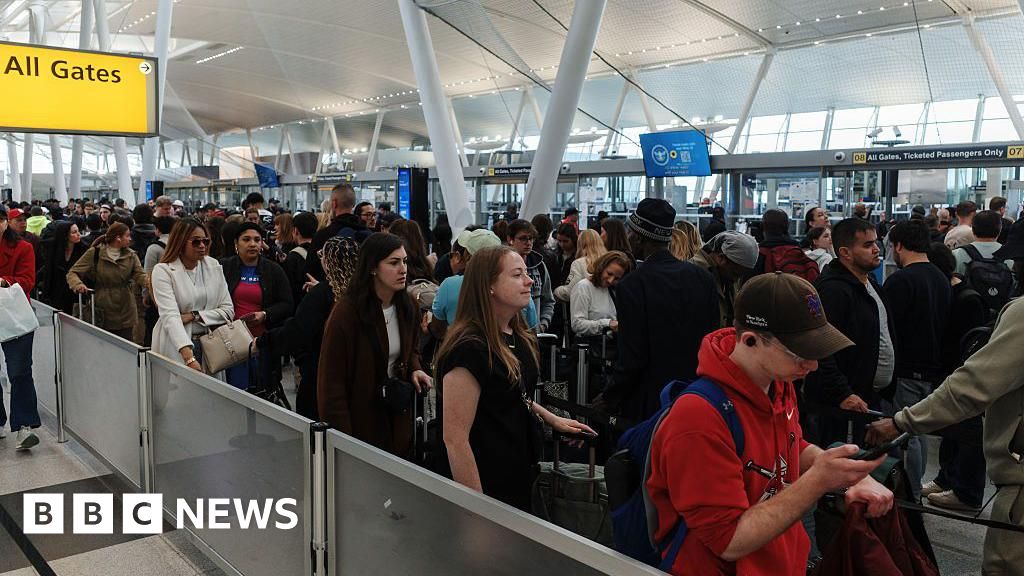
ICE agents will be deployed to U.S. airports starting Monday to assist TSA amid a partial Department of Homeland Security shutdown that has left DHS unfunded since mid-February and TSA staff unpaid for more than a month; the White House says over 400 TSA agents have quit since the shutdown began. The administration says ICE will not conduct passenger screening but will cover entry/exit points to free TSA officers for screening, a plan criticized by the TSA union and Democratic lawmakers as using untrained, armed agents in sensitive airport roles. A Senate bill to fund DHS and pay TSA staff failed to advance, leaving operational strains and political controversy unresolved.
Immediate winners are firms that can sell labor or technology to airports (outsourcers, biometric/security vendors) and short-term losers are consumer-facing travel incumbents that rely on smooth throughput (airlines, airport retail and parking). Operational friction at checkpoints cascades non-linearly: a 2–4 hour headline delay compresses same-day demand, increases rebooking/cancellation costs and drains ancillary revenue for airlines and concessionaires across the next 24–72 hours.
A key second-order effect is political and legal risk spilling into procurement cycles. Union backlash and Democrat-led scrutiny of ICE increase the probability of congressional riders or oversight that either (a) force DHS funding to end the disruption within days-to-weeks or (b) accelerate outsourcing and tech procurement to reduce reliance on uniformed staff over months. That bifurcation creates a binary catalyst window: resolution in <2 weeks (operational normalisation) vs drawn-out negotiation (structural shift toward contractors/security tech).
Near-term market pricing will likely over-index to headline risk rather than the marginal economics of providers. Security tech vendors and staffing firms can see multi-quarter revenue acceleration if agencies choose to outsource or upgrade screening tech; conversely airlines and airport REITs face concentrated earnings volatility into the spring travel season. Volatility is the tradeable element: sentiment-driven drawdowns should be fast and mean-reverting if funding is restored, while policy-driven procurement gains compound over 3–12 months.
Contrarian edge: the theatre of deployment is more likely to be a negotiation lever than a sustained operational change. That implies short-dated option plays to capture headline fear, and selective two- to twelve-month longs in public contractors that are positioned to win incremental DHS budgets — favour those with existing GSA/DHS contracts and rapid integration capabilities.
AI-powered research, real-time alerts, and portfolio analytics for institutional investors.
Request DemoOverall Sentiment
mildly negative
Sentiment Score
-0.15
