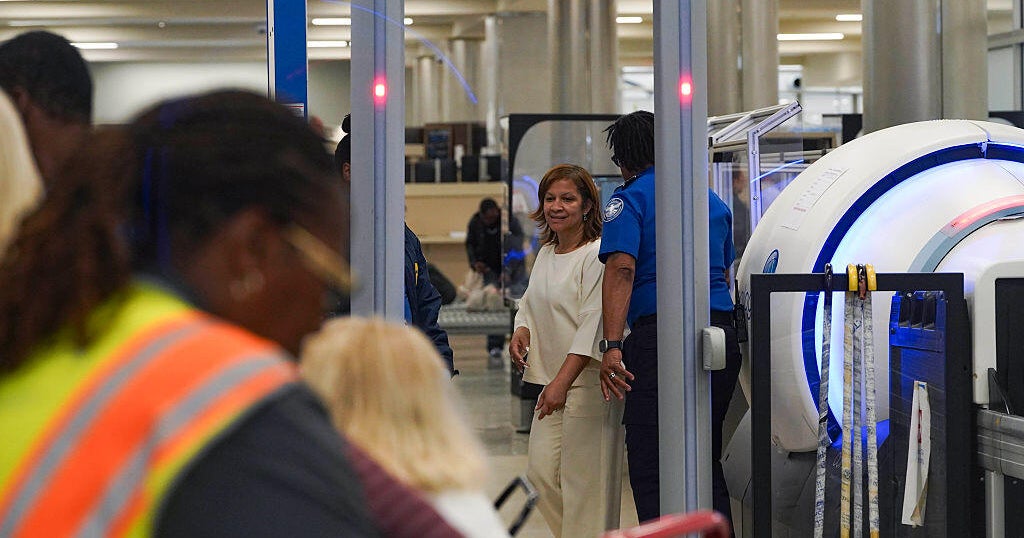
President Trump ordered ICE to deploy to airports amid the partial DHS shutdown, with TSA experiencing a peak of more than 3,250 call-outs on Saturday and over 400 officers separated. Officials and unions warn ICE agents lack training for technical screening tasks and that redeployment could disrupt airport operations and passenger flow; DHS and the White House frame the move as a resource reallocation while Democrats condition DHS funding on enforcement reforms. Operational uncertainty raises short-term travel disruption risk and political backlash but is unlikely to produce a broad market move.
Policy-driven redeployments of federal personnel to aviation hubs create an asymmetric shock: operational expertise (screening, queue management, TSA-certified throughput) is not fungible with enforcement-focused work, so expect a multi-day decline in terminal throughput and a lift in contingency labor, security contracting, and overtime costs for airports and carriers. That dynamic translates into discrete unit revenue and cost hits: every additional 30–60 minute average delay on short-haul flights can push incremental turn costs and crew-rest exposures that compress daily margins by low-single-digit percentages for regional and low-cost carriers.
Over a 0–90 day horizon the key catalysts are (a) a near-term funding or policy reversal that restores staffing and normalizes operations, which would sharply mean-revert any dislocations, and (b) legal, union, or airport-authority pushback that could prevent broader redeployments and limit scope — both have high probability within weeks. Tail risks are concentrated: a major security incident, large-scale cancellations around a holiday window, or sustained morale-driven attrition would materially widen the impact to months and could knock 5–15% off peak-season revenue for exposed carriers.
From a competitive standpoint, incumbent airport operators and concessionaires face transient revenue loss while firms with portable security capabilities and defense contractors (screening tech, rapid-deploy staffing) stand to capture incremental contracts and premium pricing. Market consensus will likely misprice the timing: much of the downside for airlines is front-loaded and hedgeable over 2–6 weeks, while the upside to contractors accrues over 3–12 months as formal contracts and capital procurement processes close.
AI-powered research, real-time alerts, and portfolio analytics for institutional investors.
Request DemoOverall Sentiment
mildly negative
Sentiment Score
-0.35
