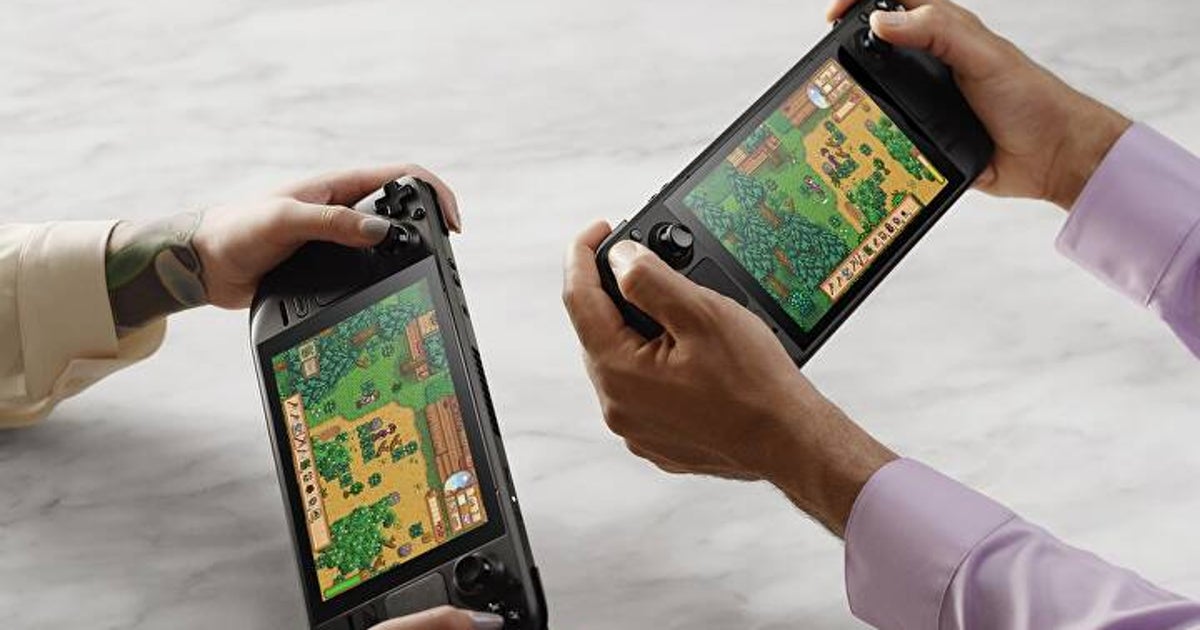
The handheld gaming market is experiencing a significant resurgence, largely driven by Nintendo's Switch, prompting other major players like Sony, Microsoft, and Valve to enter or re-enter the space. However, despite this renewed interest and new product launches such as the PlayStation Portal and PC gaming handhelds like the Steam Deck, achieving substantial commercial success remains a significant challenge for all except Nintendo. Microsoft, for instance, reportedly abandoned plans for a first-party Xbox handheld due to an inability to commit to chip supplier AMD's volume demands, underscoring the difficulty of reaching mass-market sales (e.g., 10 million units) in this segment, which is characterized as a 'minefield' for non-Nintendo companies.
The handheld gaming market is experiencing a significant resurgence, largely spearheaded by Nintendo's Switch, which has outperformed its successful predecessor. Despite this renewed interest, Nintendo remains the sole entity consistently achieving mass-market sales, with other players struggling to replicate its success. This trend highlights a bifurcated market where Nintendo holds a near-monopoly on high-volume sales.
Microsoft (MSFT) reportedly abandoned plans for a first-party Xbox handheld, unable to commit to chip supplier AMD's (AMD) reported demand for 10 million units, underscoring the formidable challenge of achieving scale. Sony's (SONY) previous handheld, the PlayStation Vita, sold only 14 million units before discontinuation, despite its quality and Sony's strong console business at the time, indicating the difficulty even for established players. These instances suggest a high barrier to entry for significant market share beyond Nintendo.
Valve's Steam Deck, while commercially successful within its niche, has lifetime sales estimated under 5 million units and was reportedly outsold by the Switch 2 in its first week. This suggests that while PC gaming handhelds like the Steam Deck and Microsoft's co-branded ROG Ally with Asus generate buzz, they cater to a smaller, dedicated audience rather than the mass market. Microsoft's current strategy focuses on leveraging Game Pass through hardware partners, a more prudent approach than direct competition in the high-volume handheld space.
AI-powered research, real-time alerts, and portfolio analytics for institutional investors.
Request DemoOverall Sentiment
moderately negative
Sentiment Score
-0.50
Ticker Sentiment
