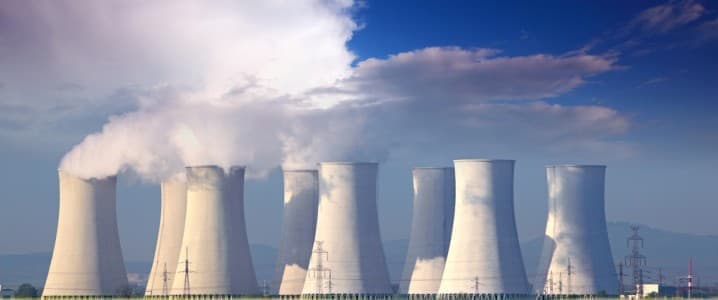
The Trump administration is aggressively pursuing a revitalization of the U.S. nuclear energy sector, committing billions in public funding, including significant allocations from the DoE's loan office, with a target to quadruple capacity by 2050. This push is complemented by substantial private investment from tech giants like Alphabet and Microsoft to power data centers, an $80 billion agreement with Westinghouse owners Cameco and Brookfield Asset Management for new AP1000 reactors, and international partnerships with Japan and the UK. Despite strong political support, streamlined regulatory efforts, and tax breaks, the ambitious acceleration faces significant challenges, including Westinghouse's past bankruptcy due to cost overruns, lengthy development timelines, high costs, and a domestic expertise gap, making a rapid nuclear renaissance within the next decade unlikely.
The Trump administration is aggressively pursuing a revitalization of the U.S. nuclear energy sector, targeting a quadrupling of capacity by 2050 and an executive order for 10 new large reactors by decade-end. This initiative is backed by billions in public funding from the DoE's loan office and significant private investment from tech giants like Alphabet, Amazon, Meta, and Microsoft, driven by data center energy demands. An $80 billion agreement with Cameco and Brookfield Asset Management for Westinghouse's AP1000 reactors further underscores this commitment.
The plan involves key players like Westinghouse, despite its 2017 bankruptcy due to project overruns, raising concerns about execution risk. International partnerships, including Japan's commitment to Westinghouse and Hitachi GE Vernova SMRs, and a multibillion-dollar deal with the UK, aim to accelerate development and provide low-carbon energy. These collaborations highlight a concerted effort to overcome domestic capacity limitations.
Despite strong political will, streamlined regulatory efforts, and tax incentives, the U.S. nuclear renaissance faces significant hurdles. Typical development timelines of a decade or more, high costs, and a domestic expertise gap, particularly compared to China's 5-6 year average, suggest a rapid acceleration is unlikely within the next decade. While SMRs are being developed, their power generation is not expected until the next decade, indicating a longer-term realization for substantial capacity expansion.
AI-powered research, real-time alerts, and portfolio analytics for institutional investors.
Request DemoOverall Sentiment
mixed
Sentiment Score
0.00
Ticker Sentiment
