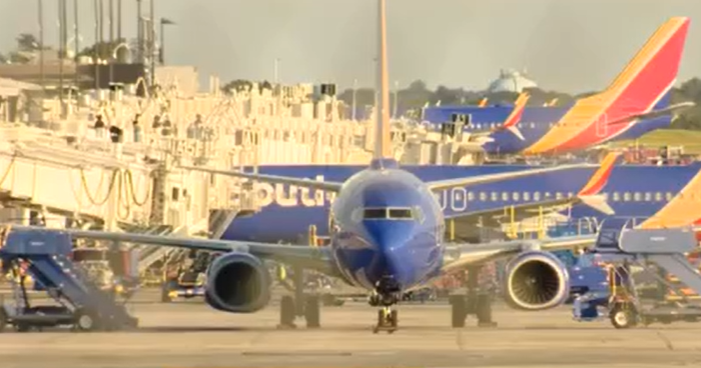
The ongoing government shutdown is severely disrupting U.S. air travel, with nationwide flight cancellations escalating to 6% and projected to reach 10% by week's end, directly impacting major carriers like Southwest and American Airlines. This operational strain, driven by air traffic control staffing issues and safety requirements, is reducing pay for aviation personnel and threatens to extend into the critical holiday travel season, posing significant financial risks to airline profitability and broader economic implications for the travel and hospitality sectors.
The ongoing government shutdown is severely impacting U.S. air travel, with nationwide flight cancellations escalating to 6% and projected to reach 10% by week's end. This operational disruption has directly affected major carriers, with Southwest Airlines (LUV) canceling 155 domestic flights on Tuesday and 145 on Wednesday, while American Airlines (AAL) reported approximately 200 cancellations across both days. The primary driver is reported air traffic control staffing concerns and unmet safety benchmarks, leading to significant operational strain.
Beyond immediate travel disruptions, the shutdown poses significant financial strain on aviation personnel, including air traffic controllers, TSA agents, pilots, and flight attendants, who are experiencing reduced or delayed pay. Pilots are losing opportunities for extra flight hours and premium routes, while flight attendants face reduced income due to fewer flight hours. This could lead to morale issues and potential staffing shortages even after the shutdown concludes, impacting long-term operational stability.
The Department of Transportation warns that travel impacts could persist into the critical Thanksgiving holiday season, even if a spending bill passes, due to the time required to meet safety benchmarks. Secretary Duffy explicitly stated that "massively more disruption" is imminent if the government remains closed into the weekend. This uncertainty and operational strain contribute to a strongly negative sentiment (-0.75 overall, -0.7 for LUV and AAL) and a pessimistic tone for the sector.
AI-powered research, real-time alerts, and portfolio analytics for institutional investors.
Overall Sentiment
strongly negative
Sentiment Score
-0.75
Ticker Sentiment
