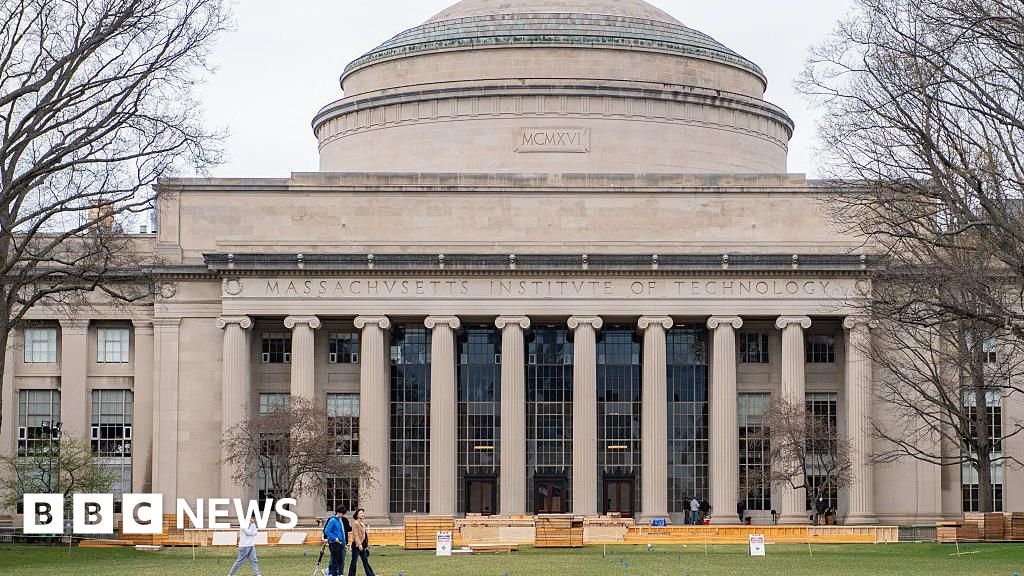
The Massachusetts Institute of Technology (MIT) rejected a Trump administration proposal to tie federal funding to specific policy changes, including caps on foreign student admissions, restrictions on campus speech, and mandates on protest responses, citing concerns over academic freedom and the merit-based allocation of scientific funding. This decision highlights escalating tensions between the federal government and higher education institutions, with MIT emphasizing that scientific funding should be based on merit alone. The broader implications for institutional investors include potential instability in federal research funding, impacts on international talent pipelines, and complex regulatory risks for universities, especially given threats from state officials like California Governor Gavin Newsom to cut state funding for institutions that accept such federal conditions.
The Massachusetts Institute of Technology (MIT) has rejected a Trump administration proposal, the "Compact for Academic Excellence," which sought to link federal funding to specific policy changes, including capping foreign student admissions at 15% and restricting campus speech. MIT President Sally Kornbluth articulated that the proposal was inconsistent with the university's core values, academic independence, and the fundamental belief that scientific funding should be based solely on merit. This decision highlights a significant ideological clash between the federal government and leading academic institutions.
This rejection, following previous federal funding cuts and lawsuits involving MIT and Harvard, signals escalating tensions and potential instability in federal research funding for the higher education sector. The administration's attempt to impose policy mandates on universities, including those like Brown, UPenn, and UT, introduces a new layer of regulatory risk and uncertainty for institutions heavily reliant on federal grants.
Furthermore, the situation is compounded by conflicting political pressures, as exemplified by California Governor Gavin Newsom's threat to cut state funding for any California university that accepts such a federal deal. This creates a challenging environment where universities may face difficult choices between federal and state financial support, potentially impacting their long-term financial health and strategic planning.
AI-powered research, real-time alerts, and portfolio analytics for institutional investors.
Request DemoOverall Sentiment
moderately negative
Sentiment Score
-0.50
