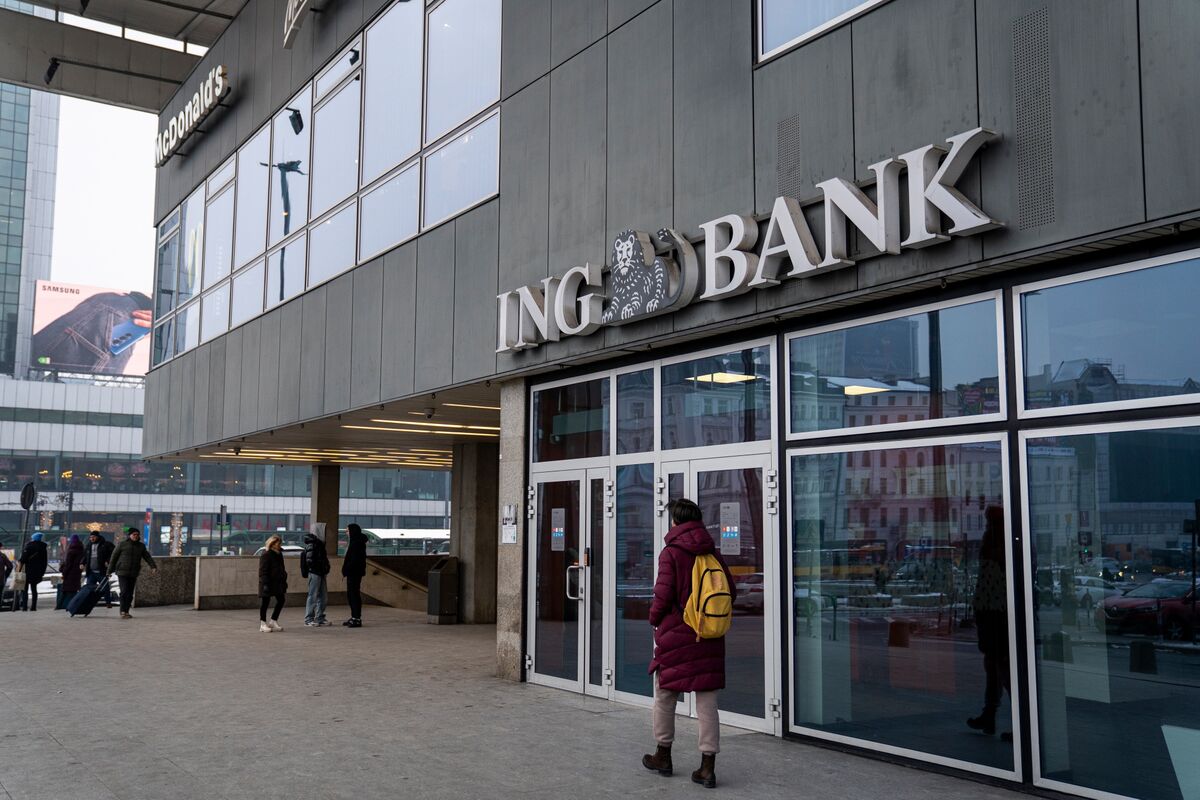
ING Groep first-quarter net income rose 6.9% to €1.56 billion, beating the €1.46 billion Bloomberg consensus. The Netherlands' largest bank also announced a fresh €1 billion share buyback, signaling confidence in capital generation. Results were supported by higher lending income and fees.
This is less about the headline beat than the signal it sends on capital elasticity: a large Dutch bank is comfortable returning capital while still showing enough operating momentum to avoid looking like it is paying out at the peak. That matters because European banks remain trading with a persistent discount to buyback-capable US peers; when management opts to retire stock instead of hoarding capital, it usually compresses that valuation gap over the next 1-2 quarters, especially if other lenders are forced to stay defensive on distributions. The second-order winner is not just ING equity holders, but the whole European banking complex if this is read as proof that regulatory and funding conditions are benign enough to sustain excess capital returns. The losers are slower-growth deposit gatherers and banks with weaker fee engines, because ING is effectively signaling it can defend earnings quality without relying on spread expansion alone. If rates drift lower, the market will increasingly differentiate between banks with real fee diversification and those whose earnings are still mostly rate beta. The main risk is that capital return announcements can be backward-looking while credit deterioration is forward-looking. The next 1-3 quarters matter: if loan-loss provisions normalize higher or deposit competition compresses net interest margins faster than fee income grows, buyback support becomes less important as an earnings catalyst and more of a balance-sheet housekeeping exercise. For now, the market is likely underpricing the reflexive effect of buybacks on per-share metrics in a sector where small changes in P/B can drive meaningful rerating. The contrarian angle is that consensus may be overrewarding the headline authorization and underestimating how much of the upside is already in the stock. If the buyback is executed gradually, the real trade is not a one-day pop but a sustained reduction in float that supports relative performance versus lower-capital-return peers; however, if macro data soften, the same bank could quickly revert to a defensive posture. That makes this more attractive as a relative value expression than as an outright momentum long.
AI-powered research, real-time alerts, and portfolio analytics for institutional investors.
Overall Sentiment
moderately positive
Sentiment Score
0.56
Ticker Sentiment
