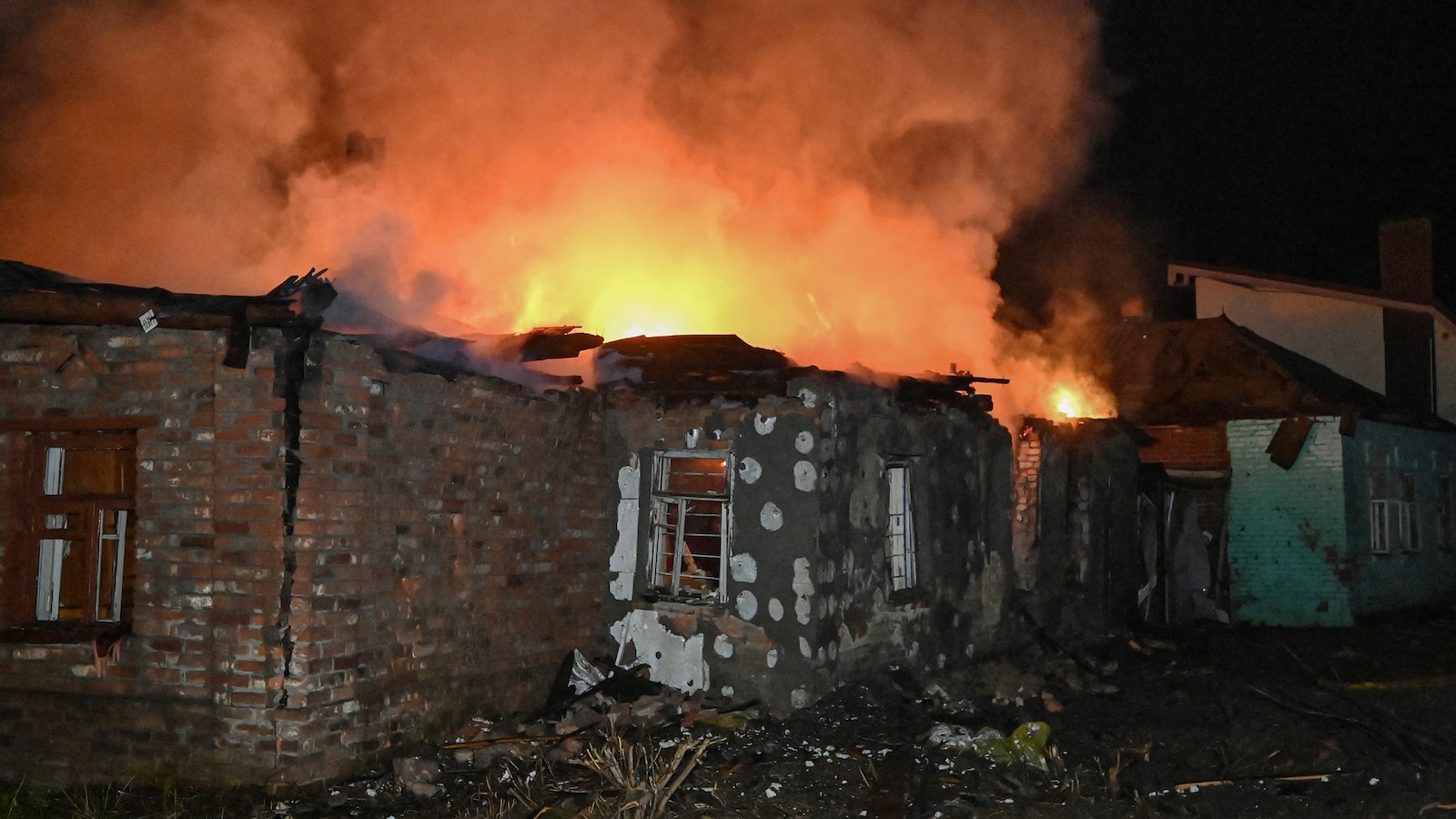
Heavy Russian drone strikes overnight hit Ukraine, with Kharkiv reporting at least four dead and 17 injured after Ukraine's air force said 162 drones were launched (125 shot down or suppressed, 37 impacting across 15 locations). The strikes coincided with Geneva talks on a contentious 28-point U.S. peace proposal — U.S. officials including President Trump and Secretary of State Marco Rubio signaled cautious optimism about progress while Kyiv and Moscow gave mixed responses and Moscow said it had seen no official outcomes. The combination of ongoing kinetic escalation and tentative negotiation progress keeps geopolitical risk elevated, with potential implications for energy markets given European oil flows and for defense-sector positioning should talks fail or succeed.
Market structure is shifting toward defense suppliers and non-Russian energy logistics: firms with long-cycle defense revenue (LMT, RTX, NOC) gain pricing power while European travel, insurance and regional energy transport providers face revenue shocks. Spot/forward oil and TTF gas volatility will rise; expect upward pressure on Brent by $10–30/bl in an escalation scenario, widening European credit spreads 25–75bp and lifting equity IV for EU banks and airlines for 2–8 weeks.
Tail risks include a targeted strike on EU pipeline/terminals or formal Russian export curbs that would spike Brent >$100 within days and trigger sanctions cascades; conversely a credible ceasefire or binding deal in 2–6 weeks could erase 20–35% of defense premiums. Hidden dependencies: winter gas inventories, NATO aid tranches, and U.S. election-driven sanctions policy can rapidly reprice exposures.
Trade implications: favor 3–12 month exposure to U.S. defense equities and oil call optionality while reducing cyclicals tied to European travel and short-duration credit in EM Europe. Use short-dated volatility plays (1–3 months) to capture event risk and scale multi-week equity positions; enter within 48–72 hours for option-priced event risk, scale out on news milestones (Geneva outcomes, formal ceasefire, or energy-asset strikes).
Contrarian view: markets may overpay for permanent energy scarcity—if Geneva produces binding deconfliction within 30 days, expect 20–30% mean reversion in defense names and 15–25% in Brent. Mispricings likely in integrated majors (BP, RDS.A) and European airlines which price in protracted outages; unintended consequence: sustained defense capex could lift long-term inflation and rates, compressing P/E multiples across cyclicals.
AI-powered research, real-time alerts, and portfolio analytics for institutional investors.
Request DemoOverall Sentiment
moderately negative
Sentiment Score
-0.35
