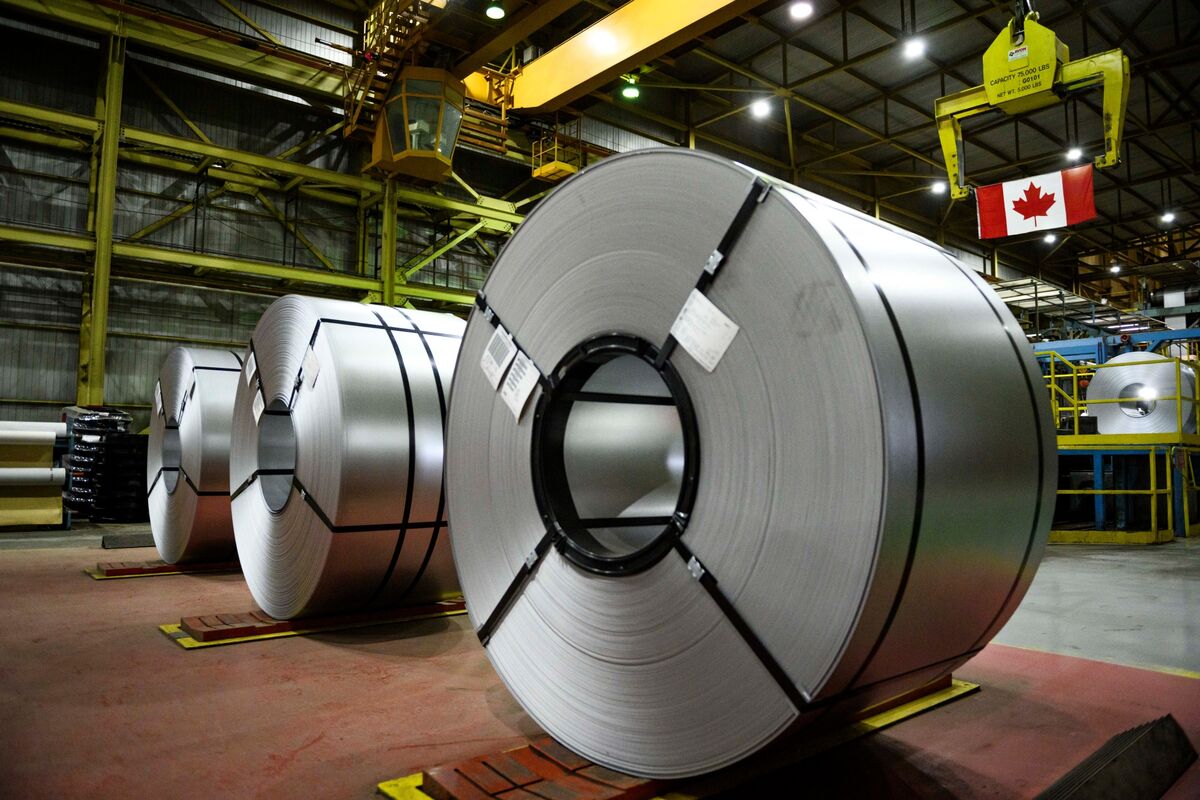
Canada unveiled C$1.5 billion ($1.1 billion) in support for firms hurt by the Trump administration’s revised US metal tariff rules. The April change imposed a 25% surcharge on the full value of products containing steel, aluminum and copper, replacing the prior 50% tariff on only the metal content. The package is a material policy response and should support affected Canadian exporters, but it also underscores ongoing tariff-related cost pressure and trade friction.
The near-term winner is not the subsidized firms so much as their domestic upstream and substitute suppliers. Once a tariff shock is partially socialized, procurement tends to re-route toward local content, lighter metal intensity, and redesigns that reduce exposure to the tariff base; that creates a second-order tailwind for Canadian fabricators, logistics providers, and industrial distributors with non-US optionality. The biggest loser is likely the cross-border integrator model: firms that rely on final assembly plus embedded metals now face a wider wedge between input economics and landed price, which compresses margins unless they have pricing power.
This is more inflationary than the headline suggests because it nudges companies to rebuild supply chains rather than simply pay the tariff. That means a multi-quarter capex and engineering cycle, not just a one-off cost spike: order books may move quickly, but throughput changes lag 2-6 quarters. If Washington broadens enforcement or other jurisdictions retaliate, the shock migrates from metals into machinery, autos, and construction equipment, where embedded-metal content is high but pricing is less transparent.
The market may be underestimating the political durability of the regime. Domestic support in Canada reduces immediate insolvency risk, but it also lowers the probability of an early policy capitulation, making this more of a months-to-years re-pricing than a days-to-weeks dislocation. The contrarian read is that the aid package is a signal the government expects a prolonged trade posture; that should keep a floor under Canadian industrial activity, but it also caps upside for firms exposed to US demand because the subsidy offsets cash burn without restoring lost competitiveness.
For investors, the best setup is to own the relative beneficiaries of domestic substitution while fading the most metal-intensive exporters with weak pricing power. The cleaner expression is a pair trade between Canadian industrials with local exposure and North American manufacturers reliant on cross-border finishing, especially where gross margin is already thin and inventory turns are slowing. Any relief rally in tariff-exposed names is likely to be tradable rather than durable unless there is a policy rollback.
AI-powered research, real-time alerts, and portfolio analytics for institutional investors.
Request DemoOverall Sentiment
mildly negative
Sentiment Score
-0.25
