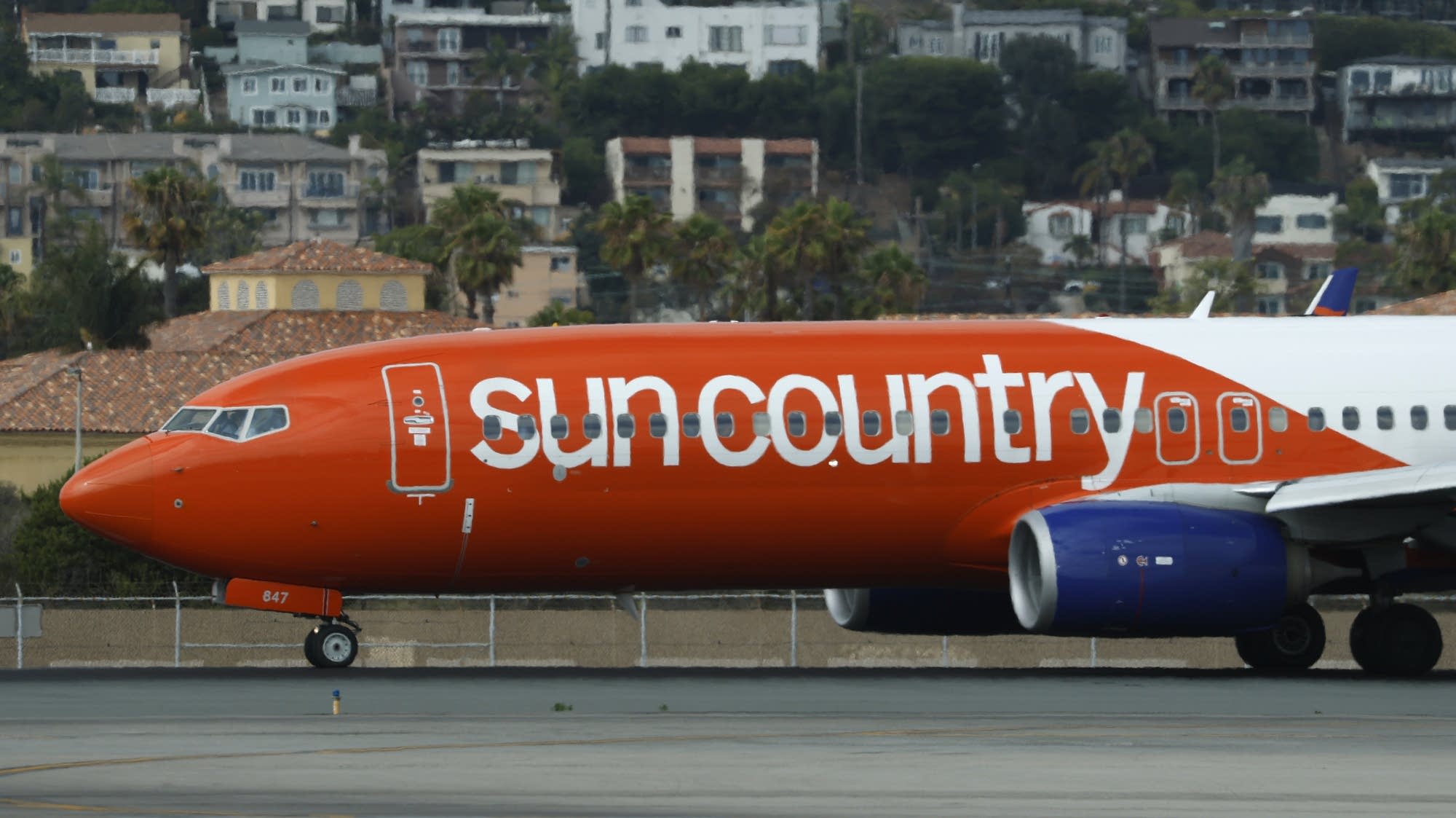
Allegiant Air and Minnesota's Sun Country have completed their merger, marking a notable consolidation in the low-cost airline sector. The deal is modestly positive for both carriers as it may improve scale, network efficiency, and competitive positioning. The news is likely relevant for airline peers and investors tracking industry consolidation.
This is less a simple headline than a signal that the domestic ultra-low-cost leisure carrier market is moving toward rationalization. The key second-order effect is that consolidation tends to improve pricing discipline on thin, highly seasonal routes before it shows up in reported margins, because capacity decisions are made at the schedule level months ahead of earnings. The likely winners are the largest, lowest-cost operators with the strongest balance sheets, while the losers are smaller carriers that rely on aggressive fare dumping to defend share. The more important read-through is to airport and ancillary ecosystems: when capacity tightens, load factors and ancillary attach rates usually improve faster than base fares, which can disproportionately help operators with strong bag/seat/credit-card monetization. That also means regional airports with heavy reliance on fare-sensitive leisure traffic may see a near-term rebound in utilization, but local competitors and charter operators could face more volatile yields as the merged platform optimizes route economics. From a timing standpoint, the biggest impact should show up over the next 1-3 quarters through forward booking curves and capacity announcements, not immediately in current-quarter results. The main reversal risk is that antitrust or integration friction forces management to preserve excess capacity longer than intended, blunting the pricing benefit; fuel spikes would also compress the upside if the industry tries to hold fares while input costs rise. In a weaker consumer environment, the merger could simply accelerate discounting elsewhere rather than lift the whole segment. The contrarian angle is that the market may underappreciate how much of the value accrues to non-obvious beneficiaries: aircraft lessors, airport services, and even larger network carriers that can selectively defend business-heavy routes while leisure competition rationalizes. If the deal improves industry discipline, the biggest multiple expansion could come from carriers perceived as structurally uninvestable, because even modest margin stabilization can re-rate them from distressed EV/EBITDA levels. The key question is not whether the merger is good for the combined company, but whether it reduces the probability of price wars across the whole budget-travel stack.
AI-powered research, real-time alerts, and portfolio analytics for institutional investors.
Request DemoOverall Sentiment
mildly positive
Sentiment Score
0.20
