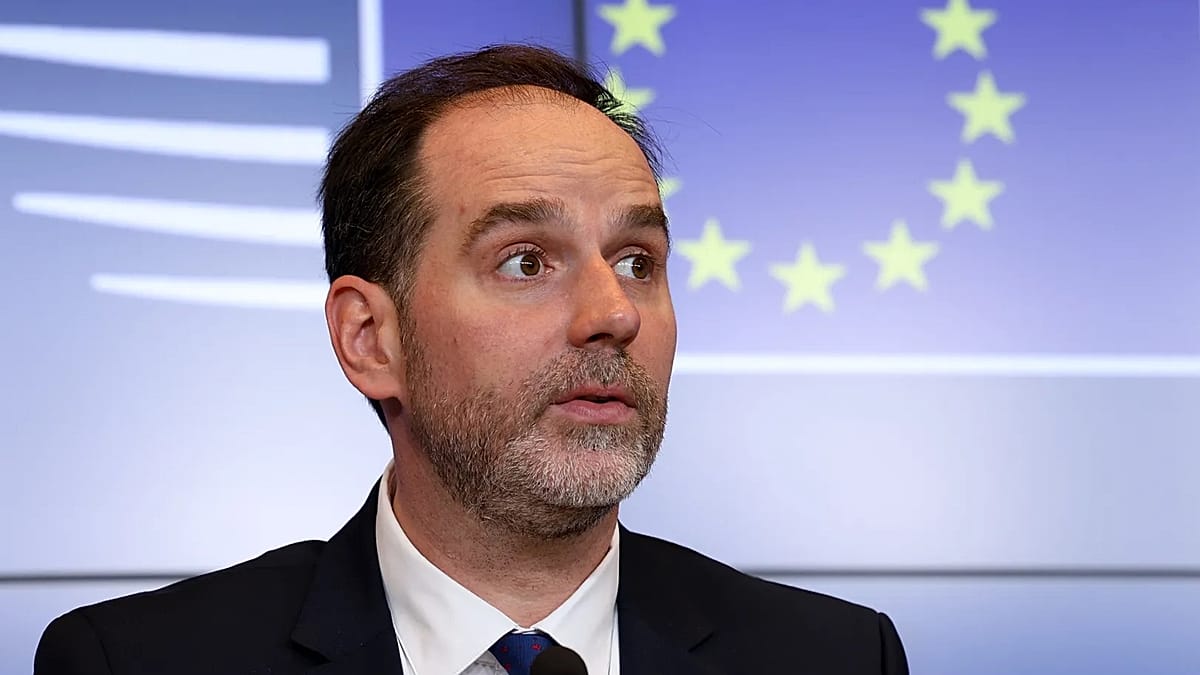
Polish Secretary of State Ignacy Niemczycki warned that Russia is not negotiating in good faith ahead of a second round of trilateral peace talks in Abu Dhabi, citing Russian strikes on Kyiv's heat and electricity infrastructure amid temperatures near -20°C as evidence Moscow seeks to prolong the war. He said the US could play a role in pressing Russia, downplayed the practical impact of Iran's reciprocal terrorist designations after the EU listed the IRGC, and cautioned that an asserted 2027 EU accession target for Ukraine would be difficult. The statements underscore continued geopolitical risk to European energy security and political stability, with potential upside risk to regional energy prices and elevated political-risk premia for investors.
Market structure: Near-term winners are LNG exporters and shipping/regas capacity owners (Cheniere LNG, Equinor, Shell) and defense contractors (Lockheed LMT, Rheinmetall RHM.DE) as a tightening of EU gas/electricity supply increases spot premiums and multi-month forward curves by an implied 20–50% if attacks persist through winter. Losers are European power retailers and industrials with high heat/electricity intensity (ENGIE ENGI.PA, E.ON EOAN.DE, basic materials) facing margin squeeze and potential curtailments.
Risk assessment: Tail risks include escalation to wider sanctions, pipeline sabotage, or a negotiated ceasefire; probability ~10–20% over 3 months but with >100% move in gas and defense equities if triggered. Immediate (days) = volatility spikes in gas, FX (EUR down), and sovereign spreads; short-term (weeks–months) = sustained commodity-price shock; long-term (quarters–years) = accelerated EU capex in regas, storage, defense leading to structural demand shifts. Hidden dependencies: US LNG ramp, regas terminal bottlenecks, winter severity.
Trade implications: Prefer asymmetric longs: 2–3% long CHK (Cheniere) or SHEL (Shell) via 6–12 month call spreads to capture >30% upside if TTF/Brent stay elevated; 1–2% long LMT or RHM.DE as defense tail hedge. Short 2–3% positions in ENGIE/EOAN or buy puts if power forwards widen and industrial margins erode; use TTF futures/options to express directional gas view (3-month call calendar). Act within 1–3 weeks; trim/hedge if peace progress confirmed or TTF drops >25%.
Contrarian angles: Market may overprice permanent supply shock—if Abu Dhabi talks produce even a partial ceasefire within 30–60 days, commodity/demand rerating could be rapid (gas down >30%, defense down 15–25%). Historical parallel: 2014 spikes faded as markets reallocated; avoid one-way exposure—size positions to allow 20–30% drawdowns and buy puts to protect against a negotiated outcome or faster-than-expected EU renewables acceleration in 12–24 months.
AI-powered research, real-time alerts, and portfolio analytics for institutional investors.
Request DemoOverall Sentiment
moderately negative
Sentiment Score
-0.40
