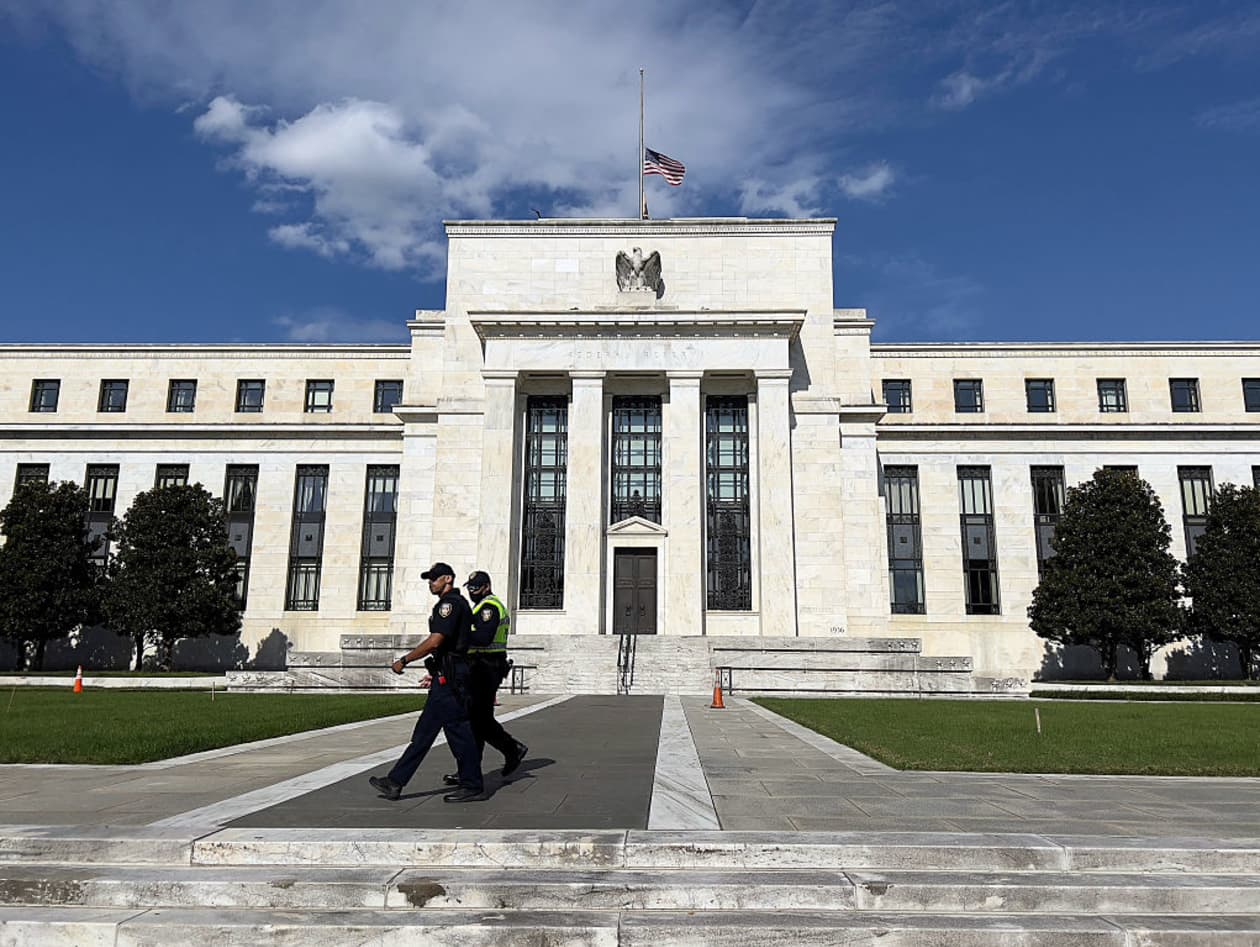
Short-term funding strains are reappearing: the Secured Overnight Financing Rate and the Tri‑Party General Collateral Rate have crept back above 4% (below late‑October peaks), signaling tighter liquidity in the overnight repo market. One‑ and two‑month T‑bill yields fell to 3.84% and 3.75% on slightly higher odds of Fed cuts, but strategists from J.P. Morgan, BNY Mellon, TD Securities and Deutsche Bank warn the Fed may need to inject liquidity via open‑market operations, reserve‑management T‑bill purchases or IORB adjustments as soon as early 2026 (or sooner), making month‑end plumbing volatility a near‑term risk for rates and risk assets.
Market-structure: Rising repo/SOFR above ~4% benefits holders of ultra-short, high-quality liquid assets (1–3M T‑bills) and money-market funds; it hurts levered hedge funds, broker-dealers and regional banks that rely on wholesale funding because funding margins and haircuts rise. Dealers’ balance-sheet constraints increase the implicit spread between secured repo and unsecured funding, boosting demand for Treasury collateral and widening GC vs. Treasury basis by 10–30bp in stress windows.
Risk assessment: Immediate risk (days) is month-end cash flows and tax/Treasury settlement squeezes; short-term (weeks–3 months) risk is repeated repo spikes forcing Fed OMO or IORB tweaks; tail risk (low prob, high impact) is a systemic repo freeze causing forced sales in IG credit and elevated equity vol. Hidden dependencies include Treasury bill supply, MMF redemptions, and corporate tax flows; catalysts: Fed language, large T‑bill auctions, and quarter-end liquidity cycles.
Trade implications: Favor short-duration Treasury exposure and SOFR-linked instruments while hedging funding-sensitive financials. Tactical trades should be timed into month-ends and ahead of Fed calendar decisions — expect intervention probability to rise materially if repo sustains >4.2% for more than 5 trading days. Volatility will be concentrated in money‑markets and bank/regional‑bank equities; options on XLF/KRE are efficient for convex protection.
Contrarian: The market assumes Fed waits until 2026 to add reserves; that underprices the probability of near-term OMOs or IORB tweaks if repo spikes reoccur. Conversely, the market can overreact to transient month‑end pressure — a quick Fed tweak could compress short yields by 20–50bp, creating downside in short-yield trades and a rapid rally in duration that could hurt short-Treasury strategies.
AI-powered research, real-time alerts, and portfolio analytics for institutional investors.
Request DemoOverall Sentiment
mildly negative
Sentiment Score
-0.25
Ticker Sentiment
