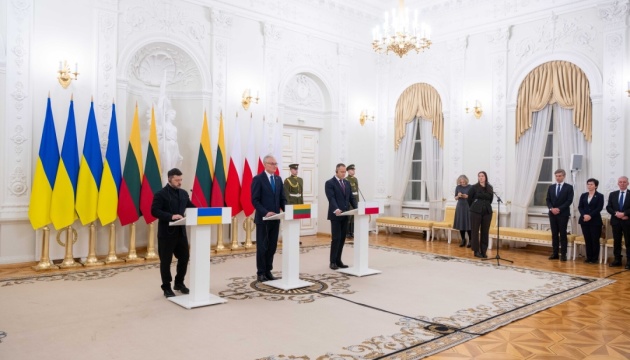
Ukrainian President Volodymyr Zelensky urged the U.S. and Europe to maintain and intensify sanctions pressure on Russia, calling for a complete stop to Russian oil tankers (including in the Baltic Sea) and measures to block propaganda and sanction-evasion schemes. The comments, made alongside Polish and Lithuanian leaders in Vilnius, were followed by a report that Senator Lindsey Graham secured approval from President Trump for a bipartisan sanctions bill, underscoring increased prospects of further punitive measures that could tighten energy flows and raise geopolitical risk premia for affected markets.
Market structure: Renewed calls to choke Russian seaborne oil raise probability of tighter European crude balances and higher freight spreads. Expect winners: liquid fuels producers and commodity-exposed ETFs (XLE, BNO) and tanker owners (STNG, NAT) as rerouting increases voyage miles; losers: Russia-exposed assets (RSX) and EU refiners reliant on cheap Urals crude. Impact on FX/bonds: near-term safe-haven USD and German bunds rally, while BBB-rated corporates with Russia links face widening spreads.
Risk assessment: Tail risks include (1) full cutoff of Russian oil causing Brent spike >20% to >$100 within 3 months, (2) rapid sanction-evasion via third-country flags limiting impact, or (3) military escalation broadening risk premia. Immediate window (days–weeks) is sentiment-driven volatility; medium (1–6 months) depends on legislation/exemptions; long-term (6–24 months) is demand re-shaping and energy security capex. Hidden dependency: insurance (P&I) refusals or reflagging can nullify sanctions without price signal.
Trade implications: Tactical overweight energy and tanker exposure for a 2–3 month trade if Brent moves +10% or EU announces tanker bans; implement via 2–3% positions in XLE (or BNO) and 1–2% in STNG. Hedge Russia/EM downside with 1–2% short RSX or 3‑month ATM puts; use 3‑month call spreads on XLE (buy 10% OTM, sell 20% OTM) to cap cost. Rotate into defense names (RTX, LMT) on any confirmed expansion of sanctions funding within 30–90 days.
Contrarian angles: Consensus overestimates immediacy of a comprehensive tanker ban — logistics, insurance and Chinese/RoW demand will blunt near-term supply shocks, so oil upside may be capped below earlier fear levels; shipping rates may already price in stress. Historical analog (2014) shows adaptation in 6–12 months; risk of overcrowded long-energy positions if legislation stalls. Watch for unintended consequence: higher insurance premiums that benefit smaller, flexible tanker owners while depressing trade volumes and global demand growth.
AI-powered research, real-time alerts, and portfolio analytics for institutional investors.
Request DemoOverall Sentiment
mildly negative
Sentiment Score
-0.25
