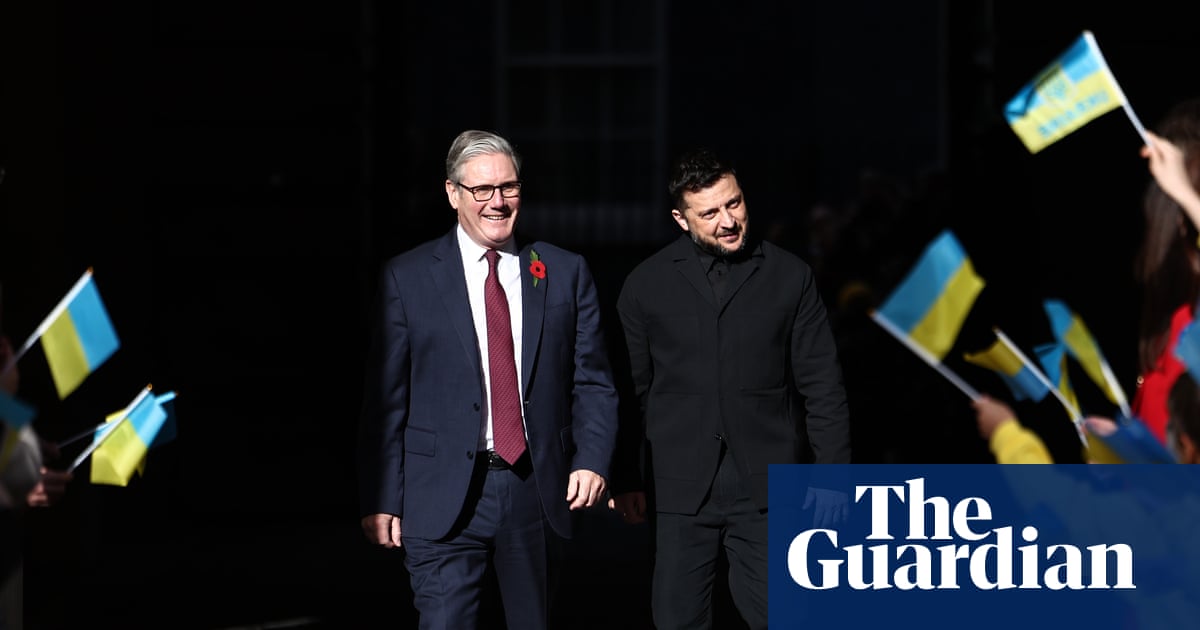
Ukrainian President Zelenskyy, after meeting Western allies in London, underscored the necessity of sustained US involvement and unity against Russia, specifically advocating for US Tomahawk cruise missiles despite President Trump's current hesitation. This push coincides with the UK's call for allies to supply more long-range munitions, exemplified by Ukraine's recent use of a British Storm Shadow missile to hit a Russian industrial target. Concurrently, the US has sanctioned Russian oil majors Rosneft and Lukoil and urged a ceasefire, while the EU, though delaying a decision on utilizing frozen Russian assets for Ukraine, has committed to a phased ban on Russian LNG imports by 2027, reflecting ongoing, albeit varied, Western economic and military pressure amidst Russia's intensified attacks on Ukrainian infrastructure.
Ukrainian President Zelenskyy underscored the critical need for sustained US involvement in efforts to end the war and secure post-war guarantees, despite President Trump's current reluctance to supply Tomahawk cruise missiles. This highlights Ukraine's strategic reliance on Western unity and advanced military aid, even as Trump recently sanctioned Russian oil majors Rosneft and Lukoil and called for a ceasefire. The UK also advocates for increased long-range capability, with Ukraine recently using a British Storm Shadow missile to strike a Russian industrial target in Bryansk.
The US imposed sanctions on Rosneft and Lukoil, Russia's largest oil companies, signaling continued economic pressure. Concurrently, the EU, despite delaying a decision on utilizing €140bn in frozen Russian assets, agreed to a 19th sanctions package including a gradual ban on liquefied natural gas (LNG) imports by early 2027. This phased approach to LNG sanctions, partly influenced by dependencies like Hungary and Slovakia on Lukoil, indicates a complex and evolving Western strategy to impact Russia's energy sector.
Russia has intensified its bombing of Ukraine's energy infrastructure, causing power and water outages in Kyiv and Chernihiv, aiming to break public resistance ahead of winter. This escalation underscores the humanitarian crisis and the strategic importance of long-range capabilities for Ukraine to counter Russian aggression. The ongoing conflict and its impact on infrastructure present significant risks for regional stability and economic recovery.
The overall sentiment is moderately negative and cautious, with a market impact score of 0.6, reflecting ongoing geopolitical instability and its potential economic ramifications. Key themes include geopolitics, sanctions, energy markets, and defense, all of which contribute to a complex and volatile investment landscape.
AI-powered research, real-time alerts, and portfolio analytics for institutional investors.
Request DemoOverall Sentiment
moderately negative
Sentiment Score
-0.40
