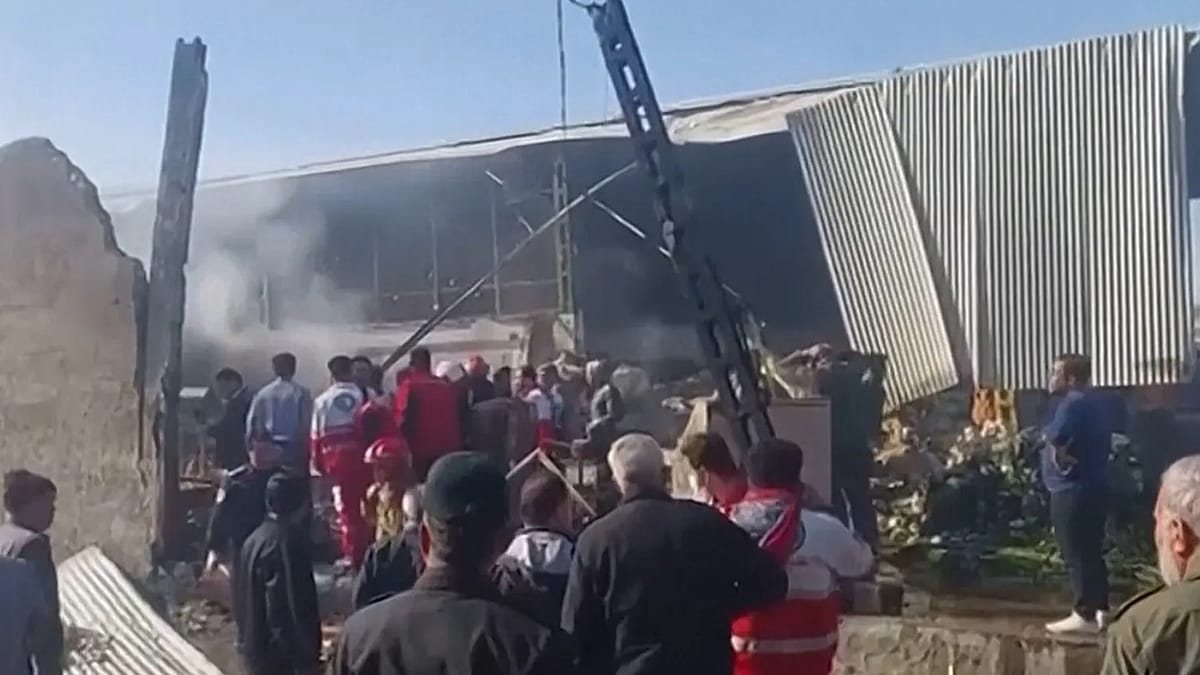
An Iranian army training helicopter crashed into a fruit and vegetable market in Dorcheh, Isfahan province, killing at least four people including the pilot and co-pilot and two civilians. The crash — coming days after an F-4 fighter jet accident near Hamedan that killed one pilot — highlights Iran's reliance on ageing aircraft amid Western sanctions that constrain access to parts, a vulnerability underscored by the May 2024 Bell 212 crash that killed President Ebrahim Raisi and other officials. For investors, the event raises localized operational and geopolitical risk concerns around Iranian military readiness and air-safety, though it is unlikely to produce immediate, broad market moves.
Market structure: Recurrent Iranian military aircraft failures tighten demand for replacement airframes, spare parts, and MRO (maintenance, repair, overhaul) services but sanctions block Western suppliers, creating a bifurcated market: legal Western defense primes gain geopolitical premium while grey‑market suppliers (Russia/China intermediaries) capture immediate revenue. Near-term pricing power accrues to US defense primes (LMT/NOC/RTX, or ETF ITA) for regionally financed procurements; civil aerospace and regional carriers see margin pressure from grounded fleets and insurance premium spikes. Cross‑asset: expect short-lived safe‑haven flows into gold and US Treasuries, brief widening of EM sovereign/credit spreads, and elevated oil volatility tail risk if incidents escalate to supply routes (move of ±$3–$7/bbl within weeks).
Risk assessment: Tail risks include targeted strikes or a major domestic incident provoking sanctions relief or escalation—low probability but high impact (oil >$100/bbl, VIX +50%). Immediate (days) risks: flight restrictions, insurance repricing; short (weeks–months): higher defense procurement budgets regionally; long (quarters–years): structural MRO market growth in sanctioned economies if workarounds persist. Hidden dependencies include third‑party parts supply chains traversing neutral jurisdictions and increased black‑market activity that could prompt secondary sanctions. Key catalysts: additional crashes, major civilian casualties, or public unrest within 30–90 days.
Trade implications: Tactical plays favor small, defined exposures: 1–2% portfolio in gold (GLD) and 1–2% in defense (ITA or LMT/NOC) for 1–12 months, plus micro hedges in volatility/oil options (30–90 day). Pair trades: long defense vs short airline/jets ETF to capture relative rerating; use call spreads to limit premium bleed. Entry: act within 48–72 hours for volatility/gold; stagger defense buys over 2–6 weeks to avoid whipsaw.
Contrarian angles: Consensus views risk only near‑term; undervalued is persistent structural demand for MRO and sanctioned workaround suppliers over 12–36 months—this could benefit regional heavy lifters and non‑US OEMs (Russia/China). Reaction may be underdone in defense equities (limited allocation), and overdone in outright oil panic trades; avoid large directional crude longs unless price breaches $85–95/bbl threshold sustained for >5 trading days. Monitor shipping insurance spreads and SIGINT/OSINT for escalation signals.
AI-powered research, real-time alerts, and portfolio analytics for institutional investors.
Request DemoOverall Sentiment
moderately negative
Sentiment Score
-0.35
